Nava Social is about to revolutionize the @Solana trader game. Trading SOL tokens shouldn't be this difficult. Nava Social, launching soon, will make trading Solana tokens incredibly easy—frictionless and hassle-free.
If you're in the Solana ecosystem, stay tuned for Nava Social. First come, first served.
#NavaSocial #Solana #SOL #Crypto #Web3
417
0
0
24
☠️RISINGONE☠️🔱
08-02 17:09
フォロー
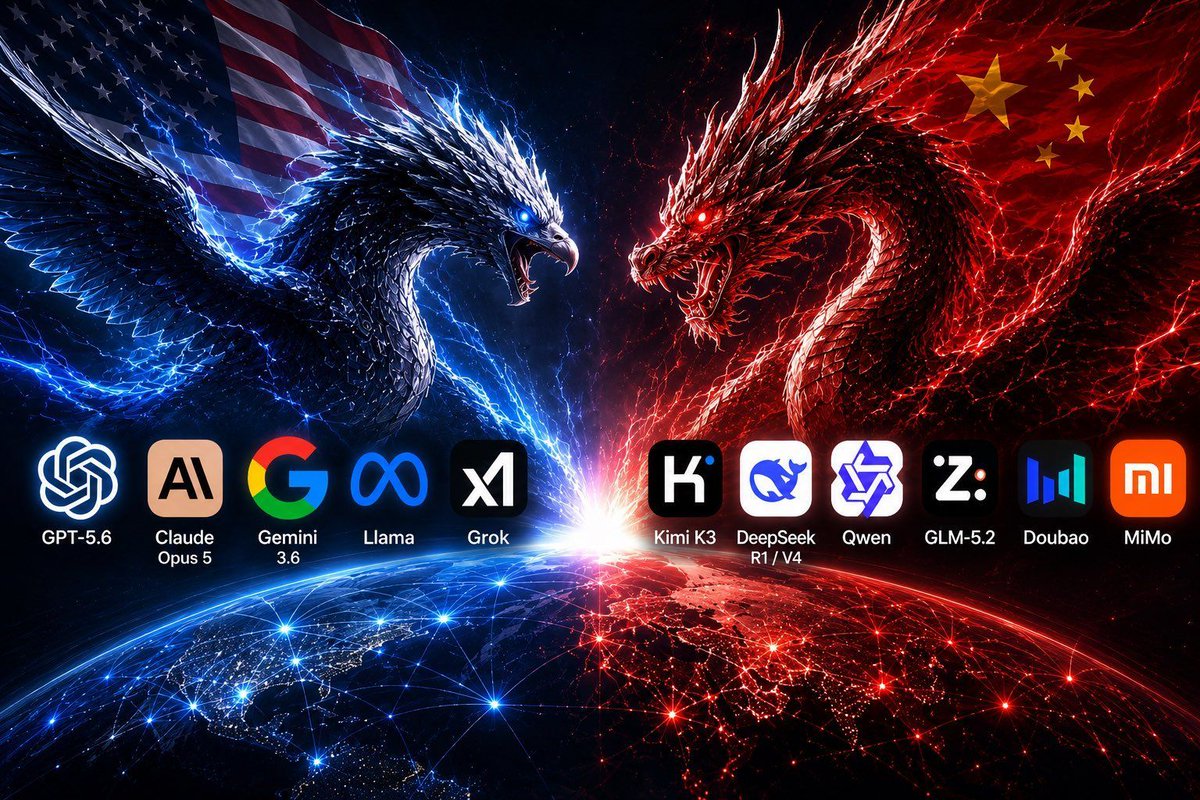
The US-China AI War
If we extend the timeline to three years from now, which game will emerge victorious and dominate the market?
Currently, chatgpt remains far ahead.
408
0
0
21
andrew chen
08-02 13:17
フォロー
We're now moving away from testing LLMs by things like "creating an SVG of a pelican riding a bicycle." To get a more comprehensive understanding, I was curious what Opus 5 would do if I gave it the first paragraph of text from *The Lord of the Rings*, a budget of 1 million tokens (about $10), and asked it to render three JavaScript versions. Opus ran for about two hours, writing 5,500 lines of code (procedurally) to render the story. It was a bit rough, but interesting. It's truly incredible that an LLM could actually manage to place and coordinate various polygon assets in (x, y, z) coordinates, write code to animate them, and ultimately accomplish all that.
I also love these kinds of examples because a normal person simply wouldn't spend the time writing such custom code, but LLM (game developers) have endless energy and patience, so it shows how our thinking has shifted from "nobody would do this" to "of course, it's free anyway." There are probably many more examples like this. But I'm excited to create highly customized worlds where you can imagine placing players, for example, letting them participate in the Lord of the Rings story as NPCs or characters, and so on. Like a timed version of Grand Theft Auto X that you can experience anytime.
Finally, the world/game domain exposed a weakness of LLM: they can't easily review their own work because they can't efficiently natively perceive videos or play games within videos. For example, Opus 5 had to very slowly and laboriously take screenshots at different points in time, resulting in several errors and many flaws in the footage. This is an example of a rudimentary capability (multi-mode, gameplay) that I think is still quite lacking.
483
0
0
40
pandaWL
08-02 11:39
フォロー
Many market analysts focus solely on candlestick charts, valuations, and technical indicators, overlooking a simple yet crucial principle:
Major market movements in any asset class are essentially driven by capital flows.
Over the past two months, a noteworthy change has emerged in the US ETF market:
A large number of new ETFs have been launched, especially those with leveraged or derivative features.
This reveals a key signal:
The market is creating more "entry points for capital."
In the past, investors needed to research company fundamentals before buying stocks;
Now, more and more capital is entering the market through ETFs, even amplifying returns through leveraged ETFs.
What does this mean?
It means that future market volatility may become increasingly severe.
During an uptrend:
Capital flows rapidly into ETFs → pushing up the index → attracting more capital → creating a positive feedback loop.
During a downtrend:
Leveraged funds are forced to reduce their positions → ETF redemptions increase → passive selling expands → accelerating the decline.
This is why the market is increasingly resembling a "money game."
Many people ask:
"Why do stocks rise even when economic data is poor?"
The answer is simple:
Because the short-term market trades not on reality, but on expectations of liquidity.
As long as the market believes more money will flow in, asset prices can continue to rise.
However, we must also be wary:
When the rate of ETF issuance exceeds the rate of real wealth creation, the market may enter a different state.
More and more products chase limited assets, ultimately leading to:
Prices driven by capital, not value.
This is why similar phenomena occur in the later stages of every major bull market in history:
Products become increasingly complex;
Leverage becomes increasingly high;
Participation becomes increasingly easy for ordinary investors;
Market narratives become increasingly exciting.
Because the truly frenzied phase often occurs not when no one believes, but when everyone believes.
The current expansion of the ETF market is not inherently a bad thing.
Financial innovation can improve efficiency and lower investment barriers.
But investors must understand:
Capital inflows can drive prices up, but they cannot forever replace value.
What truly determines the market's future direction isn't just corporate profits, but also:
Whether new funds can continue to flow in;
Whether leveraged funds can continue to expand;
Whether investor confidence can be maintained.
When the market is rising, we must see the power of capital;
When the market is frenzied, we must also see the risk of capital withdrawal.
After all:
Rising prices require buying pressure, falling prices only require a loss of buying pressure.
Money never disappears; it only flows from one asset to another.
Truly smart investors don't chase after capital at its most frenzied moment,
but rather, they understand where capital is flowing before its direction changes.
#USStocks #Investing #ETFs #FinancialMarkets #AssetAllocation
323
0
0
43
Mario Nawfal
08-02 05:53
フォロー
Trump Media is essentially saying, "Truth Social can influence the market, so if you want to see posts milliseconds faster than others, pay up…
Up to $100,000 per month."
This is a huge boost for high-frequency traders who rely on small advantages for survival.
It's essentially a data licensing game played by every major social media platform, only on a larger scale because the main account belongs to Trump… and his family is the largest shareholder.
Is this purely about making money, like Trump Coin? Essentially, it's the same.
They're using their only unique asset—Trump's mouth—to make money.
The difference is that there's actually a real (even small) product behind this: a licensed, low-latency news feed, not just meme tokens.
It feels like turning the president's news feed into a premium subscription service.
From a legal perspective, this is public information, just with a speed advantage gained for a fee, so it doesn't fall under "traditional" insider trading.
From an ethical perspective? It's a complete mess in the public eye.
Source: Truth Social / Author: Claudio
498
0
0
34
MartyParty
08-02 00:59
フォロー
Folks—internet memes are like a game of musical chairs. If you get in early and exit at the peak, you profit. There's no value in it, no loyalty involved, and anyone telling you the opposite is just peddling their own profit.
This is a gambling age. Internet memes are meaningless, just noise. If you're an insider, you'll have an advantage; otherwise, you'll lose everything. Malicious traders might gain some valuable information if they know which data to watch and how the house works, but 95% of malicious traders end up losing everything.
Don't get wiped out. Safeguard your quality assets and don't gamble them away.
Accumulate blue-chip internet shares and safeguard them. Don't chase stocks that are skyrocketing. Don't hold volatile, worthless tokens.
If you're using leverage, learn risk management, never lose money, cut your losses promptly, and strictly adhere to your stop-loss strategy. Casino apps and trading platforms are designed to plunder your assets. Don't become a victim.
426
0
0
25
CryptoPotato Official
08-01 16:05
フォロー
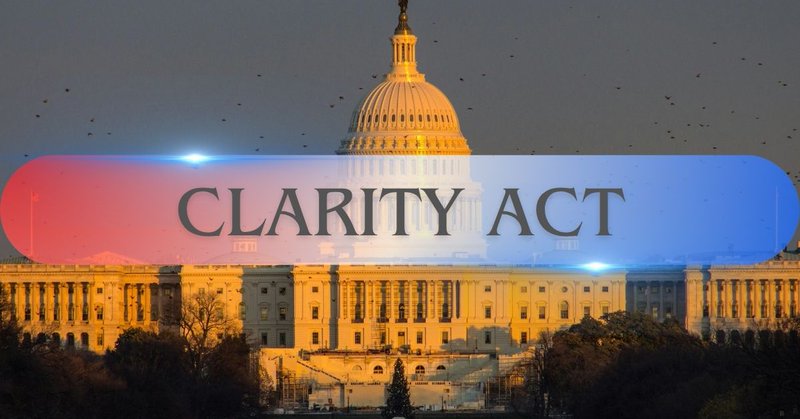
Insight: The chances of the highly anticipated Clarisity Act passing this year have dropped to 31%. Washington is currently engaged in a high-stakes waiting game over ethical issues.
@saylor is unconcerned about the current delays. He points out that Bitcoin will thrive regardless of the legislation, but the US urgently needs clear rules for digital assets.
321
0
0
30
链研社|AI First🔶💧
08-01 10:37
フォロー
AI Earnings Season: Giants Choose Different Directions in AI Development
The most noteworthy aspect of this AI earnings season isn't revenue, but rather the financial statements the giants have made. On the AI path, no one wants to compete with anyone else.
Google is the most versatile. It develops its own cloud, chips, and models across the entire stack. Its TPUs contribute tens of billions of dollars annually, and its capital expenditure in 2025 is approximately $92 billion. It wants to control the entire supply chain.
Amazon doesn't focus on models; it concentrates on its Trainium chips. Trainium 2 generates billions of dollars in annual revenue, with over 1 million chips in production. It's allocating over 500,000 chips to Anthropic for Project Rainier and also selling computing power to OpenAI. It doesn't build the smartest brains; it only sells machines that can run brains.
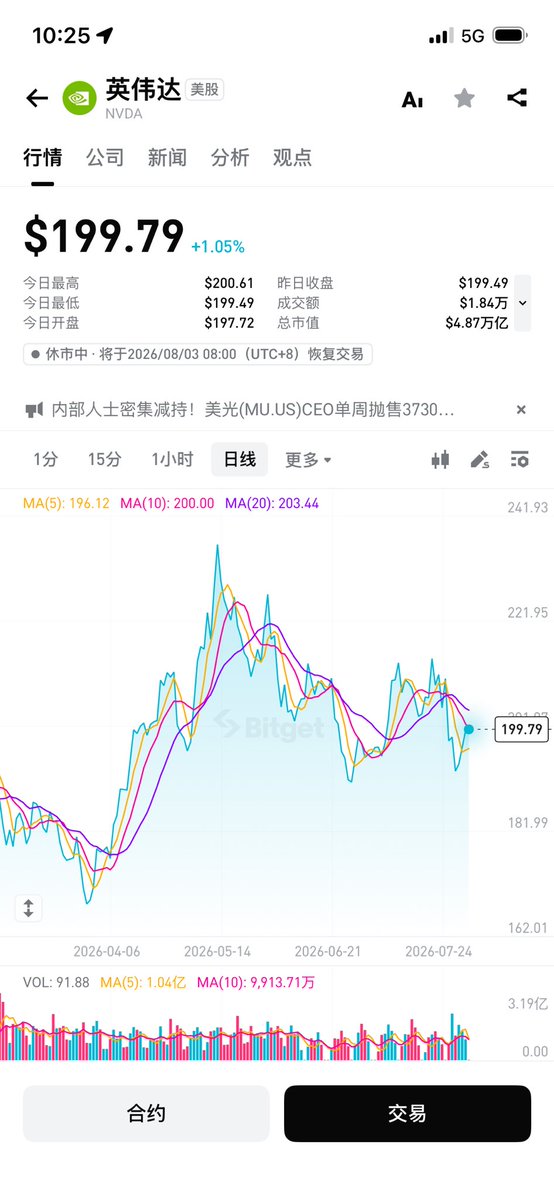
Nvidia has taken selling shovels to the extreme. It has invested up to $100 billion in OpenAI, jointly building at least 10 gigawatts of data centers with millions of GPUs. They're suppliers, investors, and shareholders alike, directly staking their balance sheets on the project.
Microsoft, playing the platform game, has long since moved away from being tied to OpenAI. Azure AI Foundry is packed with OpenAI, Claude, Grok, and Mistral, boasting tens of thousands of models and serving over 70,000 customers. It treats AI capabilities and its internal enterprise agents like utilities, accepting whichever model is best.
Meta is the most aggressive yet also the most awkward. Capital expenditures are projected at $66 billion to $72 billion in 2025, and will increase in 2026, determined to acquire models, pushing its Hyperion cluster towards 5 gigawatts. Yet, revenue is still primarily driven by advertising; AI hasn't directly generated any additional revenue, and Reality Labs is still losing $4.5 billion. It's all investment, with returns seemingly unrealistic.
Musk is the most audacious. SpaceX traded $60 billion in stock for Cursor, retaining Colossus in Memphis (equivalent to 1 million H100 contracts), and conveniently leased computing power to Anthropic and Google for approximately $26 billion annually. Computing power, models, and applications are all bundled together.
Apple is an outlier. Its capital expenditure is only $12.7 billion in fiscal year 2025 and approximately $14.3 billion in 2026. It doesn't build large models, instead relying on ChatGPT and later Gemini, leasing computing power from its own Private Cloud Compute. However, there's no free lunch. AI hardware and tariff costs are rising, and iPhone revenue is already showing signs of fatigue; the price increases are being eaten up by costs.
In the same AI wave, some are trying to master the entire stack, some are only selling basic components, and some are burning cash to acquire models. There's no right or wrong approach; ultimately, everyone has to pay the price.
439
0
0
24
Sam Altman
08-01 02:21
フォロー
Last night I heard an amazing use case for ChatGP:
Connect to your home calendar and explain your child's interests and hobbies.
Every morning on the way to school, let it automatically generate a podcast, which could include a child's soccer game that afternoon, another child's upcoming birthday, some news, and so on.
418
0
0
30
The Crypto Dog 📈
08-01 00:22
フォロー
Today we're launching a Beta test for a new game currently in development, with player participation.
You can watch the full interactive live stream of the YE program in your browser (desktop and mobile devices).
The program will last 3 hours and will begin at 1:00 AM UTC.