NEAR Protocol 是一种第一层的权益证明区块链,专为可扩展性、低费用和用户友好的去中心化应用开发而设计。目前市值约 16 至 18.6 亿美元,流通供应量约 13 亿枚 NEAR 代币,位列加密货币市值前 40 名。
2. NEAR Protocol 的创始人是谁?他们有什么背景?
NEAR 由 Illia Polosukhin 和 Alexander Skidanov 于 2018 年共同创立。Polosukhin 曾是 Google 研究工程师,共同撰写了对变压器 AI 技术具有开创意义的论文《Attention Is All You Need》。Erik Trautman 也作为联合创始人加入。2024 年,Polosukhin 回归担任 NEAR Foundation 首席执行官。
NEAR 由总部位于瑞士的非营利组织 NEAR Foundation 管理。NEAR 数字集体(NDC)代表社区驱动的自我治理和国库管理倡议。治理模式旨在协调开发者、代币持有者和用户之间的利益,同时推进协议决策的全面去中心化。
7. NEAR Protocol 上构建了哪些主要应用和使用场景?
NEAR 托管多元化生态系统,包括 Ref Finance 等 DeFi 平台、Aurora EVM 扩展解决方案、NFT 项目,以及 NEAR-Chat 和 NEAR.Cognition 等 AI 整合应用。NEAR Foundation 承诺投入 8 亿美元培育生态增长。该协议还支持 Rainbow Bridge 进行跨链资产转移。
オーダーブック
最新取引
大口取引
価格 (USDT)
数量 (NEAR)
合計 (NEAR)
$1.66
$1.66
68%
31%
強気
弱気
コミュニティ見解
Mister Crypto
フォロー
Bitcoin enjoyed ample liquidity at the start of August.
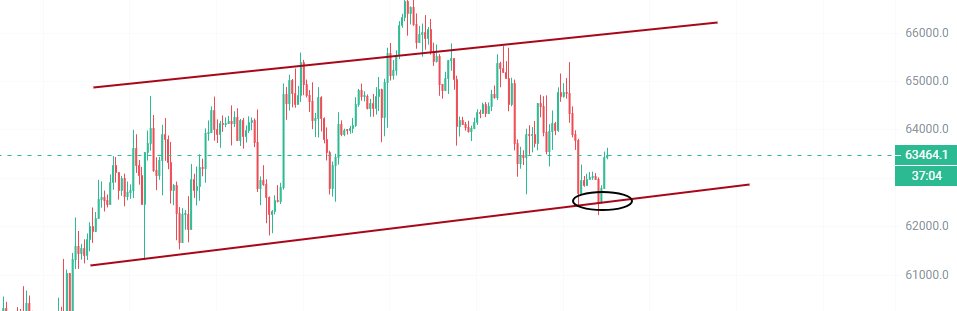
Most downside liquidity has been snapped up, but another major liquidity concentration point is around $61,000 to $62,000.
With Bitcoin currently trading near $63,000, we are closer to this downside liquidity concentration point, meaning that price level is likely to be the first to be exhausted.
However, significant liquidity has also accumulated above $65,500 to $67,000, which we need to monitor closely.
Both sides are poised for action.
High market volatility is expected!
381
0
0
27
Alex Svanevik 🐧
フォロー
Is the following summary of the current state of the Japanese yen accurate?
1/ After the bursting of Japan's asset bubble in the 1990s and 2000s, a massive amount of public debt accumulated.
2/ To combat deflation and ensure debt repayment, the Bank of Japan kept interest rates near zero for decades.
3/ Yen could be borrowed globally at virtually zero cost and leveraged for carry trades (i.e., yen carry trades).
4/ This low-cost leverage flowed into higher-yielding assets, including US stocks and bonds.
5/ Today, the Bank of Japan is raising interest rates to normalize policy amid inflation and a weak yen.
6/ Rising Japanese interest rates coupled with a stronger yen forced carry trades to be unwound.
7/ This created selling pressure, putting the US stock market at risk.
8/ The Japanese government intervened to support the yen.
9/ This wasn't enough, so the US Treasury also joined in, buying yen.
??
325
0
0
42
CryptoPotato Official
フォロー
Market Update: Bitcoin ($BTC) is currently seeking support around $63,000 after a strong rebound near $65,000.
Most major altcoins continued their decline ahead of the weekend. However, smaller tokens like BEAT and MemeCore bucked the trend, achieving double-digit gains.
305
0
0
39
0x思远
フォロー
Many are still debating whether AI will replace humans, but what will truly determine the landscape of the next few decades may not be AI, but a form of energy.
It's called: controlled nuclear fusion.
Many people don't know that humanity has actually mastered nuclear fusion long ago.
The hydrogen bomb is nuclear fusion.
But the hydrogen bomb solved the problem of:
How to use the power of the sun to destroy a city in 0.1 seconds.
Controlled nuclear fusion, on the other hand, solves the problem of:
How to confine a "mini-sun" inside a box and make it generate electricity stably every day.
These two challenges are on completely different levels.
Many people now ridicule nuclear fusion:
"It's been researched for over 70 years and hasn't been commercialized yet; is it a scam?"
But look at it from another perspective:
70 years ago, humanity didn't even have computers.
Today, the computing power of a single mobile phone surpasses that of an entire country's supercomputer decades ago.
The same applies to energy.
The technology that truly changes the level of civilization is never a simple invention, but rather making it cheap enough.
Oil didn't change the world because it was discovered, but because it was cheaply extracted.
Transistors didn't change the world because they could be manufactured, but because they were manufactured on a large scale.
The same is true for AI.
If controlled nuclear fusion is successfully achieved in the future, the first thing to be changed might not be ordinary people's electricity bills.
It would be the entire world's production logic.
Why is AI developing so rapidly now?
Because of computing power.
Why is the competition for computing power becoming increasingly fierce?
Because of electricity.
The biggest AI companies of the future may not be those with the most powerful models, but rather those that possess the most cheap energy.
You think the AI competition is a war between OpenAI, Google, and Anthropic?
Actually, it might be a war of:
Energy war.
Some say:
"Solar and wind power are enough, why do we need nuclear fusion?"
The problem is, the energy needs of humanity in the future may far exceed those of today.
AI data centers.
Robot manufacturing.
New energy vehicles.
Seawater desalination.
Space exploration.
All these resources combined would require dozens of times more energy than today.
Current human civilization is essentially built on:
coal, oil, and natural gas.
We've been burning the ancient sun for hundreds of years.
Nuclear fusion, in essence, is an attempt to:
create our own sun.
If one day, a country or company is the first to master commercial nuclear fusion,
it won't just be an energy company.
it will be a trump card for the future world.
Because once energy becomes cheap enough:
AI computing power will be cheap.
Industrial costs will decrease.
Freshwater will become cheap.
Manufacturing will be reshaped.
It could even change the competitive landscape of nations.
Every energy revolution in history has given rise to a new hegemon.
The coal era made Britain powerful.
The oil era made the United States powerful.
So?
Who will benefit from the fusion era?
Of course, we are still a long way from true commercialization.
But one thing is certain:
For the past 100 years, humanity has been solving the problem of "how to obtain more information."
For the next 100 years, humanity may need to solve the problem of:
how to obtain near-infinite energy.
Because when energy is no longer scarce, many things that seem crazy today may become commonplace.
What truly changes the world is never a particular product.
It is the redefinition of underlying resources.
341
0
0
49
实力技术瓜
フォロー
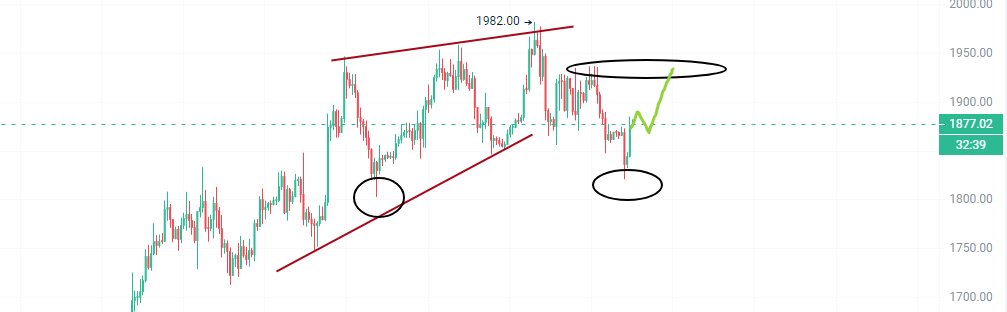
The short-term rebound of ETH is relatively weak, and the price has been pushed down again. The wedge pattern still exists, and the price shows signs of breaking down. Pay attention to whether the support near the short-term low can hold. If it holds, it may make another secondary high and then start to accelerate the decline. If it breaks down directly, it may go down directly. So for now, I am staying out of the market and watching!
443
0
0
49
Mario Nawfal
フォロー
🇺🇸 Tucker Carlson conducted an in-depth interview with Elizabeth Lane, revealing what she calls a clandestine propaganda network linked to NATO, boasting a massive army of bots, financial flows, and a mission to push the West toward larger-scale wars.
Near the end of the interview, they focused on Laura Lumer:
- Lane called Lumer a propagandist serving “Zionist globalists.”
- Lane claimed Lumer helped Trump turn against people like Tucker by spreading negative information to him.
- Lane also stated that Lumer was one of a large account involved in spreading coordinated lies and false narratives, which are part of the same machine that attacks anyone who “crosses the line.”
Lane’s argument is simple: Lumer’s goal is to advance the network’s agenda while packaging it as patriotism and “fighting disinformation.”
Source: @tuckercarlson / Author: Val
411
0
0
47
南宫远
フォロー
Tether released its Q2 attestation report, showing net operating profit of $1.5 billion, primarily from gains on US Treasury bonds and repurchase agreements.
USDT circulating supply was $184.6 billion, an increase of only about $446 million during the quarter, representing near-stagnant growth, consistent with the market's shrinking volume and declining prices in Q2.
On the reserve side, gold holdings increased by 14 tons to 146.2 tons, and Bitcoin holdings increased by 1,796 coins to 98,933 coins. However, according to the report, excess reserves fell to $4.11 billion, nearly halved from the previous quarter.
________Tether is also buying Bitcoin at the bottom.
401
0
0
35
比特币总裁
08-01 00:40
フォロー
Previous analysis advised against chasing Ethereum's price near $2000 during rebounds. It tested this level multiple times over the past two weeks, reaching a high of over $1980 before falling back. The overall price movement precisely matched the analysis. #Bitcoin #Ethereum #MarketAnalysis #BTC #ETH (From @YouTube)
354
0
0
38
Cointelegraph
08-01 00:30
フォロー
🚨Latest news: Bitcoin fell to a two-week low, near $62,000, down 3.5%, as U.S. stocks failed to follow the strong rebound in Asian stocks.
335
0
0
23
Biupa
08-01 00:02
フォロー
Former OpenAI employee Leopold Aschenbrenner's fund, Situational Awareness LP, was forced to sell most of its secondary market assets at a discount to Citadel (a large US hedge fund) near its lowest point yesterday due to high leverage.
Situational Awareness is the title of a 165-page paper he wrote, which generated significant buzz in the AI industry, and his fund is named after it.
The paper essentially discussed how AI development will drive the development of the entire AI industry chain, and his investment logic focuses on the upstream and downstream of this chain.
His fund's assets under management (AUM) grew from over $200 million to a peak of $45 billion since its inception, attracting considerable attention.
Unsurprisingly, the rapid expansion of Situational Awareness LP's positions was due to leverage. This amplified returns during upward trends but also led to liquidation risks during downturns.
It's important to note that "Context-Aware LP" sold its secondary assets, but not its primary assets (unlisted companies, such as OpenAI shares).
This example is quite similar to FTX's situation in 2022. The main reason for FTX's problems was that its liquid assets (mostly FTT, its platform token) couldn't cover its liabilities (the money users had deposited).
The outcomes differed – while Context-Aware sold at a loss at the bottom, it at least avoided liquidation, and its primary market assets remained valuable. FTX, however, ultimately collapsed.
What's the difference?
Citadel recently touted interest rate hikes and then bought Context-Aware's shares at the bottom, leading many to believe it was a scheme to profit. (Figure 2 hints at this view.) Regardless, Citadel's willingness to take over these assets at the bottom at least prevented a worse scenario (forced liquidation leading to a sell-off).
When FTX collapsed, although it sought many potential buyers, no one was willing to take them over. In particular, Binance not only refused to take over, but CZ also posted a message stating that FTX's financial situation was extremely poor, exacerbating FTX's liquidity crisis.
FTX's collapse led to the ultimate crash of 2022 (Bitcoin fell from 21,000 to 15,500, and SOL fell to 8 yuan), followed by two months of bear market consolidation at the bottom.
From this perspective, although both are profit-driven, perhaps the US stock market has a stronger spirit of "helping each other out" than the cryptocurrency market. This may be related to the long-term win-win nature of the US stock market versus the essentially speculative nature of the cryptocurrency market.