The 2026 Earnings Festival is ongoing!
Let us make your portfolio work for you!
If you own a stable, take a screenshot of your earnings screen, follow @OKX and retweet this post for a chance to win $1000 USDG.
434
0
0
34
看不懂的SOL
フォロー
Goodnight, brothers! – Weekend Market Observation: BTC Volatile, Take a Break and Adjust Your Mindset
Brothers, it's Saturday today. US stock markets are closed, and the crypto market is generally consolidating.
BTC is fluctuating narrowly within its current range, with relatively stable short-term sentiment. The market has entered a weekend wait-and-see mode, and trading volume has decreased somewhat.
This week's market has been up and down, and short-term volatility can be exhausting.
It's the weekend, so I suggest everyone turn off the candlestick charts for a while and relax. Spend time with family, read a book, recharge, and detach your emotions from the market.
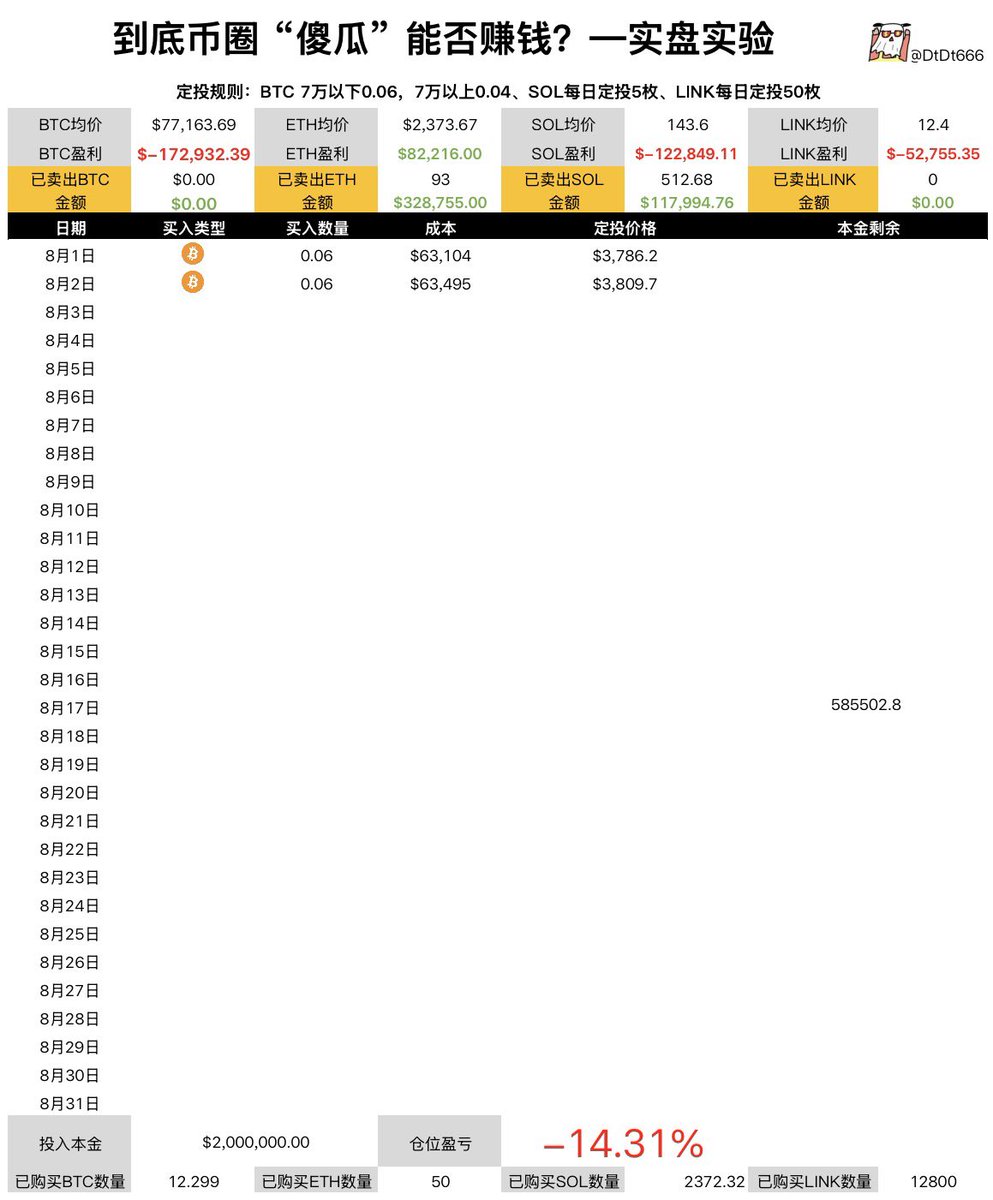
The true power of dollar-cost averaging lies not in watching the market every day, but in long-term persistence and a stable mindset. Invest a fixed amount at a fixed time, avoid chasing highs and lows, smooth out costs over time, and enjoy the power of compound interest.
Brothers, the market will always fluctuate, but life shouldn't be all about market movements.
Take a good rest, adjust your mindset, and let's continue to stabilize together next week.
Have a great weekend!
316
0
0
21
Crypto Tony
フォロー
$ETH/$USD - Latest Updates
Ethereum's relatively stable trading range remains intact, and positive factors persist.
307
0
0
38
鱼人#鱼馆
フォロー
Good afternoon, brothers, happy Saturday!
Time really flies. A week has passed in the blink of an eye, a month has passed in the blink of an eye. It feels like time is passing by so quickly. I hope for peaceful times.
✅️Market Review and Analysis
Continuing the oscillating market, as mentioned in yesterday's blog post, the monthly chart didn't close well. Bitcoin reached a high of 65400 yesterday before starting to pull back. It reached the entry point for a long position given yesterday, around 62800. Currently, I'm holding a small long position here, with a stop-loss at 62400, a 400-dollar stop-loss range.
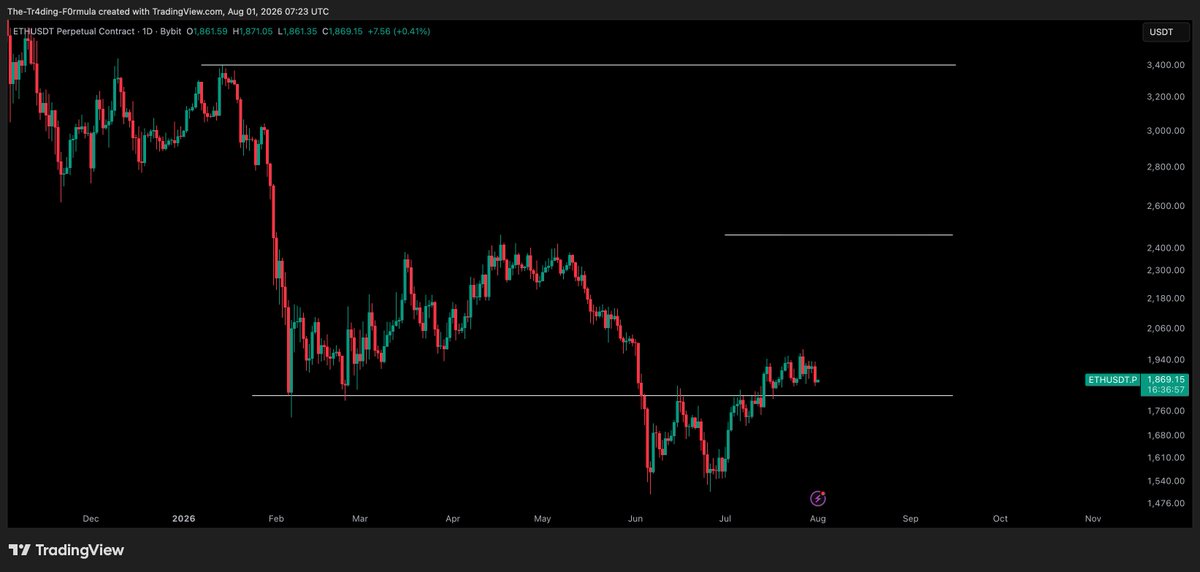
Bitcoin follows the overall market trend. Intraday support is around 1850.
There won't be much market movement over the weekend. Conservative traders can consider shorting at higher levels. Given the current market liquidity... Breaking through emotional and atmospheric barriers is extremely difficult; a high-level mindset is fine.
✅️Spot and MEME sectors
Currently, market liquidity is extremely scarce. Nobody's playing with junk altcoins anymore; trading volume is frighteningly low. If it weren't for some market makers artificially inflating volume, the daily natural volume for many altcoins would be incredibly low. The listing of US stocks on various exchanges has drained too much liquidity from the crypto market. For spot trading to have any movement, just wait and see; you can only wait until the overall market rallies, until the next bull market arrives.
Regarding MEME, I've been recommending it for the past two days:
HcfnJxLov6tY8i1dq9uYRRZKCvxADPpovcfkyXzdpump
$Chonketha This also resulted in more than doubling in value. It's better to be confident and stable in this situation, and not be afraid of market corrections.
Then, we just need to wait for the big gold release from BSC. The market has expectations and anticipation. As long as there's a push, a lot of capital will rush in. The post by the "brother" (referring to a prominent figure in the Binance ecosystem) has given the market hope that another Binance-like success story will emerge. Yesterday, $GIGGLE also saw a strong surge. Charity has always been the "brother's" way of doing things.
@cz_binance Main Focus
✅️US Stocks
While the cryptocurrency market's funds aren't enough to significantly impact US stocks, the volatility of US stocks completely influences cryptocurrency sentiment. The cryptocurrency market isn't a large financial sector to begin with; initially, there was a massive influx of funds into the A-share market, followed by a return to US stocks. The recent surge in US stock account openings, coupled with the launch of exchanges, has led to more speculative trading using leverage and contracts. US stocks are highly volatile; SanDisk saw a 40% rebound yesterday. Hynix is the worst performer in the market; it's all about expectations and then a continuous decline, designed to shake out bulls.
Yesterday, US stocks rebounded collectively, but today they're starting to correct, currently in a sideways pattern. This correction should be over soon, and an upward trend is highly probable.
#Saturday
377
0
0
39
CryptoRank.io
07-31 23:58
フォロー
🔓 August Major Token Unlocks
The following tokens, with the highest unlock value, will unlock this week:
$RAIN — $641.4 million
$ADI — $49.14 million
$PROVE — $39.2 million
$KAITO — $35.53 million
$STABLE — $30.47 million
$DATA — $24.3 million
$ZRO — $18.65 million
314
0
0
41
看不懂的SOL
07-31 23:56
フォロー
Goodnight, brothers! – Today's Market Recap: BTC Volatile, Heading Towards the Weekend
Brothers, it's Friday, and the market is generally volatile:
BTC is consolidating within its current range, with short-term sentiment relatively stable.
US Stocks: The three major indices are diverging, with technology and growth sectors performing actively, but overall trading volume is cautious, indicating a consolidation phase at high levels.
Weekend Recommendation: Adjust your mindset and get some rest.
This week's market has been up and down, and short-term volatility can be exhausting.
It's the weekend, so I suggest everyone turn off the charts and relax. Spend time with family, read a book, recharge, and detach your emotions from the market.
The true power of dollar-cost averaging lies not in watching the market every day, but in long-term persistence and a stable mindset. Invest a fixed amount at a fixed time, avoid chasing highs and lows, smooth out costs over time, and enjoy the power of compound interest.
Brothers, the market will always fluctuate, but life shouldn't be all about market movements.
Get some rest, adjust your mindset, and let's continue to stabilize together next week.
Have a great weekend! Welcome August!
302
0
0
20
链研社|AI First🔶💧
07-31 21:27
フォロー
The most surreal aspect of this AI earnings season is how the market is repricing several giants. The same massive AI bets are being treated drastically differently.
$MSFT $AMZN
After the market closed on July 29th, Microsoft's stock rose 9% after releasing its earnings report. On the same day, Meta's stock fell as much as 8.3% after its earnings report. Both companies are pouring money into AI, yet the treatment they receive is worlds apart.
I've been watching these earnings reports for two days, and my conclusion is straightforward: the market no longer cares who's betting heavily on AI. The narrative of 2023, where anything related to AI would rise, is over. Now, the market only asks one question: does your AI strategy make sense?
I. The Pricing Logic Has Changed: From Narrative to Accounting The old logic was simple. You said you were going to do AI, and the market would give you a valuation. It was a competition of who could shout the loudest and who could invest the most.
Now it's different. Microsoft, Google, Meta, and Amazon all released their reports in the same week, with capex in the hundreds of billions, yet their reactions were completely different. The market only cares about one thing: whether the money was well spent and whether it can be recouped.
I break down the market's reaction; it's actually going through four hurdles:
First, has the growth rate accelerated? If cloud business is still accelerating, the market is reassured. Microsoft's intelligent cloud and Google Cloud are both exceeding expectations in growth, providing confidence.
Second, has unit economics improved? For every dollar invested in AI, is the return more than before? Self-developed chips are a key variable in this hurdle, which I'll discuss later.
Third, is there external support for demand? Simply saying demand is strong isn't enough; there must be contracts. RPO (Residual Performance Obligation) and backlog are the most valued evidence by the market.
The fourth hurdle is hidden underneath: can the timing mismatch of cash flow be controlled? If you burn through tens of billions this year, and the cash won't be returned for five years, can the market tolerate that gap? Google's penalty stemmed primarily from questions surrounding this hurdle.
Passing three out of four hurdles earns a reward. Failing even one results in a direct valuation drop.
II. Three living examples: Different hurdles passed, different treatment.
Microsoft passed three hurdles.
Azure's growth is accelerating, and RPO backlogs are hitting new highs, proving that enterprise AI demand is genuine. Even more ingeniously, Microsoft adjusted its capex accounting, extending building depreciation from 15 years to 25 years and shifting some leases from financing to operating. The market interprets this as proactive cash flow management; while capex figures appear lower, actual investment hasn't stopped. Demand exists, and the accounts are clear, leading to a 9% after-hours rise.
Google passed two and a half hurdles.
Google Cloud grew 82% year-over-year, with its backlog reaching $514 billion, making it the most successful at validating demand. However, its quarterly capex surged to $44.9 billion, and its full-year guidance was revised upwards to $195 billion to $205 billion, causing free cash flow to turn negative to -$5.86 billion. The market initially fell by about 4%, concerned about cash flow mismatch. But its demand was genuine, so it wasn't severely impacted.
Meta failed to pass any hurdle.
Second-quarter revenue was $60.8 billion, a 28% year-over-year increase, which looks good. But free cash flow was only $784 million, a sharp 91% year-over-year drop. Net profit was $15.8 billion, a 14% year-over-year decline. Capex continued to rise, with full-year guidance at $130 billion to $145 billion. Most critically, the AI investment didn't generate incremental revenue in its core business, and the two return paths of computing power rental and enterprise services hadn't yet proven successful. The market voted with its feet, with the stock falling 8.3% in after-hours trading.
The same AI story: Microsoft was seen as the right solution, while Meta was seen as a gambler. The difference lies in how robust the financial statements are.
III. The Significant Difference in Payback Periods: Self-Developed Chips are the Watershed. The market is scrutinizing financial statements, with a key metric being the payback period.
Third-party calculations show Google Cloud's payback period is approximately 2.5 years, AWS about 4 years, and Microsoft about 6 years. Where does this difference come from? The core lies in self-developed chips.
Unit computing power cost: GB200 is approximately $2.28 per GPU-hour, Google TPU v7 is approximately $0.96, and Amazon Trainium3 is approximately $0.78-$0.86. Google and Amazon develop their own chips, reducing costs and achieving faster payback. Microsoft heavily relies on Nvidia, suffering cost disadvantages and experiencing slower payback.
This is why the market is more tolerant of Google than Meta. Google's self-developed stack can justify its cost reduction strategy, while Meta's computing power is largely purchased, burning money without demonstrating profitability.
IV. Which Types of Companies Are Favored?
By reviewing the seven companies, the characteristics of those currently favored by the market are quite clear.
First, verifiable demand. They have cloud backlog, RPO, and large customer contracts. Google Cloud's $514 billion backlog is the best safeguard.
Second, improving unit economics. Either they are reducing costs through self-developed chips (Google, Amazon), or their cloud business profit margins are increasing (Microsoft, Google Cloud profits have tripled).
Third, those selling shovels are the most stable. Nvidia basically doesn't have a capex burden; customers borrow money to buy its cards, and it directly collects payment. It's the most favored in this round, with the simplest logic.
Fourth, controllable cash flow mismatch. They dare to burn money, but the market can see the recovery path, and the timing mismatch shouldn't be too outrageous.
Conversely, the characteristics of those not favored are also obvious. Heavy asset investment with an unverifiable return path (Meta's current predicament), pure cash burning without visible revenue growth, or like Apple, AI investment being eroded by hardware price increases and consumer apathy.
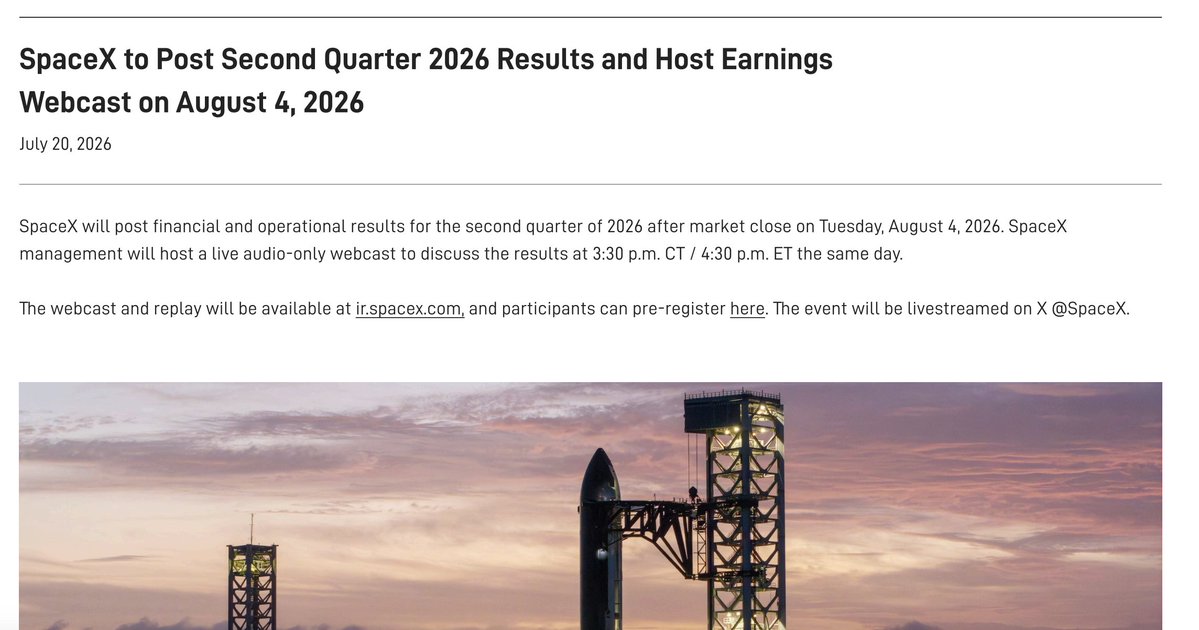
SpaceX and Musk's approach is different. Acquiring Cursor, leasing computing power, and integrating xAI, they follow a vertically integrated route of computing power, applications, and terminals, neither building a general-purpose cloud nor commoditizing models. The market hasn't yet given it a clear pricing anchor; it's more like betting on whether Musk can succeed.
V. A Major Overlooked Risk: Off-Balance Sheet Leverage (The part beneath the iceberg)The seven major AI companies' ASC 842 operating lease commitments total approximately $1.2 trillion, which are off-balance-sheet liabilities. Microsoft shifted some leases from financing to operating, seemingly reducing capex, but the off-balance-sheet commitments actually rose to $329.1 billion. The current cash flow pressure may only be the tip of the iceberg.
The commoditization of AI models is also changing the rules. Open-source models are catching up with closed-source ones; DeepSeek-V4-Pro scores 65.1 overall, GPT-5.4 scores 67.3, prices have dropped 1000 times, and usage has increased 10,000 times. Those who truly profited from this wave were those selling computing power and building cloud infrastructure. Those who bought models missed out.
This earnings season clarifies one thing: AI is no longer a magic buzzword that can cover up everything. The market is starting to examine the fundamentals.
If you can demonstrate demand, explain cost reduction, and make cash flow mismatches manageable, prices will rise. If you can't prove it, no amount of money can change the fundamental problem.
For the next few quarters, just keep an eye on three things: the backlog of cloud orders, whether prices are still rising, whether self-developed chips can reduce costs, and whether free cash flow can avoid becoming a major deficit. If these three things pass, the company will be viewed favorably. If they don't...
425
0
0
39
GiGi 發財豬
07-31 19:34
フォロー
Recently, US-listed cryptocurrencies have been under pressure, with price fluctuations directly impacting earnings reports.
Strategy released its Q2 report after the market closed yesterday, showing a net loss of $8.22 billion, almost entirely due to a write-down of the fair value of its Bitcoin holdings—a pure book loss. As of July 26th, it held 843,775 BTC, with an average cost of $75,476. Because this was announced in advance, it remained largely unchanged after hours, closing at $97.74.
Coinbase reported revenue of $1.22 billion on the same day, below expectations and down approximately 19% year-over-year, with a net loss of $360 million. Declining trading volume was the main reason, and the stock fell 5% to 7% after hours. Bitcoin is currently fluctuating around 64K.
I think these two companies have completely different approaches. Strategy is essentially a Bitcoin leverage tool; GAAP numbers are a lot of noise, but what really matters is the amount of Bitcoin held and their balance sheet. They reduced debt and accumulated cash this quarter, a pragmatic move.
Coinbase is a legitimate business; subscription services are almost half the market, and their market share is hitting new highs, showing increasing resilience. However, in the short term, it's still tied to trading volume.
August has historically been unfavorable for crypto, so funds are on the sidelines. If the price breaks 60,000, both companies will likely exert further downward pressure.
But if it stabilizes or gradually recovers, Strategy's write-downs will reverse quarterly, offering the greatest upside potential. Coinbase, on the other hand, needs to wait for trading volume to truly recover.
In the long term, I'm more optimistic. The market is near the bottom of the cycle, institutional funds are still present, and there's a chance for a rebound in the second half of the year or next year.
Don't chase the price in the short term; wait for more stable price signals before taking action.
DYOR (Not investment advice)
465
0
0
48
Crypto Wesearch 每日幣研
07-31 18:18
フォロー
To view the full content, please subscribe to the Crypto Weekly Report.
Stay informed with weekly macro trends and anticipate alpha gains! 💥
💡 Market Overview
This week, the crypto market transitioned from high levels to consolidation. BTC briefly rebounded above $65,000, but stabilized after falling back due to ETF outflows and pre-Fed meeting caution. ETH remained relatively stable. A combined outflow of approximately $350 million from BTC and ETH ETFs indicates conservative institutional buying.
The Fed maintained interest rates at 3.50%–3.75%, but with three officials supporting rate hikes, hawkish sentiment intensifying, and the economy remaining resilient, the rebound was limited.
Vitalik Deconstructs Diamond iO: How to Bring the "Impossible Obfuscation" Closer to Reality by @VitalikButerin
Cryptographic obfuscation aims to make programs "executable but incomprehensible," a concept previously difficult to implement due to its time-consuming nature. Diamond iO reassembles Attribute Encryption (ABE) and Fully Homomorphic Encryption (FHE) in a simpler way, allowing decryption only when the program is executed correctly.
Vitalik points out three major challenges: decryption threshold, output randomness, and input encoding. Its security relies on two relatively new mathematical assumptions, and efficiency still needs improvement, but its simplicity and ease of collaborative research and optimization are its strengths.
Full content is available on CoinResearch Substack. Subscribe! 🔥
322
0
0
48
飞凡
07-31 18:09
フォロー
Let me share my current thoughts on US interest rates.
Currently, three main forces are vying for dollar capital in the market.
However, their resistance to high interest rates is drastically different:
The US Treasury (backed by the power to levy taxes) and tech giants (possessing massive and stable cash flows) are completely insensitive to interest rates and will continue to issue debt even at high borrowing costs; they can be considered the absolute power players.
The weaker players are primarily ordinary households (first-time homebuyers), small businesses and startups, and commercial real estate.
Because the government and tech giants are continuously engaging in large-scale spending, they are just managing to prop up the economic fundamentals, preventing inflation and aggregate demand from falling. It's just that the weaker players are slowly bleeding money under high interest rates.
This is also the point of contention within the Federal Reserve at this meeting.
Continuing to raise interest rates is no longer very meaningful, because the source of inflation will still be borrowing money at high interest rates, and the weaker players will be driven out of the capital markets by high interest rates.
If the Federal Reserve is forced to cut interest rates this year, it means that ordinary private businesses cannot withstand the pressure.
In essence, the policy makes time extremely expensive; assets without cash flow support will slowly wither away.
In retrospect, this has actually led to the elimination of the weaker players.