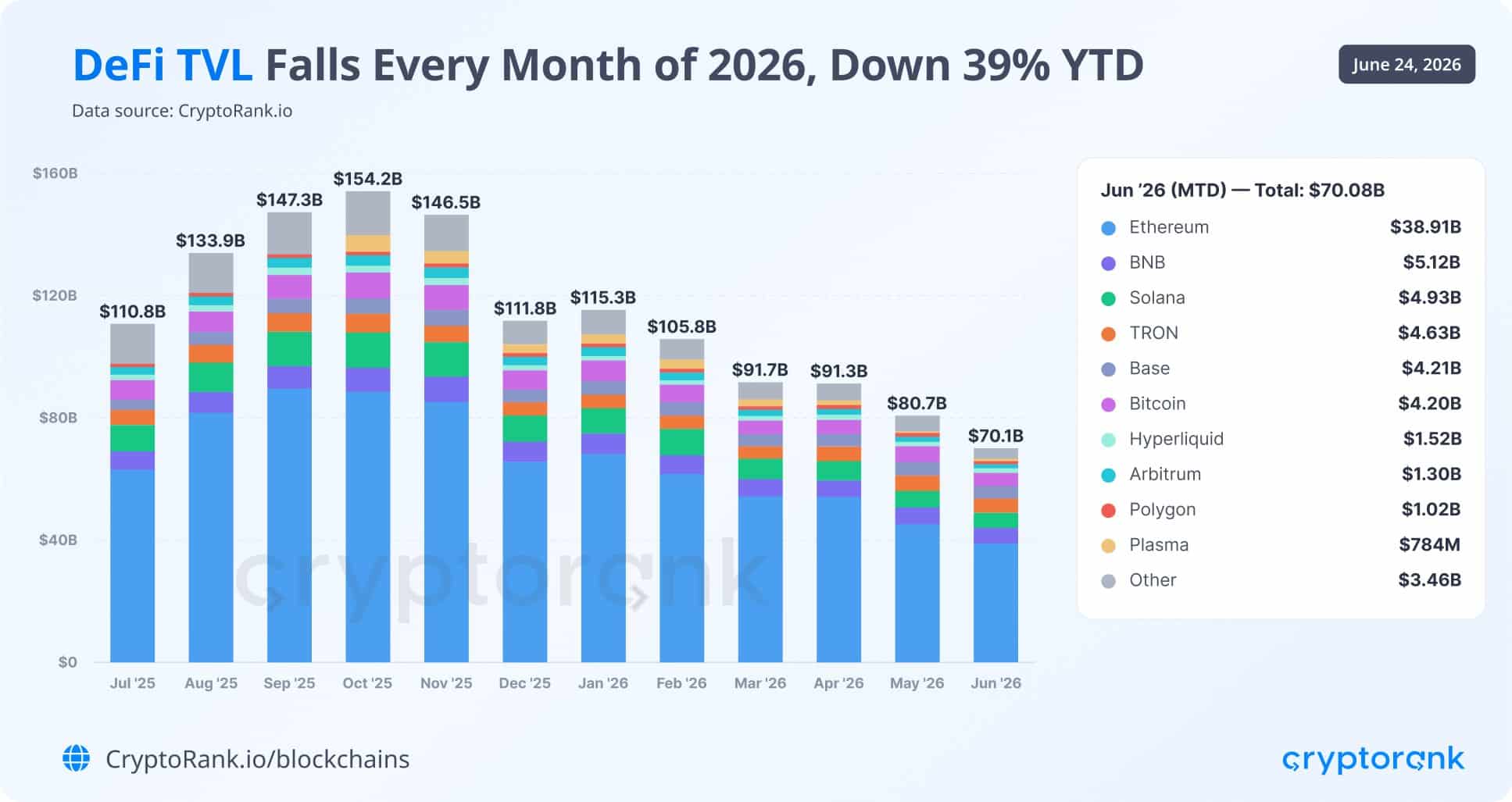
Foreign media reports indicate that DeFi funds have been continuously withdrawing since 2026, with total locked value decreasing from approximately $115 billion at the beginning of the year to nearly $70 billion in June. The article argues that in addition to a decline in market risk appetite, the frequent occurrence of security incidents is further reducing users' willingness to remain on-chain.
TVL continues to decline
CryptoRank data shows that DeFi TVL has been declining every month this year, with a year-to-date drop of approximately 39%. This pullback is even greater compared to the peak of over $150 billion expected at the end of 2025.
The article mentions that the market has cooled down significantly after the last round of expansion, and some funds are withdrawing from high-risk protocols and shifting to more cautious allocations.
The number of attacks increased in the second quarter.
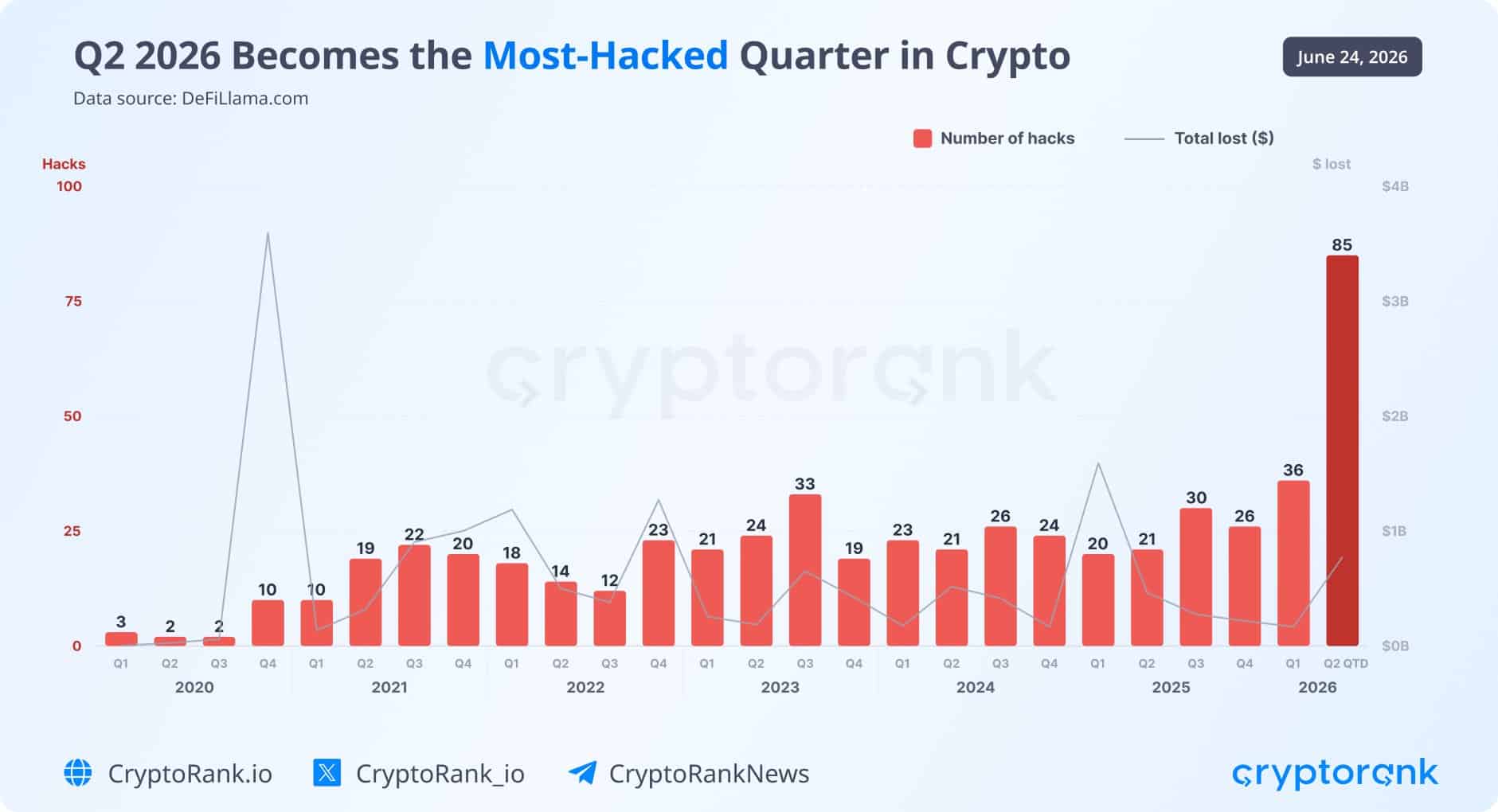
Security is another key theme in the article. CryptoRank data shows that 85 crypto attack incidents were recorded in the second quarter of 2026, making it one of the most concentrated quarters in recent years in terms of the number of incidents.
While the size of a single loss has not yet broken historical records, the increased frequency of attacks is enough to influence users' perception of protocol security. The article argues that after repeated vulnerabilities and theft incidents across multiple protocols, users are less likely to keep their funds on-chain for the long term.
- 85 attacks were recorded in the second quarter of 2026.
- Since 2026, there have been a total of 121 hacking incidents.
- The losses this year have approached $1 billion.
Liquidity hasn't disappeared, but it's become more selective about projects.
The article also mentions that DeFi TVL had previously dropped from nearly $178 billion to about $72.5 billion, while the stablecoin supply remained around $315 billion. This means that liquidity in the crypto market has not disappeared entirely, but rather has not continued to remain on a large scale within DeFi protocols.
The core change lies in more cautious fund selection. Compared to pursuing high returns, users place more emphasis on whether the protocol has a consistent security record, risk control capabilities, and fund protection capabilities.
The article argues that until the protocol can more effectively prove its security, the recovery process of DeFi TVL may continue to be iterative, and a uniform rebound is unlikely.