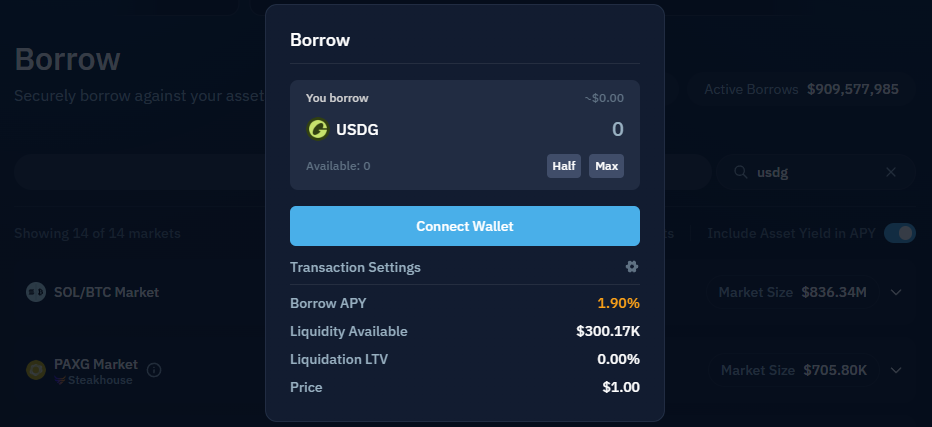


Aave has deployed its V4 lending protocol on a public blockchain outside of Ethereum for the first time, launching on the Avalanche network. The focus of this launch is not retail lending, but rather the institutional credit market centered around tokenized real-world assets. Following the announcement, the price of AAVE continued to weaken along with the overall crypto market, failing to strengthen despite the product launch.
First deployment of V4 outside of Ethereum
Aave stated that Avalanche is the first V4 network deployed outside of Ethereum. The new version introduces a Hub and Spoke architecture, allowing different lending markets to set collateral ranges and risk parameters according to their own needs, while continuing to connect to shared liquidity pools.
The goal of this design is to allow lending markets for specific asset types to operate independently, without having to completely separate liquidity into independent pools. For institutional scenarios, this means the protocol can establish more segmented market structures for different assets.
RWA lending becomes a new focus
Aave plans to advance a multi-asset-backed lending market on Avalanche, covering the following areas:
- Tokenized US Treasury Bonds
- Money market funds
- Private Credit and Corporate Bonds
According to the project team, one of the first markets will allow institutions to borrow using tokenized collateral and access the protocol's existing liquidity network. This also shows that Aave is making RWA lending a key direction for its V4 expansion.
Aave founder Stani Kulechov stated that Avalanche already has a relatively mature Aave market, and its tokenized asset ecosystem is also growing, making it suitable as the first external expansion network for V4. He mentioned that one of the earliest planned markets on Avalanche revolves around tokenized asset-backed lending.
Avalanche recently ramped up its tokenization infrastructure efforts.
This deployment is also related to Avalanche's recent moves in cross-chain and tokenization. Previously, Aave had expanded its use of Chainlink's cross-chain interoperability protocol CCIP and made it the default cross-chain infrastructure for the Aave App and Stable Vaults.
According to Aave, CCIP currently covers functions such as token transfer, vault management, governance execution, GHO stablecoin transfer, and governance messaging. A unified interoperability layer helps the protocol advance into new markets within a multi-chain environment.
Furthermore, Bridgetower announced on July 13th that it had completed the tokenization of over $11 billion in real-world assets on Avalanche using Chainlink infrastructure, including the Arizona Copper-Gold project. According to reports, this transaction also propelled Avalanche to fifth place in RWA.xyz's ranking of net inflows of real-world assets.
AAVE prices remain under pressure.
Despite the new progress brought by the product launch, the short-term performance of the AAVE token has not improved significantly. Data in the article shows that AAVE is trading at $96.66, a 24-hour drop of over 2%, continuing the downward trend of the past week.
This indicates that protocol expansion and ecosystem progress have not yet been able to offset the overall market pressure caused by Bitcoin volatility. However, from a product perspective, Aave has begun to move V4 from a single Ethereum deployment to a multi-chain expansion phase targeting institutional and RWA scenarios.