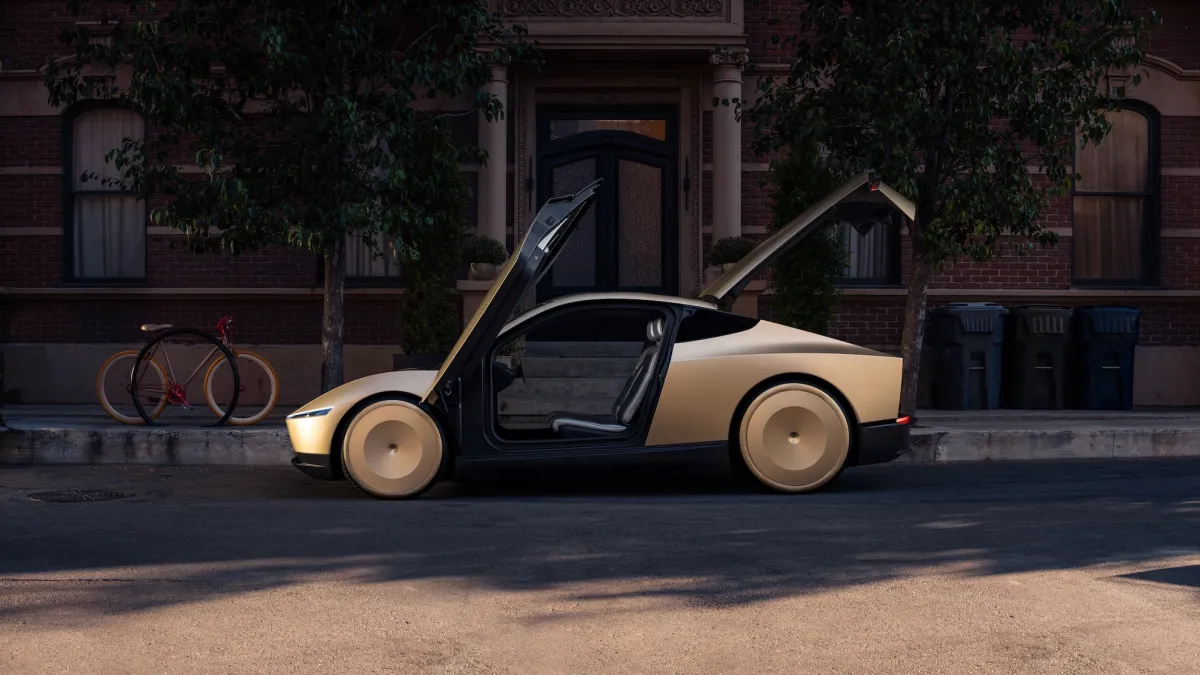


Tesla launched a survey form before an event in Austin Cybercab, asking external organizations if they are interested in participating in the construction of its robot taxi network. Although this does not yet prove that the company has decided to sell autonomous vehicles to the public, it at least indicates that its expansion strategy is shifting from complete self-operation to incorporating partners.
From car owner sharing to fleet operation
For many years, Musk has been talking about a low-cost, large-scale network of robotic taxis. The early concepts mainly revolved around individual car owners. As early as 2016, he proposed that Tesla car owners equipped with autonomous driving software could future connect their vehicles to the platform, operate them for others when not in use, and generate income from it.
This approach was later referred to as Tesla Network. In 2019, Musk also stated at the Autonomy Day event that car owners could join Tesla's own mobility app by integrating their autonomous vehicles in a similar manner to how they connect with ride-hailing platforms. In 2020, he publicly predicted that Tesla would launch autonomous robot taxis in certain regions the following year.
However, this model was never truly implemented. Afterwards, Tesla focused on testing and operating its own services. It initially used Model Y for robot taxi testing, and then switched to a specially designed Cybercab.
Form releases cooperation signal
The newly launched intention form states phrases such as "Help us build a robot taxi network," indicating that Tesla may no longer insist on operating everything in-house and is considering opening up some operational aspects to external parties.
- Purchase of Cybercab fleet
- Build travel hubs and infrastructure
- Participate in event collaborations or other forms.
Currently, Tesla has not specified what specific model it will adopt in the future, nor has it disclosed whether third parties will be able to directly own the vehicles, operate them independently, or merely undertake some management responsibilities.
Racing teams already have competitors in track management.
As the robot taxi market heats up, the number of companies specializing in autonomous vehicle fleet management is increasing. TechCrunch mentions that African fintech company Moove has begun to expand its autonomous vehicle fleet management business. The company initially provided vehicle financing services mainly for ride-hailing drivers.
Moove completed a $250 million financing last month, raising its valuation to $2.1 billion. The company currently provides fleet operation services for Waymo in Phoenix, Miami, and Las Vegas, and will soon expand to London as well. Its CEO previously stated to TechCrunch that the company also plans to own these vehicles in the future.
Apart from Moove, Uber also collaborates with fleet management companies such as Avomo and New Horizon when deploying robot taxis in the market. Traditional car rental companies like Avis and Hertz are likewise seeking opportunities in this field.
If Tesla ultimately opens up Cybercab to external fleet operators, more small and medium-sized operators may enter the market. This will help Tesla to expand its network more quickly and accelerate the growth of its robot taxi business.