





Last week, Thailand suspended the construction of 49 data center projects, indicating that the controversy surrounding the infrastructure expansion related to AI is intensifying in Asia. As countries have previously made great efforts to attract investment in data centers, issues such as power consumption, water usage, security, and community capacity are beginning to become more pressing concerns. Developers are also readjusting their construction plans accordingly.
Thailand suspends 49 projects
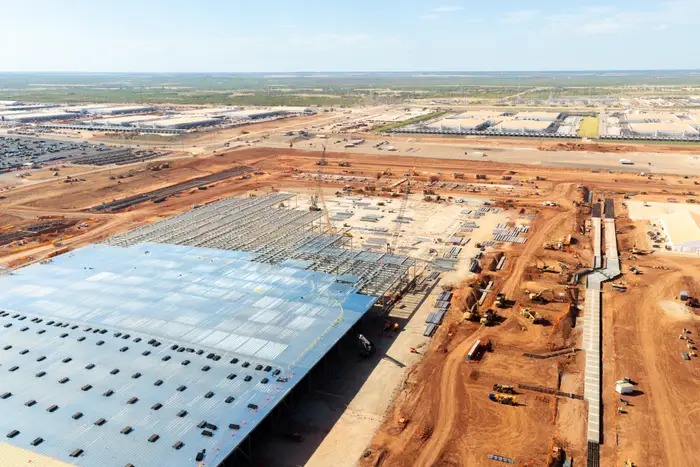
On September 4, Thai regulatory authorities suspended the construction of 49 data center projects and began to formulate new rules for resource use and security. Previously, several Asian countries had actively attracted data centers by offering tax incentives, land discounts, as well as support for electricity and water resources.
Tech companies such as Microsoft and Amazon have pledged to invest billions of dollars in Asia in recent years for building new data centers and AI infrastructure. However, as demand has risen rapidly, the progress of these projects has begun to be limited by practical conditions.
Design begins to draw closer to the community.
Bridge Data Centers, the Chief Investment Officer, stated that there is a physical limit to the speed at which data centers can be constructed on a large scale, and there have been obvious delays and challenges in project delivery. Architectural design firm Gensler also mentioned that there has been opposition to data center expansion in many places around the world.
In Asian cities with tight land availability, data centers have begun to develop towards higher floors, with some projects reaching 10 to 11 stories in height and being located closer to residential areas. This forces developers to make more adjustments in terms of noise reduction, appearance, heat management, and surrounding facilities.
Some customers are still attempting to utilize the residual heat generated by data centers to heat swimming pools in winter, in order to improve energy efficiency and alleviate external concerns regarding facilities with high energy consumption.
Unsolved issues with water and energy supply pressure
Data centers typically require a large amount of fresh water to cool the chips. In Johor, Malaysia, Bridge Data Centers has built wastewater treatment facilities to recycle municipal wastewater in order to reduce the impact on the city's drinking water supply. The company stated that the unused treated water is also returned to the community.
At the same time, data center buildings are typically designed to last for 20 years, but the lifespan of the latest AI chips may be less than 5 years. To adapt to faster hardware replacement, Bridge is adopting modular materials, allowing the internal equipment in the data room to be replaced like building blocks.
However, the pressure for sustainability in data centers has not disappeared. Data from the International Energy Agency shows that approximately 56% of the energy consumed by data centers worldwide still comes from coal and natural gas. This also puts pressure on companies' own emission reduction targets.