




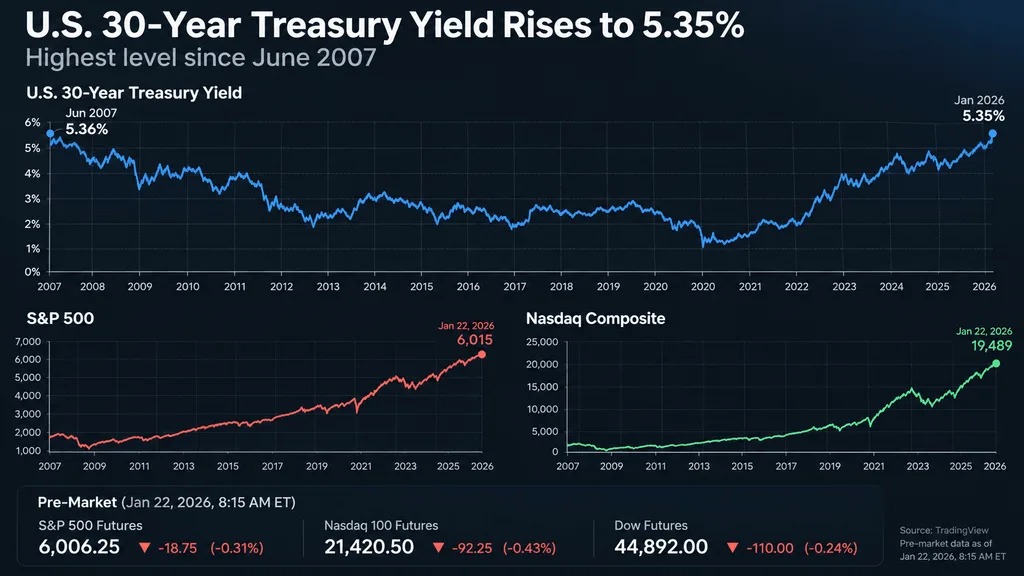
U.S. long-term Treasury yields have risen again, putting already stressed U.S. stocks under new valuation pressure. The yield on 30-year Treasuries has climbed to 5.35%, near its highest level since June 2007; the yield on 10-year Treasuries is also approaching 4.9%. With oil prices and inflation pressures remaining high, rising long-term interest rates are increasing the financing costs for businesses and households.
Long-term interest rates have returned to high levels.
The yield on 30-year U.S. Treasury bonds has once again risen above 5%, which is seen by the market as a clear sign of an increase in long-term funding costs. Unlike short-term interest rates, long-term yields have a more direct impact on mortgage loans, corporate long-term borrowing, and the discount rates used in stock valuation models.
For the stock market, the issue is not just that yields have returned to around 2007 levels; more importantly, the returns on risk-free assets have once again become more attractive. When the yield on 30-year U.S. Treasury bonds exceeds 5%, some funds will reconsider the returns between holding long-term government bonds and overvalued stocks.
AI Tech stocks face pressured valuations
High-growth sectors are more sensitive to changes in long-term interest rates because the profit expectations of such companies are largely focused on the coming years. When interest rates rise, the value of future profits discounted to the present decreases, making it easier for valuations to be compressed.
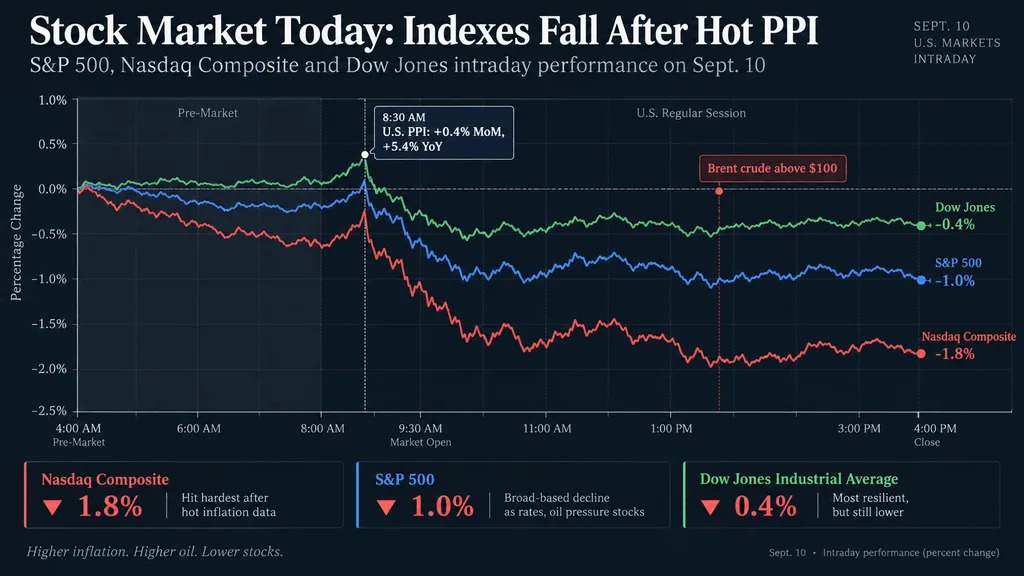
The article mentions that high-growth companies such as NVIDIA and AMD may face greater pressure than more established enterprises that can realize profits sooner. On Thursday, as U.S. Treasury yields continued to rise and oil prices remained high, both the Nasdaq and S&P 500 index futures weakened.
$6 billion in buybacks failed to stabilize the bond market
The U.S. Treasury Department increased the scale of long-term government bond repurchases to $6 billion, tripling the previous limit, but the market response was lukewarm. Reuters reported that after the announcement, long-term yields continued to rise, indicating that investors are more concerned about deficits, inflation stickiness, and the supply pressures in the U.S. government bond market, which is worth approximately $32 trillion.
This means that while the Treasury Department is attempting to improve liquidity, the market is demanding higher returns in order to be willing to hold U.S. Treasury bonds for a longer period. The core factors driving up yields remain the large scale of government borrowing, the persistent inflation risk, and the weak demand for long-term bonds from the market.
The true meaning of comparison in 2007
The 30-year yield last touched 5.35% in June 2007, but this historical comparison does not necessarily mean that a financial crisis will repeat itself. What is more noteworthy is that financial conditions are tightening again.
Rising long-term interest rates will simultaneously push up mortgage rates and corporate financing costs, as well as the discount rate used in stock valuation. In the low-interest-rate environment of the past few years, tech stocks enjoyed a higher valuation premium; now, however, with long-term U.S. Treasury bonds offering returns of over 5%, this valuation support is facing more direct challenges.
If the yield on 30-year U.S. Treasury bonds continues to rise above 5.35%, the pressure may not remain confined to the bond market but could also further spread to the U.S. stock market and a broader range of risk assets.