S&P Global Acquires OpenZeppelin to Expand On-Chain Risk Assessment
CoinDesk
09-17 21:25
Ai Focus
S&P Global agrees to acquire OpenZeppelin, enhancing its capability to assess the risks of on-chain code for stablecoins and tokenized assets.
Helpful
No.Help

S&P Global agrees to acquire smart contract security company OpenZeppelin, with transaction terms not disclosed. The company stated that this deal will extend its digital assets business beyond issuer credit and reserve assessments to include the security of code behind stablecoins, tokenized funds, and DeFi products.

OpenZeppelin continues to operate independently

The announcement states that OpenZeppelin will retain its original brand and continue to operate as an independent business unit, with co-founder and CEO Demian Brener continuing to be in charge. This transaction still needs to meet the regular delivery conditions.

S&P said that the open-source smart contract library of OpenZeppelin has been widely adopted by the stablecoin and tokenized fund markets. Contracts built on this code library have transferred a cumulative value of over $37 trillion. This refers to the historical cumulative transfer amount, not the asset size managed or held by OpenZeppelin.

Standard & Poor's adds the element of code risk

The core of this acquisition lies in addressing a portion of risks that are less covered by traditional rating systems: the smart contract code on which blockchain products rely for their operation. Even if a project has sufficient reserves and a stable credit status, issues may still arise due to contract vulnerabilities.

S&P said that as banks and asset management institutions advance with blockchain-based products, the market needs a more unified approach to technical risk assessment. The company hopes to use this opportunity to develop a new generation of blockchain security assessment, benchmarking, and data services to support the migration of capital markets onto the blockchain.

  • The coverage includes stablecoins, tokenized funds, and DeFi products.
  • The focus extends from main body risks to code and technical risks.
  • It is not expected to have a significant impact on financial results after the transaction is completed.

Digital asset business continues to expand.

OpenZeppelin was established in 2015. In addition to providing an open-source contract library, it also offers on-chain security assessment and secure development services. Standard & Poor's states that the company has completed over 900 security projects, helping clients identify more than 10,000 vulnerabilities before their code goes live.

Over the past year or so, S&P has continued to expand its presence in the digital assets sector. Previously, the company had launched a stability assessment for stablecoins and issued credit ratings for the DeFi protocol and Sky. With this acquisition, its scope of coverage will extend further from "evaluating entities" to "evaluating code" as well.

Earlier this week, Standard & Poor's also led a strategic investment in the crypto data company Kaiko, raising the total amount of its Series B financing to $110 million. In early September, the S&P Dow Jones Index and Kaiko launched a joint digital asset index series; in March of this year, the two parties also completed the tokenization of the iBoxx U.S. Treasury bond index.

Tip
$0
Like
0
Save
0
Views 27
WalletJYS reminds readers to view blockchain rationally, stay aware of risks, and beware of virtual token issuance and speculation. All content on this site represents market information or related viewpoints only and does not constitute any form of investment advice. If you find sensitive content, please click“Report”,and we will handle it promptly。
Submit
Comment 0
Hot
Latest
No comments yet. Be the first!
Related
Solana reduces target block time to 250 milliseconds
Solana has reduced the time for slot to 250 milliseconds, resulting in faster network updates. However, the computational and data synchronization capacity that a single slot can handle has decreased, while the overall capacity remains essentially unchanged.
CoinDesk
·2026-09-18 14:26:13
28
Coinbase Reaches Over 3,000 U.S. Banks Through Cooperation
Coinbase and Stablecore collaborate to advance the integration of encryption services on the banking side, covering over 3,000 American banks and credit cooperatives that can be reached through technical systems.
crypto.news
·2026-09-18 12:15:15
31
Coinbase and Stablecore connect with community banks: Covering 3,000 is a potential, not all have already been launched
On September 16th, Coinbase announced a partnership with Stablecore to integrate digital asset custody, trading, and stablecoin payments into the existing systems of community banks, regional banks, and credit cooperatives in the United States. This collaboration has already been implemented in financial institutions including those in Texas under Amarillo National Bank. The technology provided by Stablecore can reach over 3,000 banks and credit cooperatives, but being "reachable" does not mean that all of these institutions have already adopted it, nor does it imply that thousands of banks will simultaneously offer crypto services on that day.
币界网
·2026-09-18 09:55:41
194
1.9 trillion euro fund platform partners with Solana: Project Harmonia launches first, not yet fully online
Another bridge has been built between traditional fund distribution and public blockchains. On September 16th, the Solana Foundation announced the launch of Project Harmonia, which connects tokenized funds on the Solana blockchain through the global fund distribution network Allfunds. As of June 30, 2026, this project managed a scale of approximately 1.9 trillion euros, connecting over 3,300 asset management firms and financial institutions. Such a scale has drawn attention to the project, but at this stage, the focus is first on collecting proposals; it's not that 1.9 trillion euros in assets have already been moved onto the blockchain.
币界网
·2026-09-18 09:54:30
190
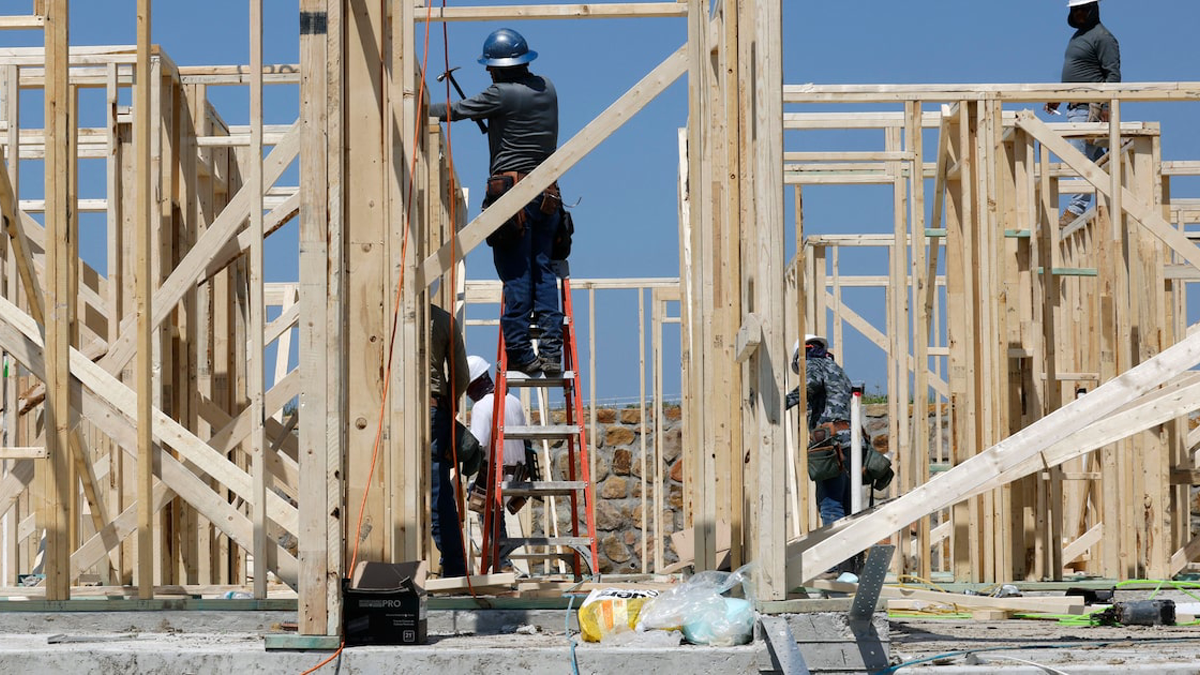
U.S. New Home Starts Fall to 1.275 Million in August: Single-family Homes Recover, but That Can't Hide a Sharp Drop in Completed Homes
U.S. housing construction delivered a mixed report in August. On September 17, the U.S. Census Bureau and the Department of Housing and Urban Development announced that the seasonally adjusted annual start of new homes totaled 1.275 million units, a decrease of 2.6% from the revised figure for July and a year-over-year decline of 1.2%. However, the start of single-family homes rose to 918,000 units, an increase of 7.6% from the previous month. The simultaneous weakening of the overall figure and the rebound in single-family homes indicate that the decline was mainly due to multi-family residences, rather than a cooling across all types of housing.
币百科
·2026-09-18 09:52:27
36
View More