

The major stock indices also recorded gains this week, although bond yields remain one of the biggest risks hanging over the market.
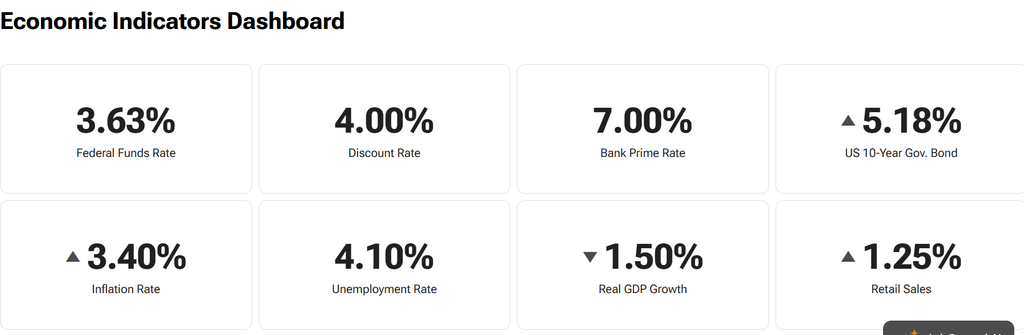
The yield on 10-year U.S. Treasury bonds closed at 5.17%. Gold ($CM : $XAUUSD) closed at around $4,322.40, and crude oil ($CM : $CL) fell 2.01% on Friday to trade near $92.79. Bitcoin ($BTC-USD) closed at around $83,809. VIX fell 2.94% to 14.87.
While U.S. Treasury yields remain above 5%, the stock market continues to show resilience.
This week, the bond market remains one of the main forces affecting the stock market.
The yield on 10-year U.S. Treasury bonds has remained above 5%, while the yield on 30-year bonds has risen to its highest level in over 20 years, as investors continue to demand higher returns for holding U.S. government debt.
However, the strength observed at the index level obscures the weaker performance of most sectors in the market.
8 out of the 11 sectors of the S&P 500 index were in a downward trend in September, and the equal-weight version of the S&P 500 index fell by about 4% this month. Financials and utilities were among the sectors that performed weaker.
This makes the market increasingly dependent on the largest companies by market value. Higher yields on U.S. Treasury bonds will put particular pressure on growth stocks, as they reduce the value of future earnings when calculated in today's dollars, while also providing investors with alternative bond options with higher yields.
IonQ surges after a breakthrough in quantum computing
IonQ, Inc. (After IONQ announced new progress in real-time quantum error correction, they became one of the stocks with the largest gains this week.)
The company stated that its researchers have developed and successfully tested what they claim to be the industry's first end-to-end, real-time quantum error-correction decoder, which is capable of operating on a single standard CPU.
Meanwhile, artificial intelligence remains another major theme supporting large tech stocks this week.
Meta Platforms ( META ) continues to expand the AI layout around its Muse application, and launches new products at the Connect 2026 event.
These advancements occur at a time when Meta continues to make substantial investments in AI infrastructure, models, and consumer-grade products. Investors are increasingly concerned about whether these expenditures can be transformed into new sources of revenue and whether they can lead to deeper user engagement in Meta's applications and hardware products.
Microsoft Corporation ( MSFT ) has also been boosted by the optimistic sentiment in the market regarding its AI strategy.
Copilot has become one of Microsoft's main attempts to convert its substantial investments in AI infrastructure into recurring software revenue. The demand for Azure AI services and the adoption of paid Copilot products will continue to be important indicators to measure whether this strategy generates sufficient growth to offset the costs of data center expansion.
Alphabet ( GOOGL ) also rose, with investors continuing to favor those largest companies that are expected to benefit from corporate and consumer AI spending.
Consumers face high interest rates and ongoing price pressures.
The economic outlook for American consumers is not so optimistic.
According to a survey by the University of Michigan, consumer confidence has dropped to its second lowest level in 74 years, due to inflation and high prices continuing to suppress household confidence.
Housing is also another point of pressure.
The average interest rate for 30-year fixed-rate mortgages in the United States has risen to 7.45%, the highest level since January 2025. Higher borrowing costs will make housing more unaffordable and may further dampen real estate market activity, which is already troubled by high housing prices and insufficient affordability.
Costco Wholesale Corporation ( COST ) indicates that a large portion of the $184 million in tariff refunds is planned to be used to lower the prices of goods including fresh produce, meat, and household items.
This measure comes at a time when consumers are exceptionally sensitive to prices. For retailers, if borrowing costs and inflation remain high, it may become increasingly important to protect profit margins while maintaining customer flow.
Next Week Outlook
The coming week will once again bring the Federal Reserve and interest rates back into the center of market attention.
The employment report for September is scheduled to be released on Friday, October 2nd. Economists surveyed by Reuters expect that the U.S. economy will create 100,000 new jobs, and the unemployment rate is expected to remain at 4.2%.
Before the release of this report, the Federal Reserve had already raised interest rates by 0.25 percentage points on September 16th, and hinted that there might be another rate hike before the end of the year.
If the employment report far exceeds expectations, it could reinforce market expectations for another interest rate hike by the Federal Reserve at its October meeting, especially since employment remains strong enough for policymakers to continue to combat inflation.
Investors will also encounter another important data point earlier this week – the Personal Consumption Expenditures (PCE) price index, which is the inflation indicator favored by the Federal Reserve.
The previous report showed that the core PCE grew by 3.3% year-on-year, still far exceeding the Federal Reserve's inflation target of 2%.
Therefore, the combination of employment, inflation, and bond yields is particularly important for the stock market. Weak data may ease some of the pressure on U.S. bond yields, while stronger labor market or inflation data could reinforce the expectation that interest rates will remain high for a longer period.
For the market, two themes are still in conflict with each other. Artificial intelligence and technology spending continue to support some of the largest stocks in the major indices, while yields on U.S. Treasuries above 5%, high mortgage loan rates, and ongoing inflation are creating tighter financial conditions for the broader economy.
Next week's employment and inflation data will help determine whether these two forces can continue to coexist, or whether higher interest rates will begin to exert greater pressure on the stock market's recent resilience.
Financial reports and ex-dividend announcements to be released soon
The financial report schedule for the week of September 28th is relatively light, but there are still several large companies planning to release their results. Carnival Corporation ( CCL ) will be the first to disclose its figures on Monday, while Micron Technology ( MU ), Nike ( NKE ), and Accenture ( ACN ) are the key companies worth paying attention to in the second half of this week.
Carnival will release its financial report before the opening on Monday. The schedule for Tuesday includes Micron, Jabil ( JBL ), and Jefferies Financial Group ( JEF ). Nike, Accenture, McCormick & Company ( MKC ) will be announced on Wednesday.
Income-oriented investors will also face a busy ex-dividend schedule this week. Well-known companies such as Realty Income, American Tower ( AMT ), Deere ( DE ), Cisco Systems ( CSCO ), Bristol - Myers Squibb ( BMY ), Philip Morris International ( PM ), and Air Products and Chemicals ( APD ) will all conduct ex-dividend transactions this week.
Financial Report Outlook
This cruise operator is the largest company on the Monday financial report schedule, and will provide investors with another perspective on consumers' needs for travel and discretionary spending.
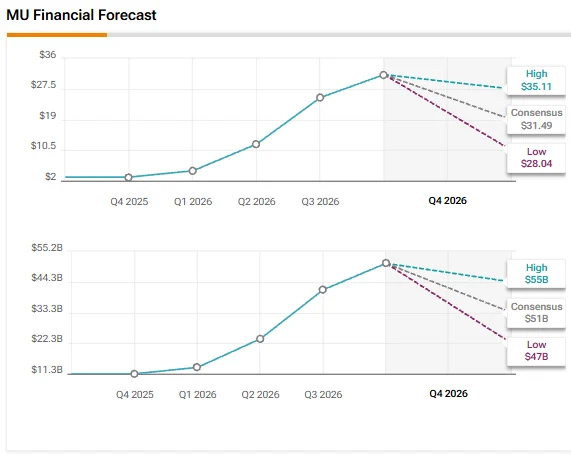
On Tuesday (September 30th), Micron is the largest company scheduled to announce its financial results. TipRanks's financial calendar currently shows that its earnings per share forecast is $31.52, with revenue estimated at approximately $51.07 billion.
Ex-dividend date this week
On Monday, September 28th, Keurig Dr Pepper ( KDP ) will ex-dividend, with a dividend of $0.23 to be paid approximately 12 days later. The indicative dividend yield for this stock is 2.88%.
Telef ô nica Brasil ( VIV ) stands out, with an indicative dividend yield of 7.46% and a dividend of $0.06.
On Tuesday, September 29th, Ericsson ( ERIC ) will conduct a dividend ex-dividend, distributing a dividend of $0.16, with an indicative dividend yield of 3.28%.
Nintendo ( NTDOY ) will ex-dividend, paying a dividend of $0.07, to be paid in about two months. Its indicative dividend yield is 4.51%.
TC Energy ( TRP ) will distribute $0.62 next month, with an indicative dividend yield of 4.22%.
The agenda for Tuesday also includes several international companies, such as Sony, SNEJF, SoftBank, Hitachi, Panasonic, Tokyo Electron, Subaru, and Mitsui.
On Wednesday, September 30th, Realty Income will ex-dividend, with a dividend of $0.27 to be paid approximately 18 days later. The indicative dividend yield for this stock is 5.84%.
AGNC Investment ( AGNC ) stands out, with an indicative yield of 14.97% and a dividend of $0.12, to be paid in about 12 days.
Deere will distribute $1.62 next month, with an indicative yield of 0.94%; U.S. Bancorp ( USB ) will pay $0.54 in about 18 days, with an indicative yield of 3.51%.
W. P. Carey ( WPC ) will ex-dividend, paying a dividend of $0.95, to be paid in about 18 days. Its indicative yield is 5.60%.
On Thursday, October 1st, Air Products, and, and Chemicals will ex-dividend, with a dividend of $1.81 per share, expected to be paid next month. The indicative dividend yield for these shares is 2.56%.
Progressive ( PGR ) stands out, with an indicative yield of 6.76% and a dividend of $0.10, to be paid in about 12 days.
Marsh and McLennan ( MRSH ) will pay $0.99 in about two months, while Cardinal Health ( CAH ) will pay $0.52 in about 18 days.
On Friday, October 2nd, Cisco Systems will ex-dividend, with a dividend of $0.42 to be paid approximately 24 days later. The indicative dividend yield for this stock is 1.56%.
Philip Morris International will pay $1.60 in about 29 days, with an indicative dividend yield of 3.09%.
British American Tobacco ( BTI ) is scheduled to distribute $0.83 in about two months, with an indicative yield of 5.82%, while the indicative yield for Ita and Unibanco is 6.43%.