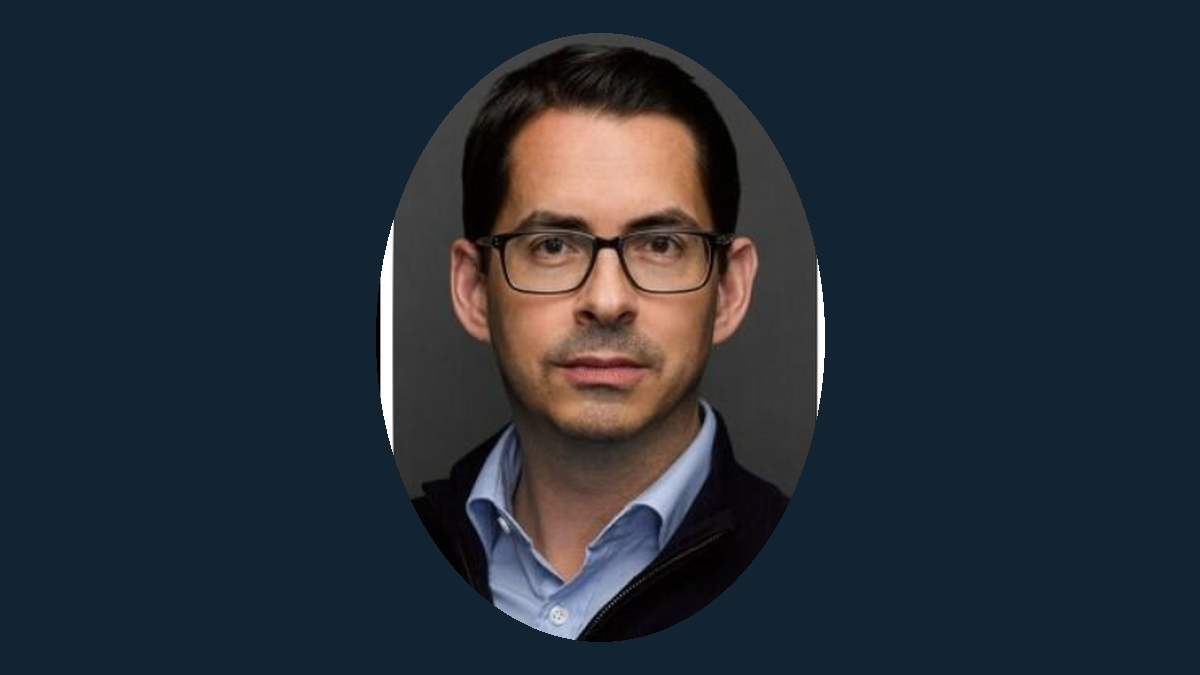


Stablecoin companies often use on-chain transaction volumes to demonstrate growth, but once they truly enter the stage of being listed companies, financial executives have to answer another set of questions: whether their sources of revenue are stable, how they manage reserves and cash, and whether investors can understand the true costs of their business. On September 25th, Circle announced that Jeremy Fox, who had served as Chief Financial Officer for over five years, planned to step down. The company has already begun the process of finding a successor, and Jeremy Fox will continue in his role until the end of December 2026, unless a replacement is appointed sooner. This is a clear transitional arrangement, not an immediate departure, and it cannot be inferred from this that there are financial problems with the company; the announcement did not provide any evidence of such issues.
Circle indicates that Fox-Geen joined in May 2021, participated in building the financial organization, accompanied the company through its initial public offering of $1.2 billion, and has gone through several growth stages. The founder and CEO Jeremy Allaire affirmed his financial leadership and operational discipline in the announcement; Fox-Geen stated that he hopes to take a break after completing the current phase of work. The company did not announce a new candidate for CFO at the same time, nor did it provide a specific date for the successor to take office. For investors and the stablecoin industry, what is truly important to monitor is the continuity of the succession process and business disclosures, rather than automatically interpreting a personnel change as a reversal of direction.
Financial positions in listed companies are much more complex than just “managing accounts.”
The business models of stablecoin issuers differ from those of general software companies. While USDC can circulate rapidly on the blockchain, the issuer's revenue and costs are influenced by a combination of factors such as the returns on reserve assets, distribution arrangements, investment in payment networks, compliance requirements, and market interest rates. Even if the number or total amount of transactions on the chain is high, it does not mean that Circle charges revenue in proportion to each transaction. CFO needs to explain this difference to shareholders using verifiable financial metrics, while also ensuring that public disclosures are consistent with actual operations. Especially during times of interest rate changes, reserve earnings can fluctuate, and a company cannot rely solely on a temporarily favorable macroeconomic environment to sustain its long-term competitiveness.
In recent years, Circle has expanded its business from USDC to areas such as payment networks, developer infrastructure, and Arc public chains. New projects require investment in research and development, partner development, and risk control, but the returns may not materialize immediately. Financial managers need to distinguish between products that are already generating revenue and those that are still in the construction or promotion phase; they must also assess the pace of expansion while avoiding overestimating future transaction volumes that could dilute current cash flows. In public materials, terms like "plans," "vision," and "pilots" should not be presented as realized profits, as this is one of the most common misconceptions in the stablecoin industry.
This announcement also reveals an important detail regarding governance: the company has specified a transition period until the end of the year and has hired an external recruitment agency to search for a successor. Such an arrangement can reduce information gaps during the handover process, but it does not guarantee that the successor will definitely take up the position on a certain day. Investors should continue to pay attention to subsequent official announcements, regulatory documents, and quarterly reports, rather than guessing the final candidate based on the initiation of the recruitment process. Personnel appointments are decisions made by the board of directors and management. Market commentators can analyze the challenges of the position, but they should not fabricate internal reasons.
Stablecoin competition enters the details of finance and governance
The market in which USDC operates is no longer just a technical competition of "which blockchain is faster." Factors such as issuance, redemption, transparency of reserves, cross-border payment channels, and the cost for institutional clients to get involved all affect the actual use of stablecoins. For a listed issuer, the financial officer must continuously coordinate external audits, internal controls, capital allocation, and product expansion, while also explaining the relationships between different business lines to the market. For example, the growth of payment networks may increase the use cases for USDC, but it does not necessarily translate immediately into a corresponding increase in the company's net profit; a vibrant public chain ecosystem does not mean that the issuer can obtain all of its value for free.
The tenure of Fox-Geen covered a period during which the crypto industry experienced severe fluctuations. Today, Circle emphasizes both USDC and payment infrastructure, while also fulfilling the disclosure requirements of a listed company. Whether the successor comes from traditional finance or a native crypto enterprise, they must work within these two realms: understanding on-chain settlement and developer needs on one hand, and being knowledgeable about financial reports, risks, capital markets, and regulatory communications on the other. The success of recruitment affects execution and market confidence more so than the possibility that the USDC contract might suddenly stop functioning one day.
For ordinary holders of USDC, this announcement should not be confused with the regular redemption mechanism of stablecoins. The announcement discusses changes in company management positions and does not announce any changes to the issuance, reserve arrangements, or user rights of USDC. If there are various rumors in the market suggesting that "there are issues with the reserves due to the departure of CFO," it is necessary to first find official financial disclosures, reserve information, or regulatory data before making any judgments. Presenting unverified speculations as facts can create additional noise in the already highly sensitive payment market.
Therefore, when evaluating this change, one cannot rely solely on a single resignation announcement, nor is it appropriate to deduce the reasons from the currency price or short-term stock prices. There are three key aspects that can be examined: whether the company has completed the orderly handover as promised, whether the new CFO can clearly present the business and costs, and whether Circle's investments in new areas such as payments and Arc can generate sustainable returns. The announcement provides a starting point for transition, not the final outcome. For the stablecoin industry to move towards more mature financial infrastructure, in addition to technical throughput, it also requires these ordinary yet critical financial and governance capabilities.