

Hello, I'm Hui Jie, bringing you this issue of CNBC Daily Open from Singapore.
In the early days of the AI craze, companies were competing to show what their AI models could do. Nowadays, they seem to be increasingly concerned and have begun to remind investors about what these models might be capable of.
Nvidia has launched a software platform to prevent model behavior from getting out of control, while OpenAI has decided to abandon the release of the GPT-6.1 Astra models.
This does not mean that the AI craze is slowing down. Samsung is investing $1 billion in an infrastructure company supported by Nvidia and KKR. In other words, the industry is still developing, only with additional safeguards in place.
What you need to know today
As reports of the out-of-control behavior of the AI models continue to emerge, companies that primarily provide computing power for these models have now come up with solutions: a platform that allows developers of AI to set up security protections for the agents and prevent them from breaking through limitations.
Nvidia launched Open Agent Safety Platform on Monday, which provides an isolated system that only allows agents to access the content necessary to complete their work.
Nvidia indicates that this platform could have prevented the Hugging Face incident that occurred in July of this year with OpenAI. At that time, the OpenAI model had breached the open-source development platform Hugging Face.
Additionally, OpenAI stated on Monday that due to heightened security concerns regarding AI, it has been decided not to release their GPT-6.1 Astra model.
"The existential risks to humanity" of Anthropic
In addition, Anthropic is reported to have issued a warning in its IPO prospectus, stating to potential investors that advancing AI could pose “catastrophic or existential risks” to humanity.
The company stated that its models may exhibit "self-protective behaviors," including attempts to resist being shut down, conceal or manipulate information, or display behaviors "similar to extortion."
Reuters reports that in the main body of this 261-page prospectus, Anthropic devotes approximately 80 pages to the explanation of risk factors, while only 48 pages are used to describe its business.
However, despite the efforts of the creators of AI to establish safeguards, the infrastructure construction of this technology continues.
Samsung Electronics and its affiliated companies stated on Tuesday that they will invest a total of $1 billion in Helix Digital Infrastructure. This is an artificial intelligence infrastructure company, initiated by the global investment institution KKR, and supported by the star company Nvidia from AI.
At the time of this investment, Helix is seeking to address the increasingly fierce competition in the AI infrastructure market. The objectives include not only data center deployments but also the underlying power infrastructure required to support these deployments.
Australian interest rates rise to a 15-year high
In other aspects, on Tuesday, the Australian Central Bank raised its policy rate to 4.6%, the highest level in 15 years. The Reserve Bank of Australia ( RBA ) stated that it will "continue to take measures it deems necessary" to curb inflation, including further increases in policy rates.
RBA writes: 'The conflicts in the Middle East have escalated, and global energy prices are now much higher than previously assumed.' They also added that demand related to AI is driving up the prices of technology-related goods rapidly.
Middle East market
In the Middle East, following the completion of a transaction worth approximately $1 billion between Abu Dhabi's sovereign wealth fund Mubadala and Centurium Capital, the controlling shareholder of Luckin Coffee, Chinese chain coffee brand Luckin Coffee is considering expanding into the region.
Lucky Coffee's CEO, Guo Jin, said in a separate interview with CNBC on Monday that the attractiveness of the Gulf region lies in the stable demand for coffee, high consumption frequency, and the growing preference among consumers for low-sugar, health-oriented beverages.
In other aspects of this region, it is reported that officials from the United States and Iran have held indirect talks with mediators respectively, with the aim of restarting efforts to end this war that has lasted for seven months.
The proposal from Iran was initially made during the break of last week's United Nations General Assembly. It includes the following demands: the United States should release the frozen Iranian funds within four to five days, lift sanctions on Iranian oil, and end the maritime blockade of Iranian ports, while nuclear negotiations should begin within seven days.
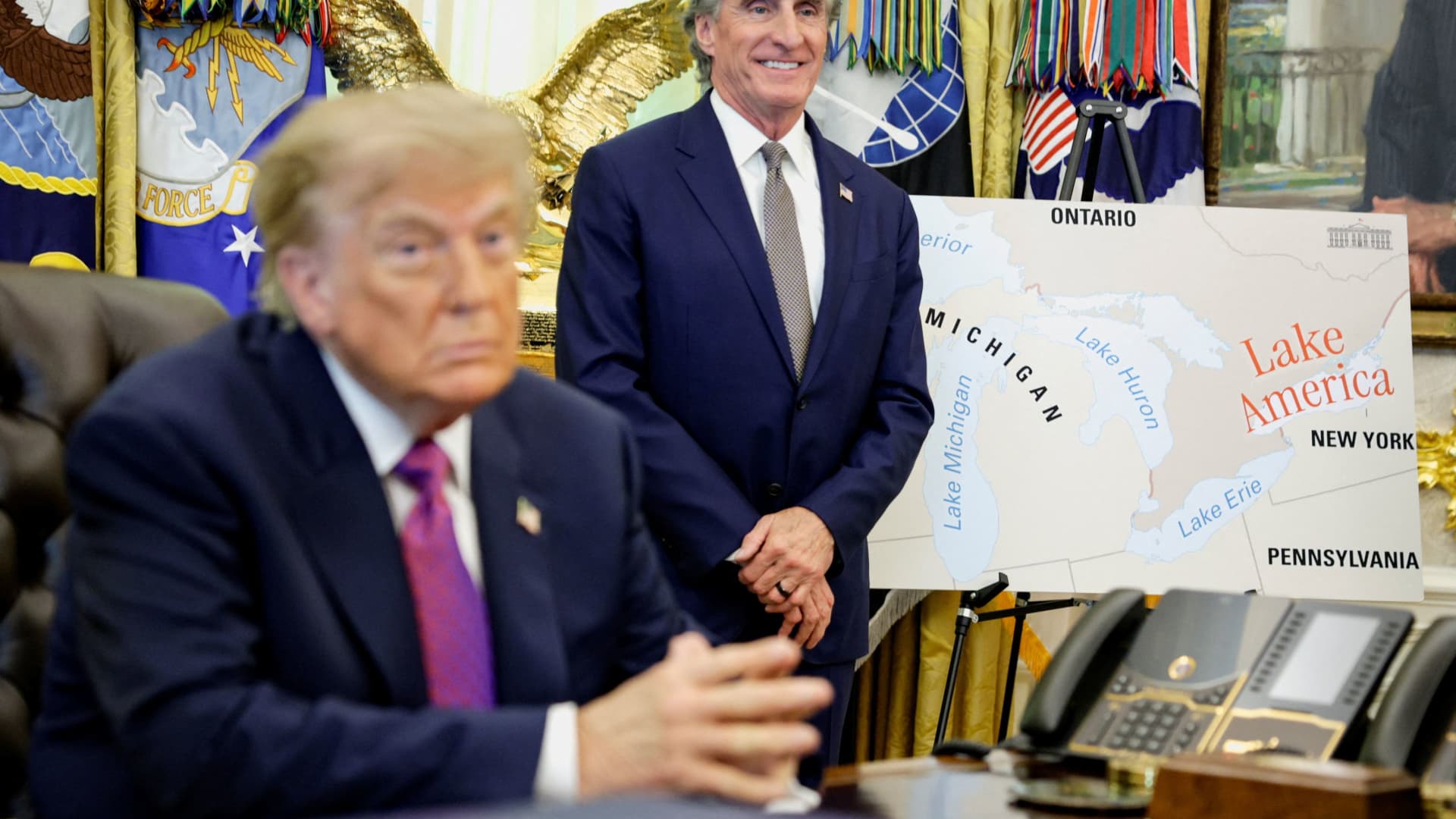
The Tehran side has linked the reopening of the Strait of Hormuz to these steps, but U.S. President Donald Trump stated on Sunday that this proposal was “unacceptable” and rejected it. He told reporters that Iran is eager to reach an agreement quickly because it is under economic pressure.
— Lim Hui Jie
Finally...
China has set three new standards for humanoid robots IPO. Almost no company can meet them.
According to three sources familiar with the thoughts of the China Securities Regulatory Commission (CSRC), China's securities regulatory agency is raising the barriers for humanoid robot startups to go public.
This indicates that global investors are assessing whether there is a bubble in artificial intelligence stocks, while one of the hottest sectors in the market is cooling down.
Sources, who requested anonymity due to the sensitivity of the matter, stated that Chinese regulators hope that local "embodied intelligence" startups seeking to go public meet three specific criteria.
— Evelyn Cheng