

It took Larry and David Ellison two years to build a media giant.
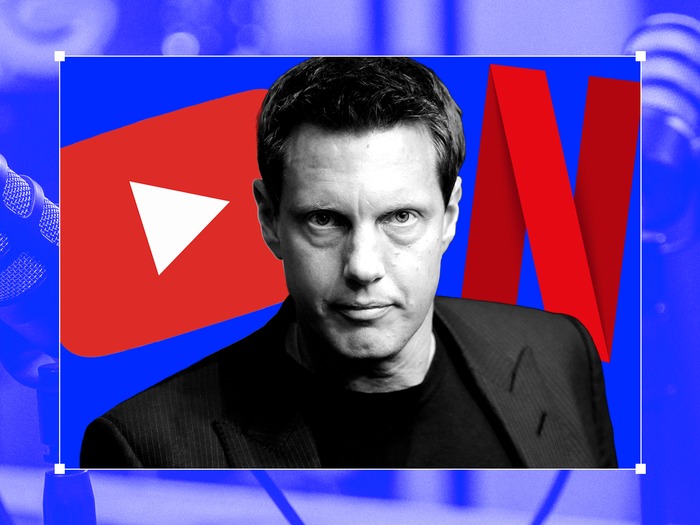
Now, after they have acquired Paramount and are about to bring Warner Bros. Exploration under their umbrella, the real challenges begin: first, they must find a way to integrate these two companies; then, they also have to compete with Netflix and YouTube.
Analyst Rich Greenfield believes that he knows the strategy that the Ellison family must adopt: not only to strengthen their existing Paramount and HBO services by acquiring well-known programs such as UFC, as well as hiring the behind-the-scenes team of "Stranger Things," but also to open their own streaming platform to external creators. This is precisely the core of the YouTube success story, and it increasingly resembles the direction that Netflix is taking.
Moreover, before AI's ability to generate videos potentially changes the concept of traditional media content libraries, it seems even more urgent to think this through as soon as possible: if anyone can produce a movie or TV series with just a computer, what value is left in the film libraries that media companies have invested millions of dollars in building over the years?
Peter Kafka: David Ellison's acquisition of Warner is aimed at turning Paramount into a company that can compete with Netflix. What exactly does he want to create?
Rich Greenfield: Paramount Skydance urgently needs to expand on a large scale. They have set their sights directly on Netflix. They want to become Netflix, and they believe that the fastest way to achieve such scale and importance as Netflix is not just by continuing to invest more money in Paramount, but by acquiring Warner Bros. in order to expand as quickly as possible.
A major decision that remains unresolved at the moment is how they plan to integrate these assets, especially in the area of streaming media. They have mentioned wanting to provide a single service. Will that mean merging everything into one? Will they raise prices to accommodate all content from HBO? Will they retain the HBO brand? There are many issues they are dealing with, and since they have revealed very little information since announcing the acquisition, it is now difficult to analyze the situation.
Over the past two years, there has been ongoing discussion about how to leverage the technological background and resources of the Ellison family to improve the streaming media experience. However, as an ordinary user of Paramount Plus, my main focus is on watching works from Taylor Sheridan and football. So far, I haven't noticed any significant changes.
The content is still far from sufficient, and that is precisely the key issue.
To date, the two largest streaming television services are undoubtedly Netflix and YouTube. I believe their success is due to their broader range of content. The more content you have, the more things you can try.
You really like Taylor Sheridan. I think most people watch the content of Taylor Sheridan or children's content like "SpongeBob". But if everyone watches the same thing, it's very difficult to train algorithms. What you really need is a large amount of diverse signals. This is why YouTube is so outstanding in content discovery, and also why Netflix is stronger than other platforms.
This is also the challenge faced by all these companies. The content diversity of Paramount Plus is not high, and the same goes for HBO Max. Therefore, simply adding the two together does not immediately equal 7.
I think the real question is whether you plan to merge these companies and actively invest more resources into them. Since both of these streaming services lack sufficient content, they need a substantial amount of new content to gain user engagement and increase the average daily usage time.
While Ellison is acquiring its second large production studio and a second extensive film library, AI is making video production much easier. How will this affect the value of large film libraries?
If you ask many experts in the field of AI videos, they will say that the technology to generate a one-minute video almost instantaneously in a laboratory already exists.
You might say that one minute isn't enough to consider something a movie or TV series, but that's not right. TV shows and movies are originally cut into segments—30 seconds, one minute, maybe two minutes—and then put back together again.
We have basically reached this stage. The key is not when the technology will be ready, but when it will no longer be prohibitively expensive to implement on a large scale. My judgment is that this will happen within the next 12 to 18 months. Perhaps I am too optimistic, or it could happen even sooner, but it is clearly on its way.
The content is about to experience a surge. I don't think that content of the HBO level will suddenly explode on a large scale, but I will indeed consider what this means for YouTube. If we have to determine who will be the biggest beneficiary of this trend, it would clearly be more likely to be YouTube, as the quality of content production will improve.
YouTube is a platform that carries content from all over the world. I believe Netflix is also developing in this direction. Will it produce a lot of content on the platform? Yes, but if we look at the total amount of content, the majority of the content on the platform will still be from others. As more content moves towards podcasts and short videos, they are reinforcing this characteristic of the platform.
So, if you were to give advice to the Ellison family, would you suggest that they continue to invest in producing high-end movies and TV series, or would you prefer to turn yourself into a platform as well?
If you want to win, you must become a platform. I don't think any single company can produce enough content on its own.
Can a company be built solely on its own content? Of course. Some companies may choose to narrow their focus and not aim to become platforms. However, if your goal is to win in the streaming media competition, you need more than just traditional TV and movie content from third parties; you need content in various forms.
My children, your children – they can’t distinguish between 30 minutes of content from a Taylor Sheridan series episode that costs $30 million per episode, and 30 minutes of content created by a group of creators. In the next 12 to 24 months, AI will blur the lines between user-generated content and the content you see on Paramount. Consumers are already telling you that you need to do a bit of everything.
NFL
Netflix