

According to Reuters, in a report on Wednesday, Citibank raised its 12-month target price for Bitcoin from $82,000 to $113,000 and its forecast for Ethereum from $2,240 to $3,028. The reasons cited were increased activity in the crypto market, a more favorable macroeconomic environment, and a resurgence in demand through exchange-traded funds (ETFs).
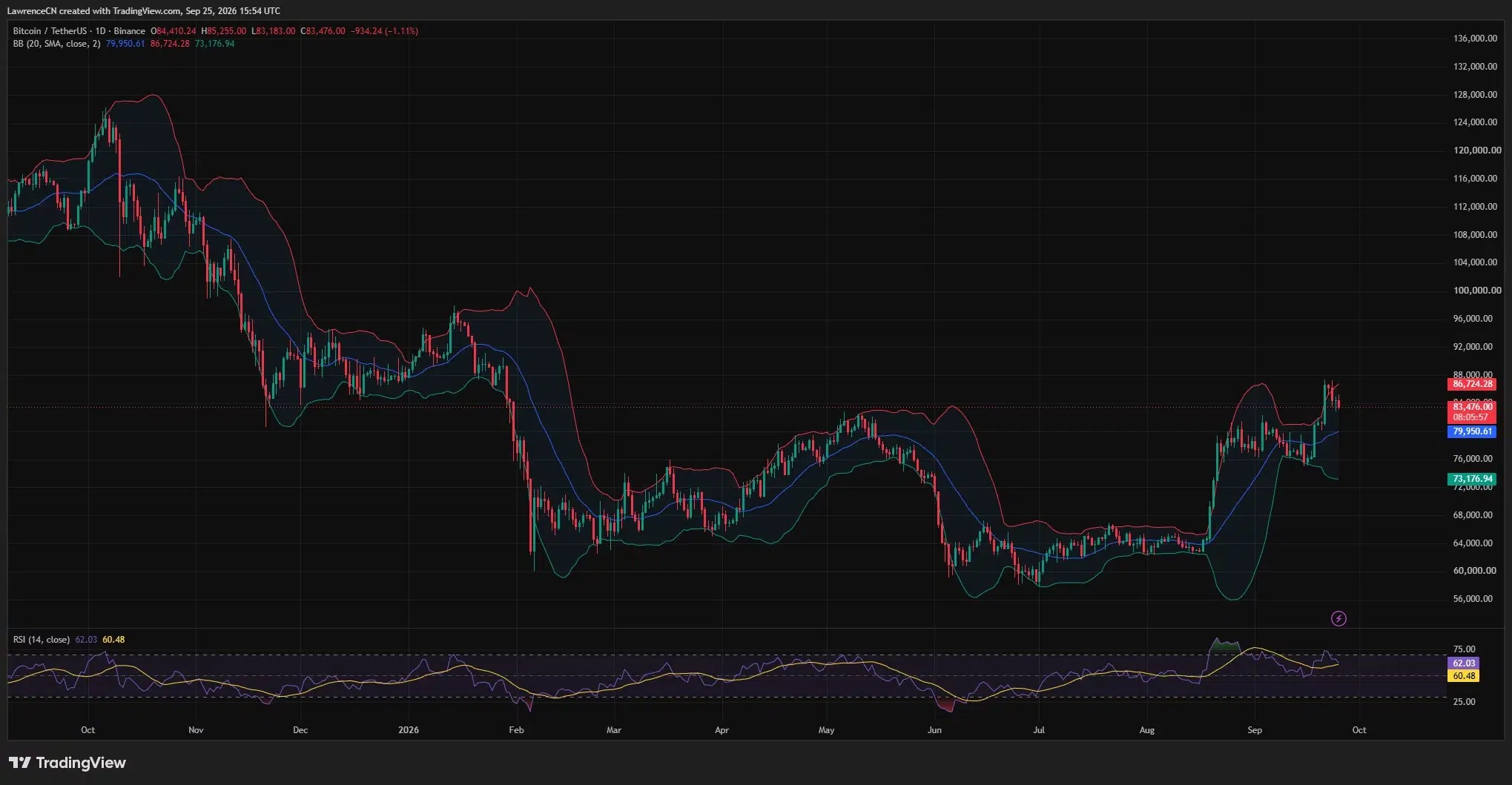
At the time of the report's release, the Bitcoin trading price was close to $84,000, which means Citibank's new target price is about 35% higher than the current level. Ethereum was quoted at around $2,700 at that time, while Citibank's forecast of $3,028 is about 12% higher.
This upward adjustment partially reverses Citibank's more cautious assessment from July. Previously, crypto.news reported that as demand for ETF weakened and progress in US crypto legislation slowed down, Citibank lowered its target price for Bitcoin from $112,000 to $82,000, and its forecast for Ethereum from $3,175 to $2,240.
Citi also lowered these forecasts earlier in 2026, reducing its expectation for Bitcoin from $143,000 to $82,000 and its target for Ethereum from $4,304 to $2,240. ETF Capital flow is one of the main factors in both rounds of adjustments.
Citi expects a net inflow of $5 billion in crypto assets over the next 12 months
As institutional demand begins to shift, Citibank expects crypto assets to see a net inflow of $5 billion in the next 12 months.
The expected inflow of funds for this period is still expected to be slower than during the previous periods of strong demand, but it is believed that advisors and brokers will gradually increase their allocation of Bitcoin. Citibank stated that as financial intermediaries continue to increase their exposure to cryptocurrencies, the flow of funds is expected to become more stable.
As of July 13, US spot Bitcoin ETF recorded a net outflow of $5.8 billion in 2026. Since then, this gap has been closed, and by late September, the capital flow from the beginning of the year to date had returned to a net inflow of about $800 million.
Recent fund activities have supported this change. The US spot Bitcoin ETF recorded a net inflow of $2.39 billion during the trading week from September 21 to September 25, with positive inflows on all five trading days.
On Monday, $999 million was contributed, and on Tuesday, another $714.7 million flowed in. BlackRock's IBIT attracted a total of $1.16 billion for the week, followed by Fidelity's FBTC with $701.6 million in inflows, and ARK 21Shares' ARKB with $294.7 million in inflows.
During the same period, Ethereum funds also saw a rebound. The US spot Ethereum fund ETF recorded positive inflows for five consecutive trading days, attracting a total of $689.8 million over those five days, whereas in the previous week it had seen a net outflow of approximately $140.6 million. BlackRock's ETHA led the way with $326.2 million, while Fidelity's FETH attracted $174.1 million.
The Ministry of Finance's repurchase efforts supported crypto activities.
Citi attributes part of the improvement in its outlook to changes in the macro environment; in the past few months, Bitcoin has underperformed compared to other risk assets.
The U.S. Treasury Department's decision to repurchase more long-term government bonds is one of the factors mentioned by Citibank. The bank stated that this move has contributed to a weakening of the dollar and helped the crypto market regain momentum.
During the same period, demand for ETF also rebounded. US spot Bitcoin funds attracted approximately $5.3 billion in capital after the Treasury Department announced an expansion of long-term bond repurchases in August.
Subsequently, Bitcoin rose by about 40% from its July lows. Reuters reported that over the past three months, BTC and ETH have each risen by nearly 40% and 68%, respectively, narrowing the decline from the beginning of the year to about 4% and 9%.
However, these increases have not alleviated the pressure on the bond market. The yield on U.S. Treasury bonds remains high, with the 10-year yield rising above 5% in late September. Bitcoin fell back after briefly breaking through $87,000, although ETF products continue to attract new funds.
Therefore, while the underlying assets fell from their September highs, the demand for funds remained positive, which also became one of the factors cited by Citibank in its 12-month outlook assessment.
The setback of the CLARITY bill has not shaken Citibank's forecasts
After the U.S. Senate failed to advance the Digital Asset Markets Clearness Act ( Digital Asset Market Clarity Act ) in September, regulation remains another aspect being evaluated by Citibank.
On September 15th, the Senate conducted a procedural vote on advancing the motion for H.R .3633. The voting result for the CLARITY bill was 49 votes in favor and 50 votes against, with another senator abstaining from voting. To move the bill forward to formal debate by the entire Senate, 60 votes are required.
This vote is a procedural one and does not equate to a final veto of the bill. It prevents the Senate from proceeding with debates on the procedure, but members can still continue to negotiate or attempt to move forward again.
Citi stated that this failure narrowed the path for the passage of the Crypto Market Structure Act, but subsequently, a rule announcement issued by the U.S. Securities and Exchange Commission (SEC) alleviated some of the negative sentiment surrounding this setback.
After the Senate's action, Bitcoin saw a rebound. Following the vote on September 15th, by the end of September, the cryptocurrency had risen by more than 10%, and the capital flow of ETF also returned to a positive range in the second half of that month.
Citi's latest forecast is still lower than some of the bank's targets earlier this year. The forecast for Bitcoin was successively lowered from $143,000 to $112,000, and then to $82,000; the previous forecast for Ethereum of $4,304 was first reduced to $3,175, and then to $2,240.
The latest revision sets a target of $113,000 for Bitcoin over the next 12 months and $3,028 for Ethereum. Citibank expects that as configurations are gradually improved, advisors and brokers will bring in approximately $5 billion in capital flows.