Tesla has launched a new feature called “Emergency Drive Away” that allows drivers to shift into gear D and drive away while the vehicle is still connected to a supercharger.
This update was released two months after a shooting incident occurred at a supercharger station in Twin Falls in Idaho. Tesla also continues to limit this feature to the U.S. market.
Tesla's charging team announced this feature on X today, accompanied by a 36-second video and several short follow-up posts:
Prior to this, Tesla vehicles would not switch out of P gear when the charging cable was connected. Users had to first unlock the charging port by touching the screen, using the App, or a button on the charging gun handle, and then wait for the latch to release.
"Emergency Drive Away" has eliminated this locking mechanism, but Tesla has not described it as a mild measure. The company stated, "Using this feature can damage your vehicle and Supercharger." Tesla indicates that this feature is intended for emergency situations only, and intentional misuse will result in "additional penalties." The company did not specify what these penalties are.
This feature requires a software update to version 2026.38.3, and Model S and Model X produced before 2021 are not supported. When car owners inquired whether new hardware was needed for the parking spaces, Tesla responded that this feature can be used at all Superchargers in the United States.
But this is only available in the United States. Tesla stated that this feature is "currently" applicable to Tesla's Superchargers in the US.
Two months after the Twin Falls event
Tesla did not mention this shooting incident in its announcement, but the timing is hard to ignore.
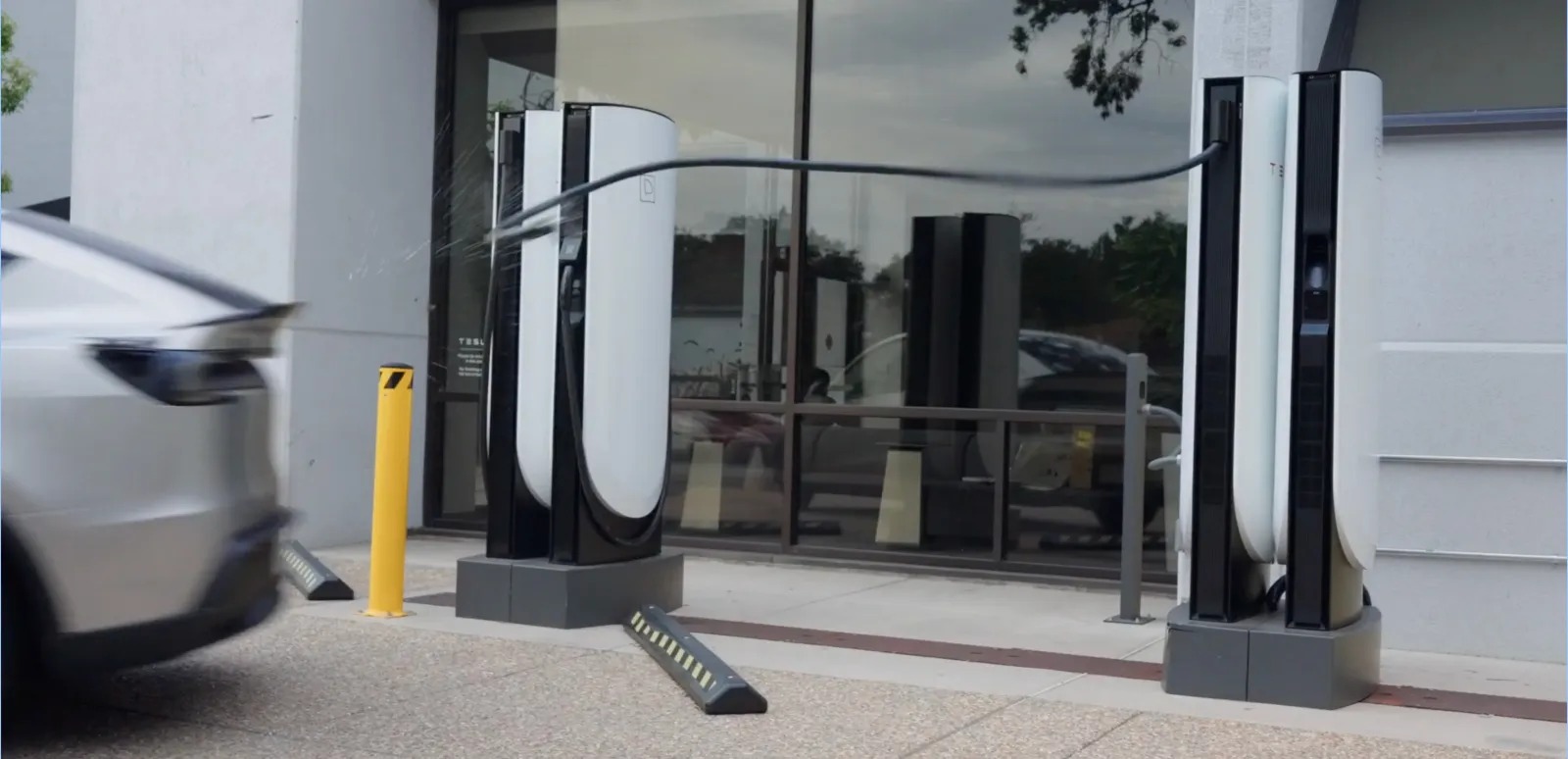
On August 1st, a gunman killed 3 people and wounded 7 others at a In-N-Out restaurant in Twin Falls, Idaho. According to the police, he fired at three people inside two Tesla cars at a supercharger station next to the restaurant; one of the victims, a 66-year-old man from Salt Lake City, died as a result.
In the coming days, Tesla owners are demanding a native solution that would allow them to leave supercharging spots without having to wait for the charging port clamps to release. Meanwhile, hundreds of owners have turned to EVject – a detachable adapter priced at $299. Tesla sued this product in 2024, claiming that it could heat up to 100 degrees Celsius during high-current charging.
Twin Falls is not the first fatal shooting incident to occur at a supercharging station. In 2023, a Tesla owner was also shot and killed at a charging station in Colorado.
Electrek Perspective
After the Twin Falls incident, we wrote that the solution had to come from Tesla, as they control both the vehicles and the charging stations. Moreover, such a feature should have certain limitations to prevent abuse and to avoid damage to the devices. Tesla has roughly implemented the solution we expected, and it only took them two months to do so. What is due should definitely be given.
However, this version is quite crude. We originally hoped that the vehicle and the charging station would disconnect the power and release the latch, so you could leave neatly. Tesla, on the other hand, has removed the software lock but warns users that leaving might damage the vehicle and the charging station. At least that’s better than being stuck there.
There's also the limitation that this is only available in the United States. Tesla states that this feature is applicable to all Superchargers in the U.S., and since charging stations in Canada use the same interface, we don't see any hardware reason to stop at the border. Tesla has developed a feature to help drivers avoid gunshots and has decided that for now, only the U.S. needs it. Unfortunately, we cannot refute this logic. Gunshots like these are indeed a problem specific to the U.S. As we said in August, the real solutions lie in gun control and substantial investment in mental health, rather than a software update.
Charge electric vehicles using rooftop solar panels at home. Find reliable and competitively priced solar installers near you for free through EnergySage. They will pre-screen the installers to participate in bidding, ensuring high-quality solutions and saving you 20% to 30%. This service is free of charge, and there will be no sales calls before you choose an installer. Compare personalized solar quotes online and get guidance from independent energy advisors. Click here to get started.
FTC: We use automated affiliate links that can generate income. For more information.