

Blast, which once held over $2 billion in crypto assets, is closing down. With declining activity, rising costs, and larger platforms such as Coinbase and Robinhood establishing their own networks, Blast is coming to an end.

Blast indicates that once it is determined that continuing to operate the Ethereum layer-2 network is no longer economically viable, the project will be shut down.
This closure indicates that as security costs rise, and platforms such as Coinbase and Robinhood build their own networks, integration is taking place within the blockchain industry.
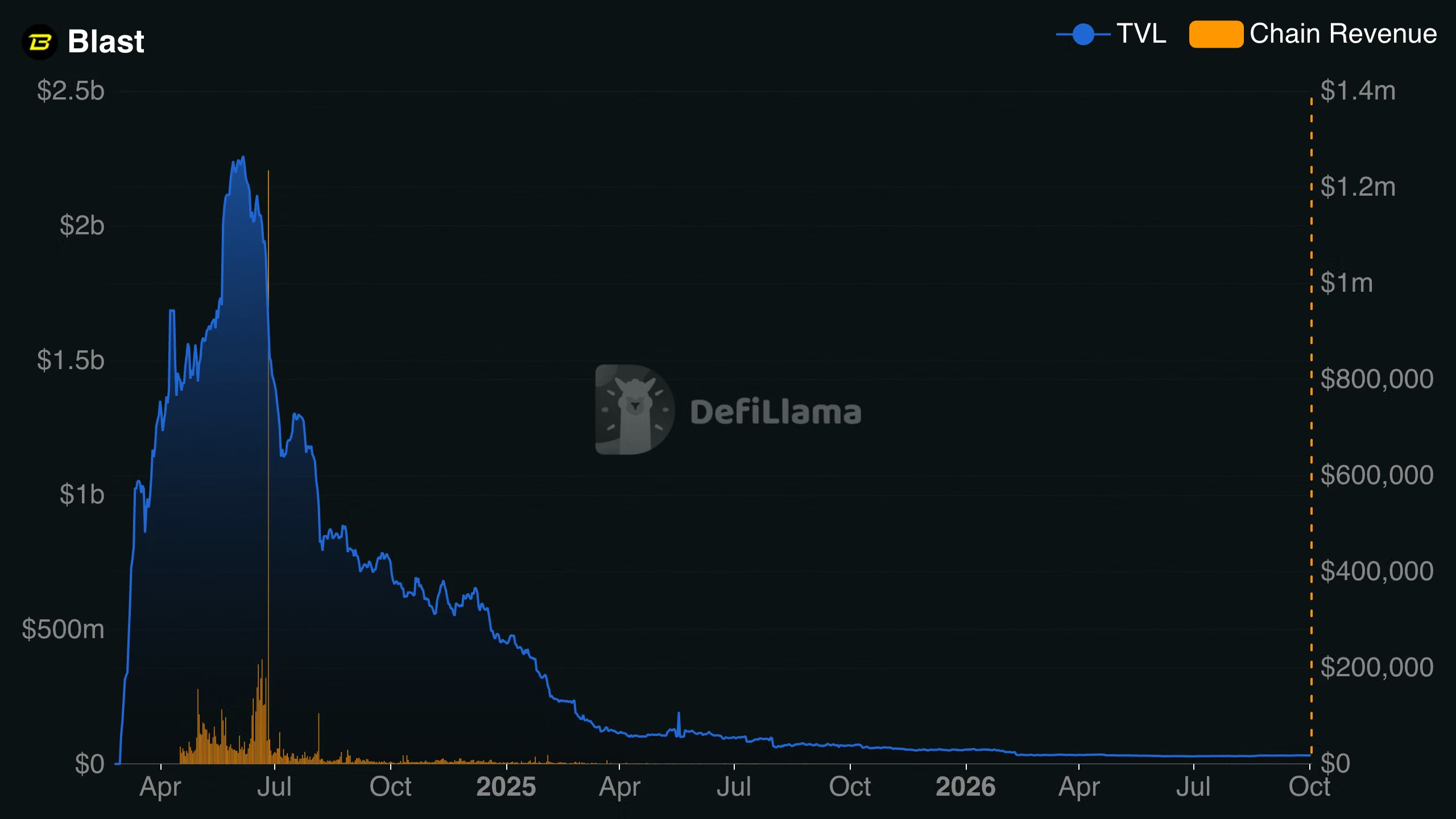
After the speculative boom peaked, the activity of Blast has dried up. The asset size on this network has fallen by 98% from its peak of $2.2 billion in June 2024.
This Ethereum layer-2 network is about to be shut down more than two years after its launch, due to a decline in activity that has made it impossible for this blockchain to cover its operating costs.
On Friday, in a post announcing its closure, the project stated:Regrettably, the economic viability of operating this chain is no longer tenable. The cost of continuously maintaining Blast exceeds the revenue generated by this L2 chain, and we do not see a credible path to achieve economic sustainability for this chain.
After the announcement was released, its native token BLAST fell by 19%, continuing the significant decline since its launch. The token has now fallen by approximately 98% from its initial issuance price.
At the time of its launch, Blast quickly attracted a great deal of attention. CoinDesk reported at that time that even before the network was officially launched in 2024, users had already deposited over $1.1 billion, partly due to market expectations for a token airdrop.
As speculative funds shifted to other areas and network activity diminished, the economic situation of this chain rapidly deteriorated. DeFiLlama data shows that its total locked-up value once exceeded $2 billion in June 2024, but since then has dropped to just $32 million. Meanwhile, Blast generated only $1,793 in revenue from network usage last month, far below the peak of about $3.5 million in June 2024.
The curtain call of Blast also reflects a broader reshuffle in the blockchain network.
Operating a blockchain means that even if user activity has diminished, it is still necessary to continue paying for development, infrastructure, and security. Recent waves of cryptocurrency attacks have also drawn more attention to security expenditures; at the same time, the AI tool may also make it easier for attackers to detect vulnerabilities in the code.
Competition is also becoming more intense.
Large consumer platforms with existing distribution channels have already launched their own Ethereum networks. The crypto exchange Coinbase has introduced Base, transforming its exchange users and developer ecosystem into a source of active engagement on the blockchain; similarly, Robinhood also launched its own Ethereum layer-2 network earlier this year and saw a significant amount of activity on the chain in the early stages.
This forces smaller chains to compete for developers, users, and transaction fees in an increasingly crowded market. The closure of Blast demonstrates what can happen when the economic arguments no longer hold water.
The team announced on the X platform that users can withdraw their assets to Ethereum through the interface of Blast before October 26th. After that, if they wish to make withdrawals, they will have to interact directly with the bridging contract.