News from the IT community on October 5th: Linus Torvalds released the Linux 7.3 - rc6 test version on October 4th local time. Compared to the more significant code changes last week, this week has returned to a more normal pattern, with driver fixes once again accounting for the majority of the changes.
However, Torvalds also specifically mentioned that with the involvement of AI and large language models (LLM), this "new normal of AI" has become a part of the current Linux kernel development cycle.
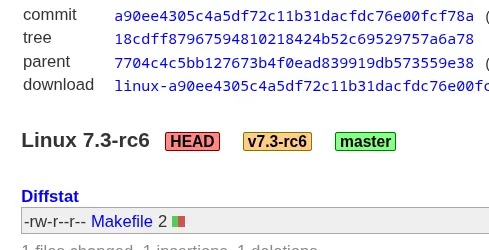
Torvalds indicates that there were no exceptional circumstances this week, and the statistics on code changes have returned to the common state where "about half come from driver fixes." The driver side involves multiple subsystems such as GPU, network, USB, TTY, IIO, and audio, showing a relatively dispersed pattern of fixes overall.
He also pointed out that the number of submissions this time is within the normal range as well. However, this time it's about the new " AI normal " – a large number of small error path fixes are being incorporated into the kernel code tree. In previous 7.3 test versions with the identifier " Linux ", there were also many patches identified or generated as a result of issues found by " AI " / " LLM ", which made the fixing activities throughout the development cycle significantly more active.
In addition to driver fixes, Linux 7.3 - rc6 also includes regular architecture updates, which are mainly related to KVM; core network code has also been fixed. In terms of the file system, the focus is on work related to the SMB client, and at the same time, a batch of new kernel self-tests ( selftests ) have been added.
In terms of hardware support, Linux 7.3 - rc6 has added support for Turtle Beach VelocityOne Race steering wheel and pedal systems. This device was previously capable of basic HID input under Linux, but there were some issues. With the addition of the corresponding device ID through hid-universal-pidff drivers this time, more comprehensive support is now available. This kit is aimed at racing simulation games and is priced at around $649 to $700 (Note from IT: The current exchange rate is approximately 4,355 to 4,697 RMB).
At the same time, Linux 7.3 also retracted the previously added support for the Logitech Bolt receiver __BJWKEEP_00004++, due to too many user feedback issues. The related HID update also includes a fix for buffer overflows in the Intel THC driver, as well as improvements to support for other devices and fixes for defects.
Linux Prior to the entire development cycle of 7.3, there were multiple instances of AI / LLM participating in code reviews and defect discovery. During the 7.3 - rc3 phase, a large number of AI / LLM related fixes were incorporated into the codebase; by rc4 and rc5, developers continued to address the issues identified by AI, and at the same time, some kernel patches assistedly generated by AI also appeared.
However, Torvalds did not assume that there were abnormalities in the development of Linux 7.3 as a result. His use of the phrase “AI normal” this time is actually describing a development pattern that has gradually become the norm: AI tools bring about more code inspections, defect discoveries, and patch submissions, which also means that maintainers need to handle more minor repair tasks.
Torvalds indicates that next week coincides with the annual maintainers' summit and Linux Plumbers Conference. He, along with several other maintainers, will be on a business trip. Therefore, the code statistics for rc7 may vary, but it is not expected to affect the release schedule of Linux 7.3.
According to the current development progress, the stable version of Linux 7.3 is expected to be released in mid-October. Prior to this, Canonical has already adjusted the target kernel for Ubuntu 26.10 from Linux 7.2 to Linux 7.3. Therefore, the release time of the stable version of Linux 7.3 will also directly affect the final kernel basis for the subsequent Ubuntu 26.10 version.