News from the IT community on October 5th: Recently, a foreign netizen purchased the AMD Ryzen 7 9850X3D processor twice on Amazon, only to find that both times the processors received were substituted with Core i3-3000 series processors, sparking a heated discussion in the community.
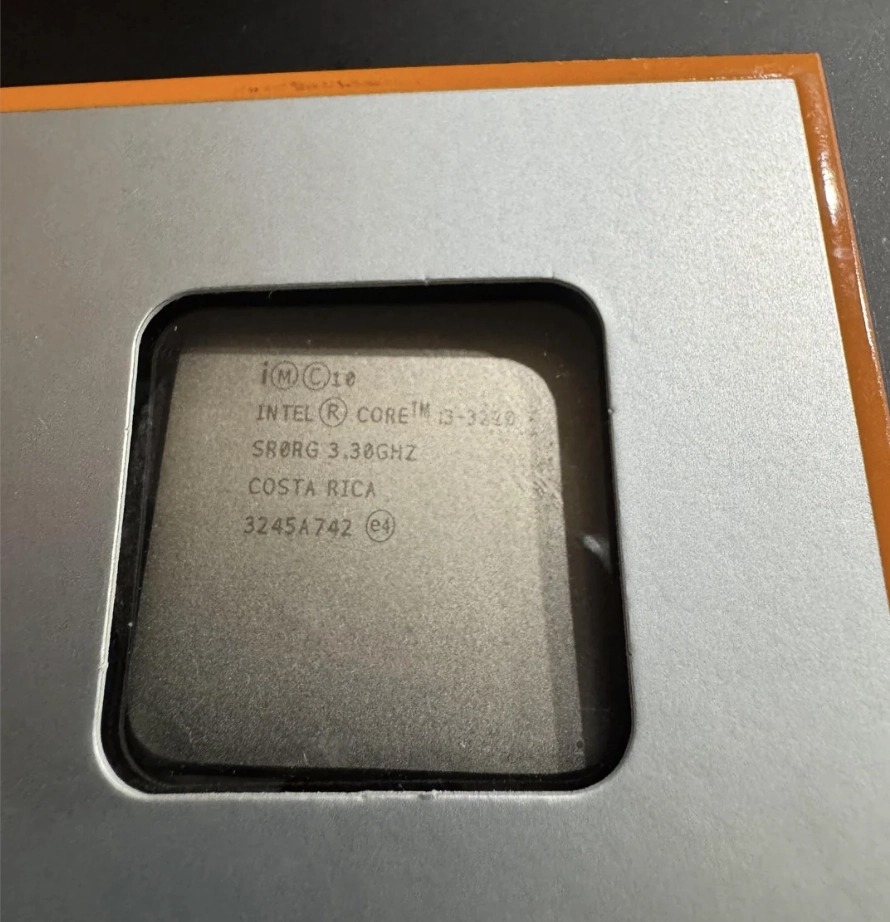
It is reported that Reddit netizen BitProfessional3792 initially purchased an AMD Ryzen 7 9850X3D through the official Amazon store. However, upon receiving the product, it was discovered that the processor appeared to have been replaced. The outer packaging of the item looked normal, and the seal was not damaged, but the actual processor inside the box was replaced with an Intel Core i3-3000 series product that is approximately 10 years old.
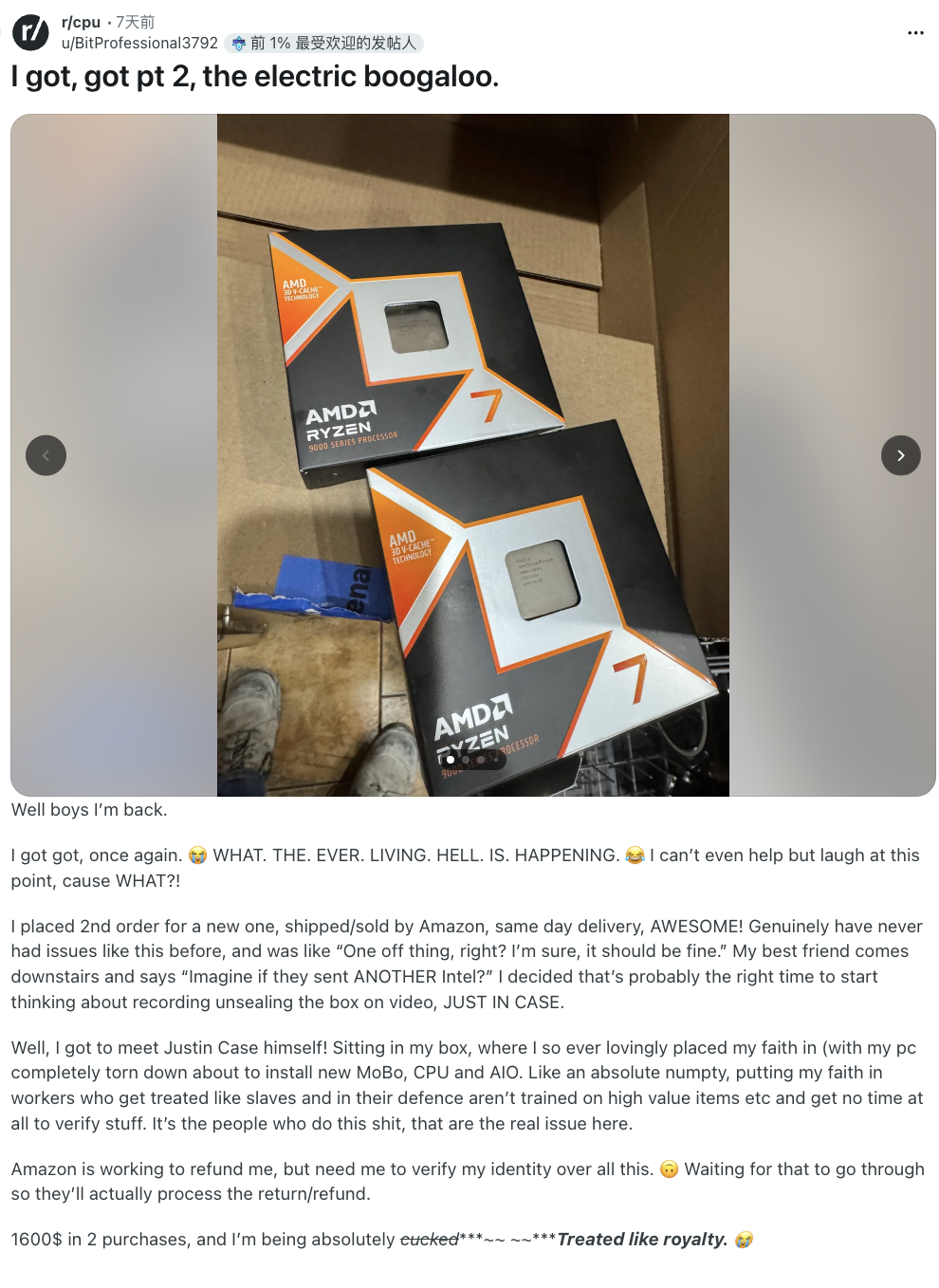
Regarding this, the netizen believed that "it might just be bad luck," so they placed another order on Amazon to purchase an Ryzen 7 9850X3D. To prevent any further issues, they recorded the entire process of receiving the package. However, upon opening it, they discovered that the product had once again been swapped, and the method used was exactly the same; the box still contained an Intel Core i3-3000 series processor.
In the end, this netizen lost trust in Amazon and decided to drive directly to the local Best Buy physical store to purchase a processor.
The netizen stated that the total cost for the two purchases was approximately $1,600 (Note from IT: the current exchange rate is about 10,737 RMB). Currently, Amazon is handling the refund process for these transactions. However, both orders encountered the issue of product substitution in the same manner, which has led some netizens to suspect that the problem may lie in the warehousing or logistics processes, and they cannot rule out the possibility that someone could substitute the products during the official shipping procedure.
Some netizens also noticed that both packaging boxes of the products contained the label LPN. Such labels are used to identify products returned by Amazon, so some believe that the issue may be related to the process of these returned products re-entering inventory. For example, it is possible that someone intercepted the packaging of returned products and then placed them into other processing systems in order to bypass subsequent inspection before they were restocked; it is also not ruled out that the products were replaced before being packed or shipped.
At present, it is not possible to confirm the specific stage of the package substitution and the responsible party. However, if a similar situation does occur in the warehousing or logistics process, it indicates that there are relatively serious vulnerabilities in the relevant procedures. Since small and high-value computer hardware such as SSD and memory can also be easily replaced, such issues may also affect other high-value goods. As for whether there are exploitable vulnerabilities in Amazon's internal automated systems, there is currently no conclusive evidence.