

PIMCO's senior advisor to the investment portfolio management department, Rupert Harrison, stated on Tuesday that after the yields on 10-year and 30-year U.S. Treasury bonds rose to 24-year highs, U.S. Treasuries are now "very attractive in value."
He stated that this round of upward movement is mainly driven by ongoing concerns about inflation, the government's heavy borrowing, and market anxiety regarding the U.S. fiscal deficit.
Harrison indicates that PIMCO still maintains a duration exposure and believes that long-term bonds can provide attractive returns as well as serve a protective role when technology stocks weaken or the economy slows down.
Yields of over 5% are changing the way bonds are calculated.
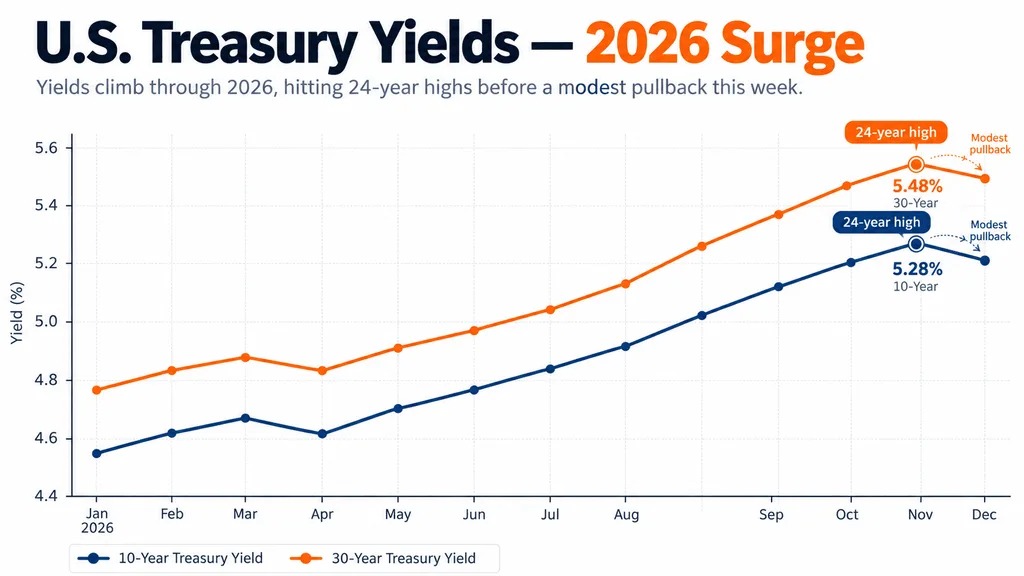
The yield on 10-year U.S. Treasury bonds fell back to around 5.28% on Tuesday, after climbing sharply the previous week; long-term interest rates remain near levels not seen since the beginning of this century.
For investors, this has changed the trade-off between bonds and stocks.
A U.S. Treasury bond with a yield of over 5% can provide a relatively high return without the risk of profit associated with stocks. This is particularly important for high-valued growth companies, as higher yields on U.S. Treasuries reduce the present value of expected profits in the years to come.
This trend has pushed the 30-year yield to levels not seen since 2007, reigniting concerns about long-term borrowing costs.
High debt remains the main risk.
PIMCO Being bullish on bonds does not mean that the forces driving up yields have disappeared.
The U.S. federal debt has exceeded $40 trillion, and the government pays about $1 trillion in interest each year. Large-scale debt issuance means that investors must absorb the increasing supply of government securities, making fiscal prospects a central issue in the bond market.
Demand in certain sectors of the market is also weakening. In the first three quarters of 2026, money market funds recorded only about $158 billion in net inflows, whereas in previous years this figure exceeded $800 billion, which reduces an important source of demand for treasury bonds.
Recent auctions have also shown similar pressures. In September, a five-year government bond auction recorded the weakest bidding multiple in nine years, further exacerbating investors' concerns that they may demand higher yields to absorb the additional supply.