Newsletter
Blockchain.com has applied to the Commodity Futures Trading Commission of the United States (CFTC) for two licenses – Designated Contract Market (designated contract market) and Futures Commission Merchant (futures commission merchant) – in order to provide event contracts and crypto derivatives to retail and institutional customers in the United States.
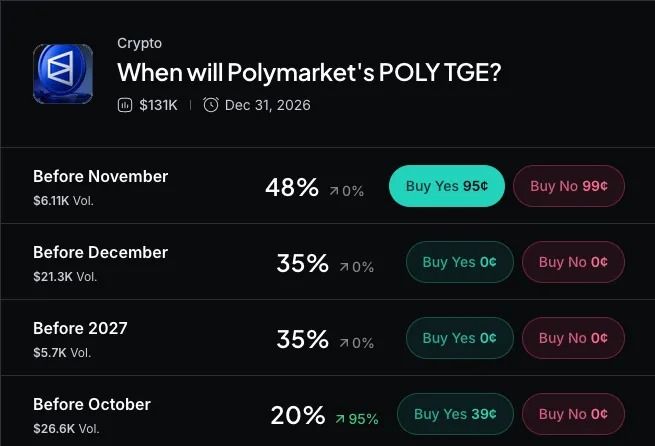
This measure will bring some of the company's current overseas services, which are currently provided through Polymarket and Hyperliquid, under its own direct operation.
Blockchain.com is attempting to join the craze of the US predictive market and has informed CNBC that they have applied for a license from the Commodity Futures Trading Commission to offer event contracts and cryptocurrency derivatives to US customers.
This crypto platform told CNBC that it has submitted two qualification applications: one is for a designated contract market license, which will allow it to operate as a futures exchange for event contracts; the other is for a futures commission merchant license, which will enable it to conduct business as a derivatives broker.
Together, these two approvals will enable Blockchain.com to operate its own regulated market in the United States, serving both retail and institutional traders.
This measure will bring under its own control the business that the company currently provides overseas only through partners. Starting this year, by collaborating with Polymarket, Blockchain.com will offer predictive markets to some international customers, as well as perpetual futures supported by the decentralized exchange Hyperliquid.
The license will allow it to operate its own event contract trading venue, rather than through third-party intermediaries. CEO and co-founder Peter Smith told CNBC that the goal is to enable users to manage digital assets, trade derivatives, and place bets on real-world events in one place.
Amid the surge in event trading under federal regulation, competition has also become fierce as this application arrives. CNBC states that Blockchain.com has seen an additional 11 companies applying this year, and DCM has approved 6 new such institutions in 2026.
Part of the appeal of federal pathways lies in jurisdiction: CFTC licenses can help them avoid the constraints of state gambling regulatory agencies, which have sued prediction market operators including Kalshi and Polymarket.
The regulatory landscape is changing rapidly, with state governments competing with federal regulators in court over who has the authority to regulate such markets.
CFTC recently submitted new rules to the White House aimed at consolidating its jurisdiction over predictive markets, while litigation surrounding whether certain swap contracts fall under federal regulation, with NFL and others opposing Kalshi, has also drawn the attention of the Supreme Court.
However, for companies such as Blockchain.com, the attractiveness of the forecasting market is evident. Business is booming, and the forecasting market is increasingly becoming mainstream, with trading volumes having seen a significant increase over the past year.
Analysts from Bernstein predict that by the end of this decade, the revenue of this industry could reach several billion dollars, and they forecast that it will become a market worth trillions of dollars.