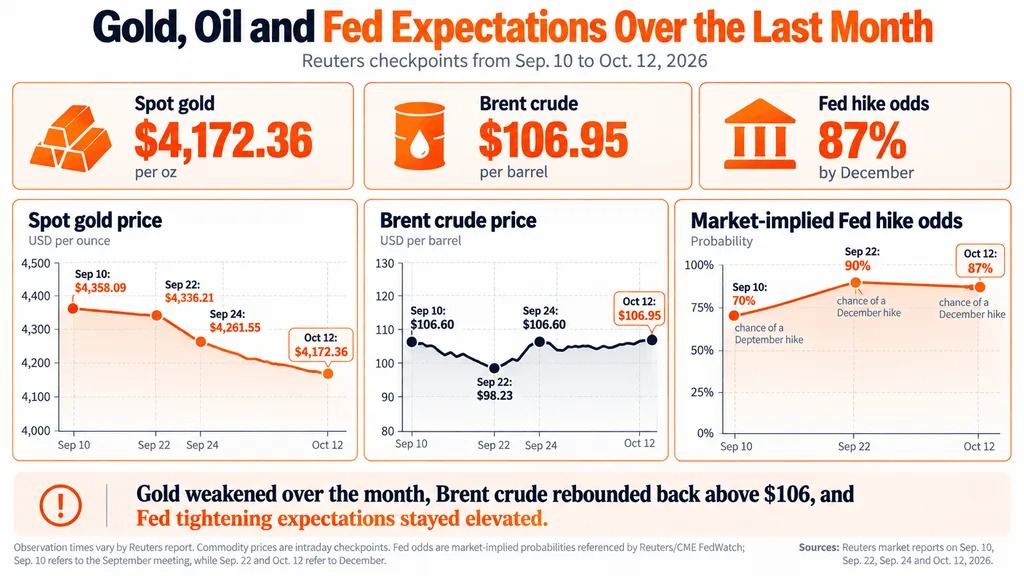
Spot gold fell 0.5% to $4,172.36 per ounce; US gold futures also fell 0.5% to $4,196.20. Previously, on last Friday, gold prices rebounded to a one-week high of $4,194.36, but then pressure from the energy market and expectations regarding monetary policy caused gold prices to decline again.
This decline highlights an unusual relationship: gold is usually seen as a tool to hedge against inflation, but when investors expect the Federal Reserve to respond with tighter monetary policy, higher energy prices actually hit gold prices.
Oil prices rise above $106, with bets on the Fed raising interest rates increasing to 87%
On Monday, Brent crude oil rose to around $106.95 per barrel, and tensions in the Middle East once again sparked concerns about the global energy supply. US crude oil traded around $93.82, while the US Dollar Index climbed to around 102.44.
Higher oil prices will drive up transportation, production, and consumer costs, potentially keeping inflation at high levels for a longer period. This will put pressure on the Federal Reserve, prompting it to maintain restrictive interest rates or to raise them further.
According to Reuters' reporting on the commodities market, investors at that time estimated that the probability of a rate hike in December was around 87%.
Rising expectations of interest rate hikes make assets that generate interest more competitive compared to gold, as gold itself does not produce any returns. A stronger US dollar also increases the cost for buyers using other currencies to purchase gold.
The same mechanism had previously pushed gold prices below $4,200, but the decline on Monday was smaller than that during the selling spree in late September.
Gold prices face a test from U.S. inflation data on Wednesday
The next major catalyst is the September Consumer Price Index ( CPI ) report, which was released on Wednesday, at 8:30 a.m. Eastern Time on October 14th.
Investors will watch whether higher energy costs are being transmitted into broader inflation, especially in terms of service prices and core consumer prices. The Producer Price Index ( PPI ) released on Thursday will also further reflect potential price pressures.
For the Fed's next two meetings, market expectations remain significantly divided. Although the probability of a rate hike in December is relatively high, investors generally expect policymakers to keep interest rates unchanged in October.
This difference is very important for the outlook of gold prices. If the inflation report is weaker than expected, it may weaken market expectations for further tightening of monetary policy, thereby depressing the dollar and supporting gold prices.
On the contrary, if inflation is unexpectedly strong, it may reinforce market expectations for policy tightening in December and put additional pressure on gold.
Under Geopolitical Risks, Why Does Gold Still Face Pressure?
The weakening of gold is worth paying attention to, as the unstable situation in the Middle East usually supports the demand for safe-haven assets. However, the inflationary consequences of current high oil prices are competing with this demand for safe havens.
Earlier this month, after weak U.S. employment data reduced the market's expectations for an immediate interest rate hike by the Federal Reserve, gold prices briefly surpassed $4,200.
Ethan Mercer is a financial journalist who covers cryptocurrency, stocks, and the global economy. He studied economics and finance before turning to market reporting, with a particular focus on Bitcoin, stocks, monetary policy, and investor sentiment. His work focuses on explaining daily market fluctuations and the broader trends behind them.