IT News on October 13th: At 1 a.m. on October 14th, Apple pushed a new system to users via OTA. After upgrading to iOS and watchOS, Apple Watch users will be able to activate the sleep apnea function. This feature has previously been approved by the National Medical Products Administration and entered the domestic market as a Class II medical device under the "Sleep Apnea Indication Reminder" application, becoming another health function on Apple Watch that is subject to medical regulation.
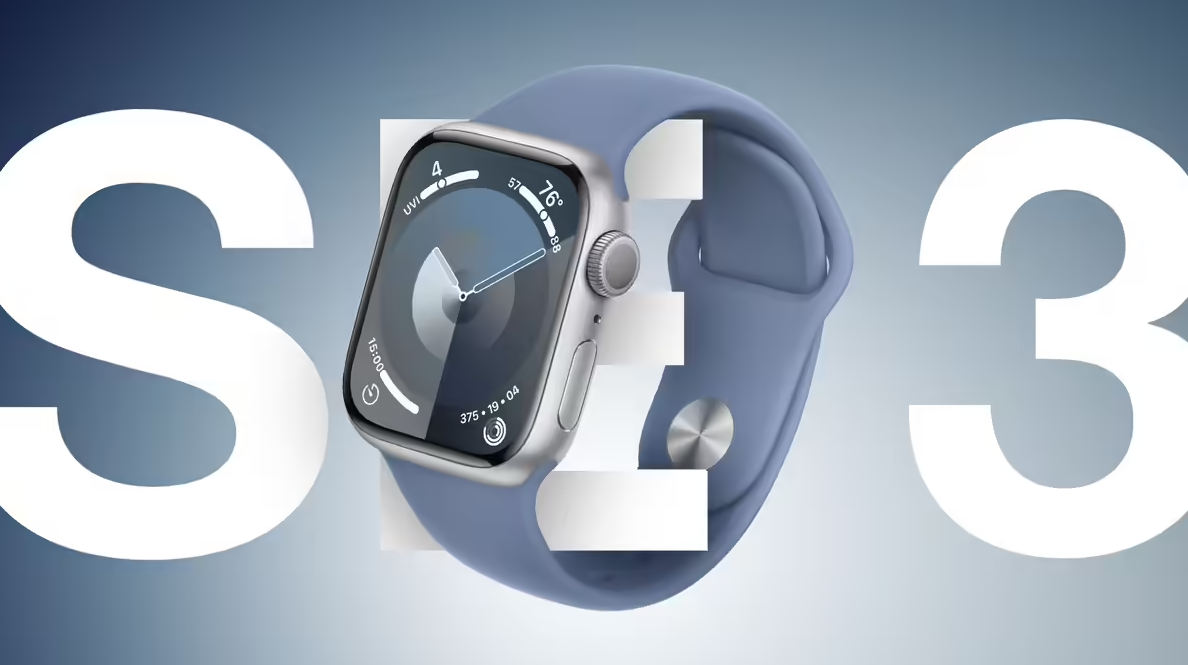
The sleep apnea function currently supports Apple Watch Series 9, Ultra 2, and SE 3 as well as subsequent models, and is intended for adult users who are 18 years of age or older and have not been previously diagnosed with sleep apnea.
This year marks the eleventh anniversary of the launch of Apple Watch, and its health features now cover 18 different areas. Sleep has always been a key focus, from bedtime reminders and sleep stage tracking to sleep quality scoring and vital sign monitoring. Apple has gradually transformed this watch into a personal sleep observer. The addition of sleep apnea detection has shifted users' attention from simply whether they sleep well to whether they sleep healthily.
Eighty percent of patients are unaware that they are sick.
One of the most widespread misconceptions is that "snoring indicates a good night's sleep." After falling asleep, the soft tissues in the throat and the relaxed tongue can block the upper airway. When airflow is completely interrupted for more than 10 seconds, it is considered an apnea event; if the airway is not completely blocked but airflow is significantly reduced accompanied by a decrease in blood oxygen levels, it is referred to as hypoventilation. The full name of this condition is "Sleep Apnea-Hypopnea Syndrome," with obstructive sleep apnea being the most common type. According to the Apnea-Hypopnea Index (AHI), a diagnosis can be made if this occurs 5 times or more per hour on average.
Its prevalence exceeds the imagination of most people. A study published in The Lancet Respiratory Medicine in 2019 showed that the global prevalence rate has risen from 2% to over 24% in just over a decade, with more than 1 billion patients aged 30 to 69 alone; in China, there are approximately 176 million patients, making China the country with the highest number of cases in the world.
What's more challenging is the issue of diagnosis; approximately 80% of patients are not aware that they are sick. While being overweight and having a short, thick neck are indeed high-risk factors, structural problems such as a small jaw, deviated nasal septum, enlarged tonsils, and enlarged tongue can also put many thin people at risk. Some patients may present with symptoms like insomnia and anxiety.
Each episode of apnea is accompanied by hypoxia and carbon dioxide retention, and repeated micro-arousals fragment sleep. The intense negative pressure within the chest cavity also continuously pulls on the heart and blood vessels. A series of clinical data obtained by IT from Apple shows that approximately 80% of cases of refractory hypertension are related to sleep apnea. The risk of coronary heart disease increases by 5 times, and the proportion of stroke patients with this condition ranges from 60% to 90%. Nighttime sudden deaths account for 46% of all cardiac sudden deaths, and the risk of car accidents also rises to 7 times that of the general population.
Perceive breathing through subtle movements of the wrist
Apple Watch takes a different approach from the traditional blood oxygen measurement route. According to Apple's description, the new chip introduced with Series has a range of up to 256g together with the accelerometer, allowing it to capture extremely subtle muscle movements on the wrist that are difficult to detect with the naked eye even when worn throughout the night. When breathing becomes disrupted, the relevant muscles will tremble slightly with each breath, and the watch identifies these abnormalities to calculate a new indicator known as the Breathing Disruption Index. This index is measured in "events per hour" and reflects the extent to which normal breathing is disturbed.
Why not use blood oxygen measurement? Apple's explanation is that they have evaluated various data sources and found that relying solely on the accelerometer sensor is sufficient to achieve their design goals. Moreover, blood oxygen monitoring is intermittent and may not coincide with every breathing event.
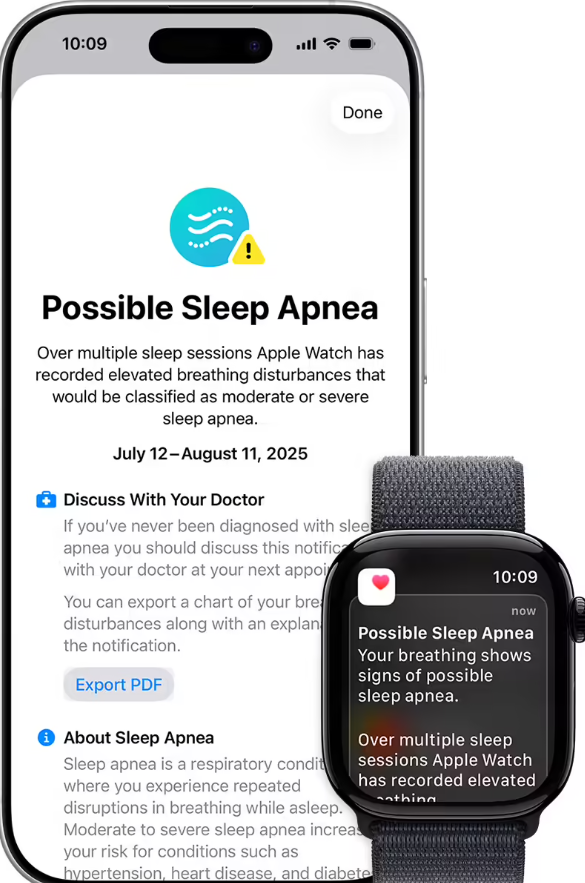
At the practical level of use, the functionality is evaluated on a 30-day cycle. Users are required to wear the device for at least 10 nights within this 30-day period, without the need for it to be consecutive. The system reviews the data from this time frame, and if more than half of the nights show an "increase" in the Respiratory Disturbance Index, Apple Watch will send a notification, indicating possible signs of moderate to severe sleep apnea; if there are fewer than 10 nights of data, no notification will be issued.
Apple stated that sleep apnea is a chronic condition, not an emergency. A 30-day observation period not only meets the screening requirements but also allows for a more rigorous determination. Drinking alcohol, upper respiratory tract infections, certain medications, as well as exercise and weight changes, can all increase the level of breathing disorders, and these fluctuations can be traced in the health App curve.
Apple also revealed that the algorithm training utilized over 11,000 nights of paired data. During the study, participants wore the Apple Watch device while undergoing clinical-level sleep monitoring. The baseline devices included hospital-based polysomnography (PSG) and home-use sleep apnea detectors (HSAT). The event determination was based on a strict standard of a 4% decrease in blood oxygen levels, with the aim of minimizing false positives.
During the clinical validation phase, nearly 1,500 participants wore the watch continuously for up to 30 nights and completed two nights of HSAT testing as a control. The results showed that the sensitivity of this function was 66.3%, with a specificity of 98.5%; among participants with no sleep apnea at all, there were no false positives; in patients with severe cases, the sensitivity reached 89.1%.
There are requirements to be met before activation; take notifications seriously.
Currently, there are clear requirements for enabling this feature: users must be at least 18 years of age and have never been diagnosed with sleep apnea; those who have already been diagnosed do not need to enable it. What this feature truly aims to reach are those who are unaware of whether they have the condition or who have doubts but have never sought medical examination. Apple has repeatedly emphasized that what is provided is a risk warning, which cannot be used for diagnosis, treatment, or management, nor can it replace traditional diagnostic and treatment methods; even if there are no issues after 30 days, it does not mean one can rest assured without concern.
If the notification does indeed arrive, Apple recommends taking it seriously and consulting a doctor as soon as possible. It is also possible to export the respiratory disorder data into a PDF report to bring to the hospital. There are precedents for such a approach.
An employee of Apple enabled this feature while on a business trip in the United States. After wearing it for 30 days, they received a notification and were subsequently diagnosed with severe sleep apnea, which was caused by a nasal structure issue that prevented smooth breathing when lying on one side. After using a ventilator, their sleep data returned to normal, and for the first time, they experienced a feeling of freshness and alertness upon waking up. The doctor said that it is quite rare to encounter patients who are diagnosed so early, rather than waiting until heart problems arise.
In terms of privacy, Apple stated that health data is stored in an encrypted format on the device itself, and even when it is synchronized to iCloud, it is done in an encrypted manner as well.
Conclusion
For a long time, diagnosing sleep apnea has relied on polysomnography conducted in hospitals, which requires professionals to monitor patients throughout the night and occupies a hospital bed. Faced with hundreds of millions of potential patients, such resources are simply insufficient. Apple Watch has moved the initial screening process to the wrist, using observations over several consecutive nights to compensate for the limitation of traditional tests, which can only cover one or a few nights.
Of course, what the watch provides is merely a hint and should not be taken as a diagnosis. It's more like a ticket that leads those who are completely unaware of their apnea to proper examinations and treatments. If you are also a user of Apple Watch, after upgrading the system, you might want to pay attention to your own breathing disorder data. I believe you will feel more at ease as a result.