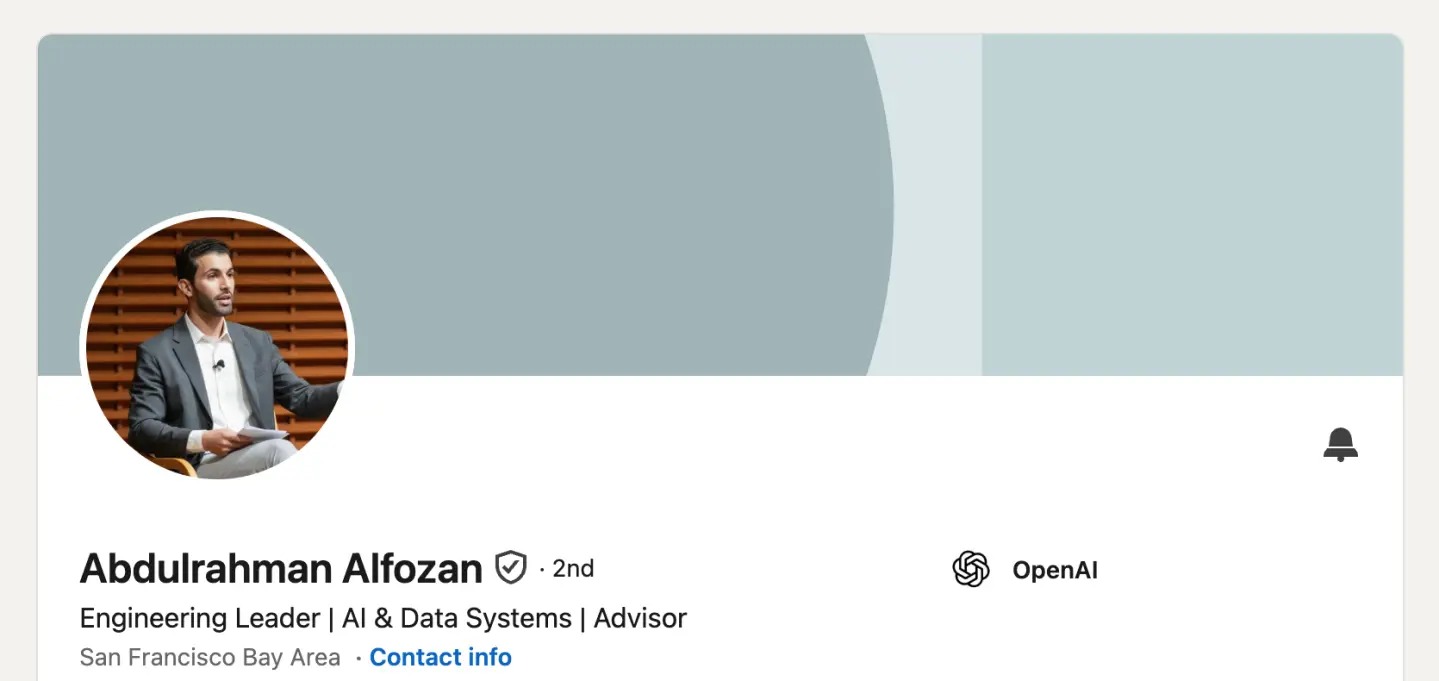
Abdullah Rahman Al-Fuzan (Abdulrahman Alfozan) has quite impressive LinkedIn credentials, and seems more like a future CEO rather than a person who was arrested by the United States Federal Bureau of Investigation (FBI) on October 9th. His profile shows that he has won 9 awards, has 5 records of volunteer work, a enthusiastic recommendation from a colleague, a patent related to healthcare, degrees from two top American universities, and work experience at well-known companies such as SAP, Microsoft, Meta, and OpenAI.
The federal complaint accusing him of secretly installing recording equipment in a executive meeting room did not specify the motive. However, since his arrest, people on the internet have begun to dig into his past experiences.
A risk partner from a Saudi company
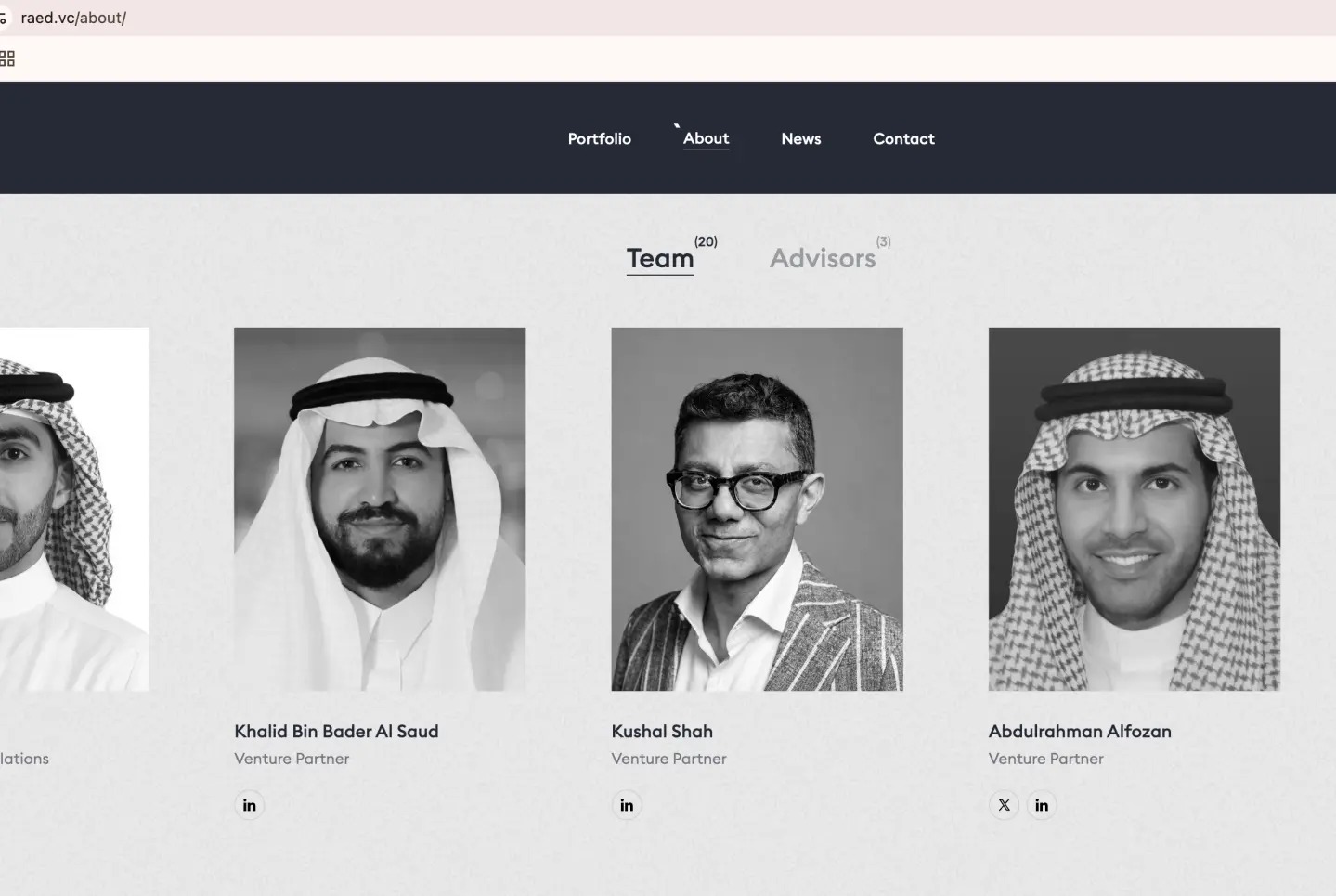
According to court documents, Al-Fozan is a Saudi national who became a legal permanent resident of the United States in September 2020. He has 15 years of professional and educational experience in the U.S., beginning in 2011 when he joined MIT ( MIT ). Although most of his work experience since then has been in the U.S., in 2025 he became one of the 20 risk partners of a Saudi Arabian company called RAED Ventures. He is still listed on the company's website, but RAED has not yet responded to requests for comments regarding whether he is still associated with the company ( Fortune ).
In the screenshot from the RAED website, another person appearing on the company page is Khalid Bin Badr Al Saud, a member of the Saudi royal family and prince ( Prince Khalid bin Bader Al Saud ). He joined RAED as a partner on February 6, 2025, and two days later, on February 8, 2025, RAED announced that Al-Fozan had joined the company. OpenAI told Fortune that Al-Fozan did not join OpenAI until July 2025; however, Al-Fozan's personal LinkedIn indicates that he joined the company in September 2025. OpenAI did not respond to questions regarding this time difference.
It is currently unclear whether, during Alfozan's tenure at OpenAI, the company allowed him to simultaneously hold the external investment role at RAED. OpenAI has refused to respond to Fortune's inquiries regarding its conflict of interest policy.
The complaint letter did not accuse him of stealing trade secrets, nor did it claim that he was acting on behalf of a foreign government. In a post on X, OpenAI stated that there were "no signs" of him improperly accessing or disclosing model weights, source code, or customer data.
The U.S. Department of Justice stated that Al-Fozan is accused of "using or attempting to use electronic, mechanical, or other devices to intercept oral communications." A trial attorney from the Counterintelligence and Export Control Section of the Department of Justice's National Security Division is assisting with the prosecution.
The Saudi government has shown interest in American AI companies. According to Reuters, in 2025, the AI chip startup Groq received a committed investment of $1.5 billion from the Kingdom of Saudi Arabia. Semafor reports that there is also a state-backed artificial intelligence company in Saudi Arabia called HUMAIN, which led a $900 million financing round for the media production startup Luma AI in 2025. HUMAIN also established a partnership with the American AI programming platform Replit in 2025.
The Information Previous reports stated that OpenAI had negotiations with Saudi investors in 2025. CNBC At that time, it was reported that in January 2026, the company returned to the Middle East and entered into negotiations with sovereign wealth funds. There is no content in the court documents that links Al-Fozan to these investments.
A one-way ticket to leave the United States
The complaint states that starting from August 17th, Alfonso allegedly inquired with a productivity agent about the capacity of the OpenAI meeting room and which meetings were held there. OpenAI told Fortune that this so-called agent is an internal tool. He also asked how to send USPS packages to that building.
Subsequently, starting from September 24th, Al-Fozan is alleged to have used a chatbot account associated with his wife to submit instructions regarding the construction of a continuous audio recording device, the encryption of its memory card, and the addition of real-time monitoring capabilities. OpenAI told Fortune that this so-called chatbot was actually ChatGPT. Later on, he was accused of installing the device around September 28th. Sources informed Fortune that OpenAI discovered the device during a routine check on September 30th.
Subsequently, the company notified the federal government. After that, a camera was installed behind the television in the conference room where the device was placed, and Al-Fozan subsequently appeared on the camera footage on October 5th. The company fired Al-Fozan on October 9th, and on the same day, FBI arrested him.
It was only three days since Al-Fozan, his wife, and another family member booked one-way flights from San Francisco via Istanbul to Saudi Arabia; the flight date was October 12th. This information is based on a motion to seal the case.
Court documents do not explain why this family booked this trip. The prosecution cited this point in their request to the judge to seal the complaint until this week. The motion states: 'The defendant had the ability, and would have even more motive to flee the United States earlier if they had been aware of this case before their arrest.'
Alfuzan made his first appearance in federal court on October 13 and will appear again on October 19.