

Pre-market observations for October 15th

Bitcoin BTC traded at $80,972.85, down more than 2% in the past 24 hours; other major cryptocurrencies such as XRP, Ethereum ETH traded at $2,361.65, with Solana experiencing even larger declines. This drop seems to be less about the issues inherent to cryptocurrencies themselves and more about a broader withdrawal of risk assets from the market.
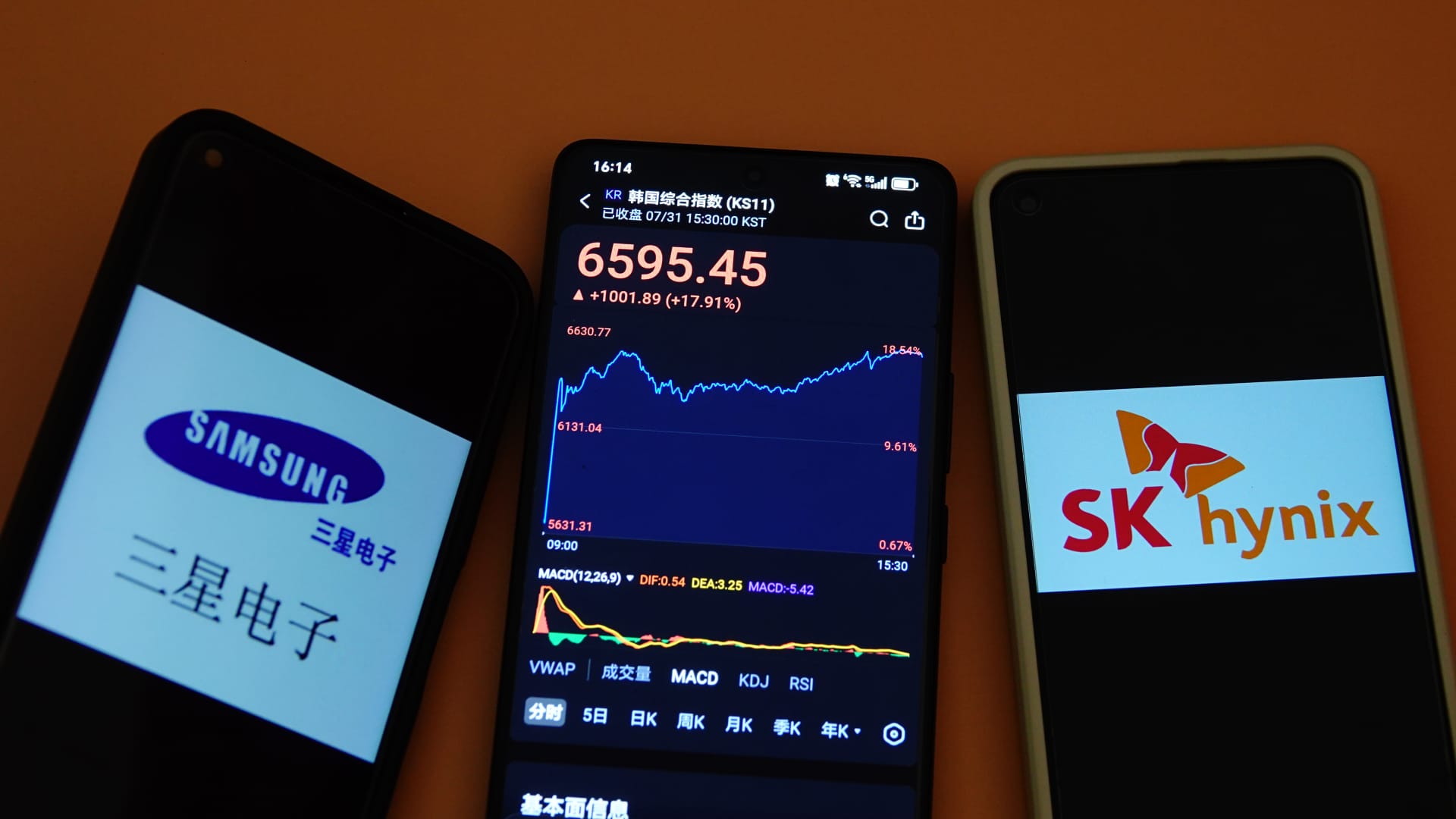
Copper-related futures – which are often seen as an important barometer of the global economy's health – fell by nearly 1%, continuing from a 1.6% decline on Wednesday. Other assets sensitive to growth also saw declines, with Asian stock markets dragged down by selling off in South Korean chip stocks. Nasdaq index futures, as well as risk-sensitive currency pairs such as the Australian dollar against the Swiss franc, were also weakening.
At the same time, the yield on U.S. Treasury bonds has declined, which means bond prices have risen, and gold has increased by 1%. The yield on 10-year U.S. Treasuries, a benchmark lending rate, has fallen by 8 basis points to 5.08%, continuing the decline from its recent high of 5.36%. U.S. Treasuries and gold are generally considered safe-haven assets.
These trends together indicate that investors are reducing their risk exposure and seeking safe assets, while also harboring some concerns about stagflation.
InvestingLive Analyst Giuseppe Dellamotta wrote in a market update: "This is more akin to a stagflationary environment, with risk assets and the US dollar performing poorly overall, while gold has fared better."
After the data from the United States on Wednesday CPI exceeded expectations, the market once viewed concerns about the Federal Reserve's interest rate hikes as a catalyst. However, these concerns seem to be fading.
CME Federal Fund futures currently only account for a 29% probability that the central bank will raise the benchmark interest rate to the range of 4% to 4.25% later this month. The remaining probabilities indicate that the interest rate will remain unchanged at 3.75% to 4%. CPI After the announcement, this probability briefly approached 50%, but then quickly fell back.
Looking ahead to the market, the Producer Price Index ( PPI ) to be released on Thursday will provide another clue as to the extent of inflation remaining in the supply chain. If the data is on the high side, it may further exacerbate risk-aversion sentiment.
Traders will also be watching whether the trend of AI trading continues to decline. 10x Research analysts still tend to hold Bitcoin during this decline, but only on the condition that BTC remains above $78,000. In addition, they prefer to "hedge their Bitcoin long positions with Ethereum."
Stay vigilant!
For further reading: For analysis of today's counterfeit coins and derivatives trends, please refer to "Crypto Markets Today". For a complete list of events this week, please see "CoinDesk"'s "Crypto Week Ahead".
Related reports on CoinDesk:
- Fink identifies the triggers for the U.S. economic recession and issues a warning regarding the $40 trillion national debt: BlackRock CEO Larry Fink stated that companies are investing substantial funds in AI data centers, and any attempt to slow down this process could harm the U.S. economy, not just the stock market.
- Bitcoin mining pools that once handled 2.3% of the network's computing power have shut down after their power decreased by 65%. According to CoinDesk, the crypto exchange Binance is shutting down its Bitcoin mining pool, which was launched in April 2020.
- AI Forced selling accelerates the shift of investors towards bonds, leading to a decline in the stock market: Bloomberg Reports indicate that as sales related to artificial intelligence intensify, global stock markets are falling, and investors are turning to bonds as a safe-haven.
Today's Signal
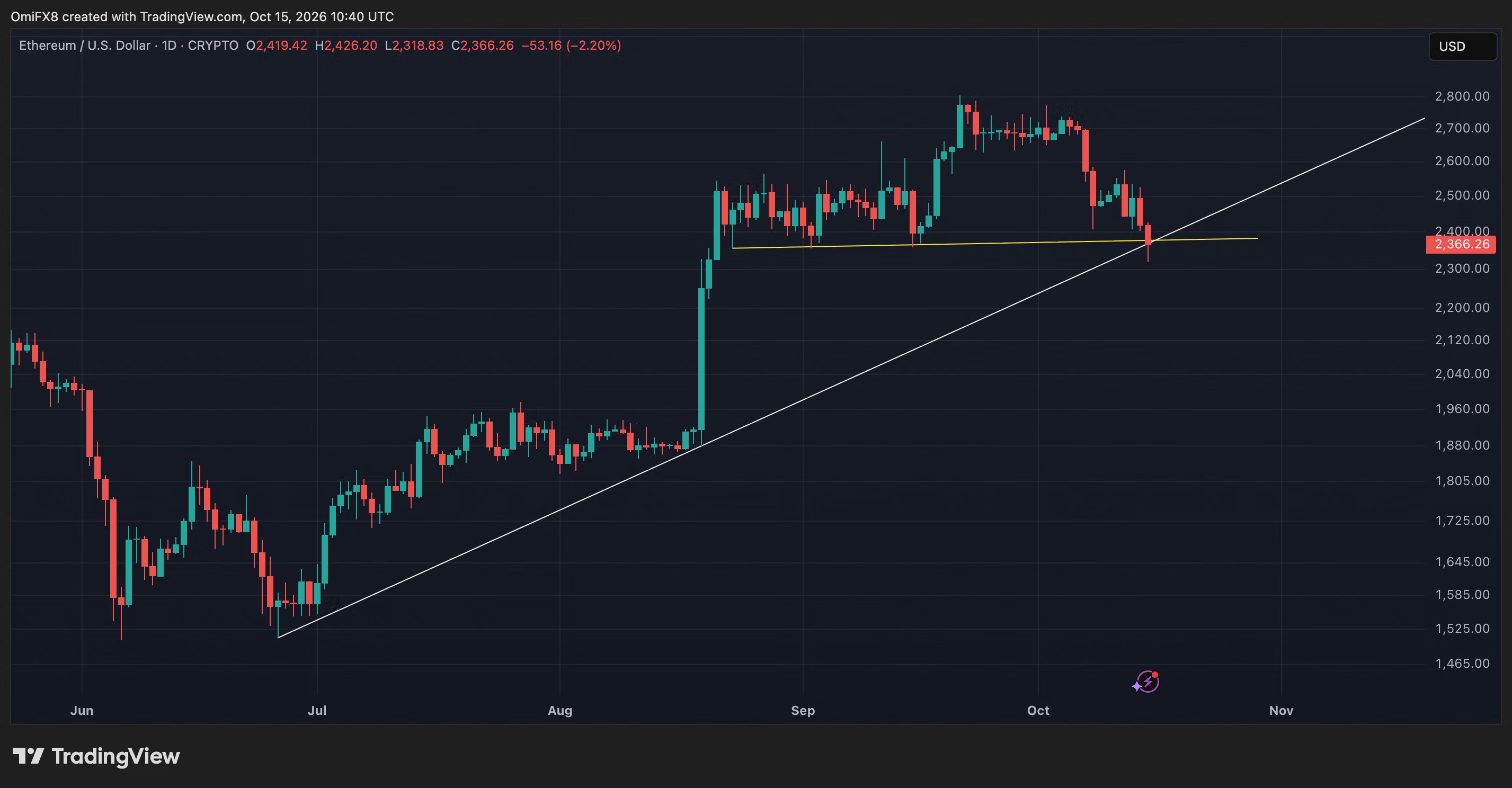
The chart displays the intraday price fluctuations of Ethereum since May in the form of candlestick charts.
Ethereum is testing a double support area around $2,350, which is constituted by a horizontal trend line and an upward trend line. The horizontal line has served as continuous support since August 23rd, while the upward trend line indicates a bullish trend since the low point in July.
If it falls below this confluence support level, it will indicate a significant weakening of demand and may open the door for even greater declines.