

A few weeks ago, I heard a strange story about a friend from a large technology company in Silicon Valley.
She recently removed all internet-connected devices from her home, switched to paper bank statements, and also stocked up on canned food in the basement.
She is a very rational and experienced person, and she holds a senior management position at one of the largest internet companies in the world. Why would she choose to cut off so many connections? As a precaution, my family also orders paper bank statements. Yet, this matter remains puzzling.
By this week, her approach doesn't seem so crazy anymore.
The AI model has exposed serious security vulnerabilities in software used by approximately 70% of websites. Meanwhile, a U.S. bank has discovered AI proxies in customer accounts, some of which do not seem to be acting according to the instructions of the account holders, according to Axios.
"Black October"
The tech community has now entered a state of widespread panic. A great deal of internet-related anxiety, characterized by a sense of collapse, is actually occurring within the internet itself, as my colleague Alice Tecotzky pointed out.
On X and Reddit, warnings about the upcoming "Black October" continue to ferment, even evolving into imaginations of AI causing civilization to come to a halt. A lengthy post on X warns of the possibility of a "global cyberattack/ AI swarm," and provides a survival checklist: stock up on small-denomination cash, print out your neighbors' phone numbers, download maps, buy a hand-cranked radio, and prepare a gallon of water for each person per day.
Oh, don’t forget to bring a manual can opener. You wouldn’t want to survive the AI apocalypse only to be defeated by a can of beans.
Well-known app developer and former X product leader Nikita Bier summarized this sentiment most accurately.
"It's time to turn off the internet," he posted on Wednesday evening.
Cloudflare Executive says this is "a bit scary"
If you're reading this article, it means you haven't done it yet. But should we really be worried?
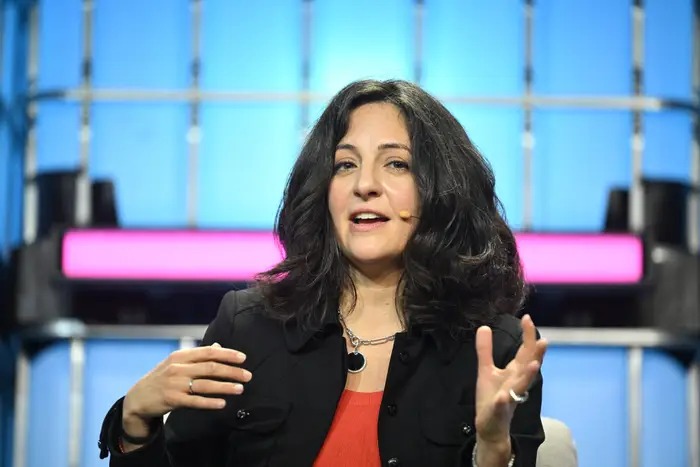
I brought this issue to the attention of Cloudflare, our Chief Strategy Officer, Stephanie Cohen. Cloudflare helps to protect about 20% of the internet.
“The world is a bit scary right now,” she told me this week beside the Cloudflare Annual Conference held in San Francisco.
The problem is that the Internet is built on decades of software, many of which have security vulnerabilities.
Some of these weaknesses have been known for many years. However, fixing them requires time and money, and at that time, hackers often did not have the capability to exploit these vulnerabilities. As a result, they were left unaddressed for a long time.
AI has completely changed this way of computing. People who previously needed years of training to invade computer systems can now get assistance with the AI model. Moreover, the speed at which these tools can find vulnerabilities is beyond human competition.
As a result, the number of newly disclosed software vulnerabilities – referred to in the industry as Common Vulnerabilities, and, Exposures, and collectively known as CVE – has surged.
Now, a frantic race is unfolding between those who attempt to invade the system and those who try to protect it.
Don't panic about AI.
However, the stance of Cohen was surprisingly reassuring.
Moreover, a larger initiative is already in progress.
OpenAI has launched a project named Patch the Planet, in collaboration with Cloudflare and other security professionals, to utilize AI to identify vulnerabilities in widely used software and to assist in their remediation.
Vercel Chief Product Officer Tom Occhino recently told me that the company has been discussing with partners the establishment of a non-profit organization to fund a group of “well-intentioned AI agents” to identify and fix software vulnerabilities on the internet.
Amazon has also joined this effort. Its new Continuum service was launched on Thursday, using AI proxies to identify security vulnerabilities and propose fixes. Amazon stated that those who maintain free and available software can use it to help protect the broader internet.
Humans may still need to review and approve these fixes, but AI helps to clean up software that has been neglected for a long time, and that prospect is exciting.
Some people in the industry did not overlook this irony.
Interestingly, everyone is talking about how the poor code generated by AI is causing a cyber crisis, but in reality, it's the old, poor human-written code that is causing the crisis, while AI is just helping to clean it up," software engineer Ben Kaufman wrote on X on Thursday.
Anyway, Cohen believes that the panic triggered by AI will ultimately lead to an improvement in the industry – because it has exposed problems and also increased the urgency to fix those vulnerabilities.
"We may ultimately end up in a world that is truly much safer," she said.
The question is how to get to that step.
A fundamental question about the Internet
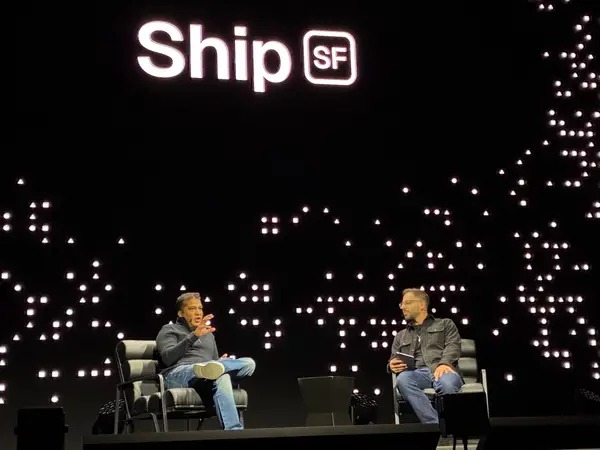
Recently, at a Vercel conference in San Francisco, when I met Occhino, he described such a world: as AI models with increasingly powerful capabilities began to examine the underlying systems that support the internet, those software applications that were once considered secure suddenly seemed to become vulnerable as well.
This leads to a more fundamental discussion between us: why did we decide to connect so many things to the internet in the first place?
For many years, the tech industry has been competing to move everything online: thermostats, refrigerators, doorbells, cars, bank accounts.
We once thought that connecting something to the internet meant it would become better.
Maybe we should think about it again.
Before the advent of the Internet
I remember the world before the advent of the Internet. It functioned quite well actually. We could still buy groceries, pay bills, keep our houses warm, and basically live our lives just fine, without each household appliance having to communicate with a computer somewhere far away.
This doesn't mean giving up online banking, or throwing smartphones into the sea.
Perhaps the cybersecurity community, which has been immersed in online threats for a long time, has overlooked an obvious fact.
Not everything needs to be connected to the internet.
Occhino put it very succinctly: 'Some things are simply not suitable for the internet from the very beginning.'
Perhaps this is the lesson brought by this panic this week. We don't need to turn off the internet.
All we need to remember is where the shutdown button is.