

Market Review
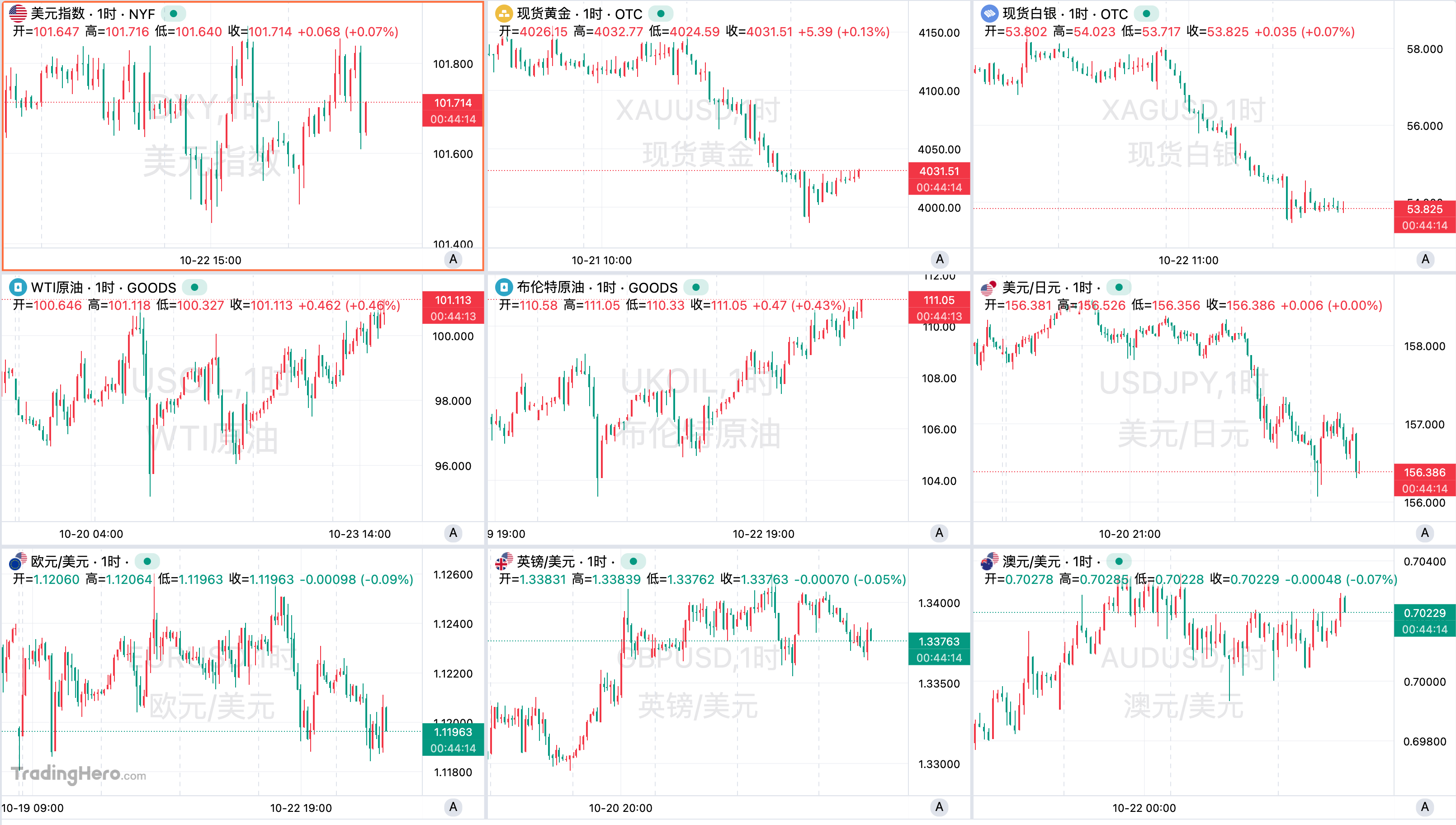
The US dollar has been generally weak this week, with market trading logic shifting gradually from "the Federal Reserve continuing to tighten policy" to "financial conditions and growth risks potentially limiting the room for interest rate hikes." The US Dollar Index once fell to a level not seen in about three weeks.
A key turning point occurred in the second half of the week, with AI capital expenditures and financing risks once again impacting the U.S. stock market. A large amount of funds flowed into U.S. Treasury bonds, causing the yield on 10-year U.S. Treasury bonds to fall below 5%, ending a trend that had persisted at 5% or above for 19 consecutive trading days. This weakened the support for the dollar that had previously relied on high interest rates. As of press time, the U.S. Dollar Index was at 101.7.
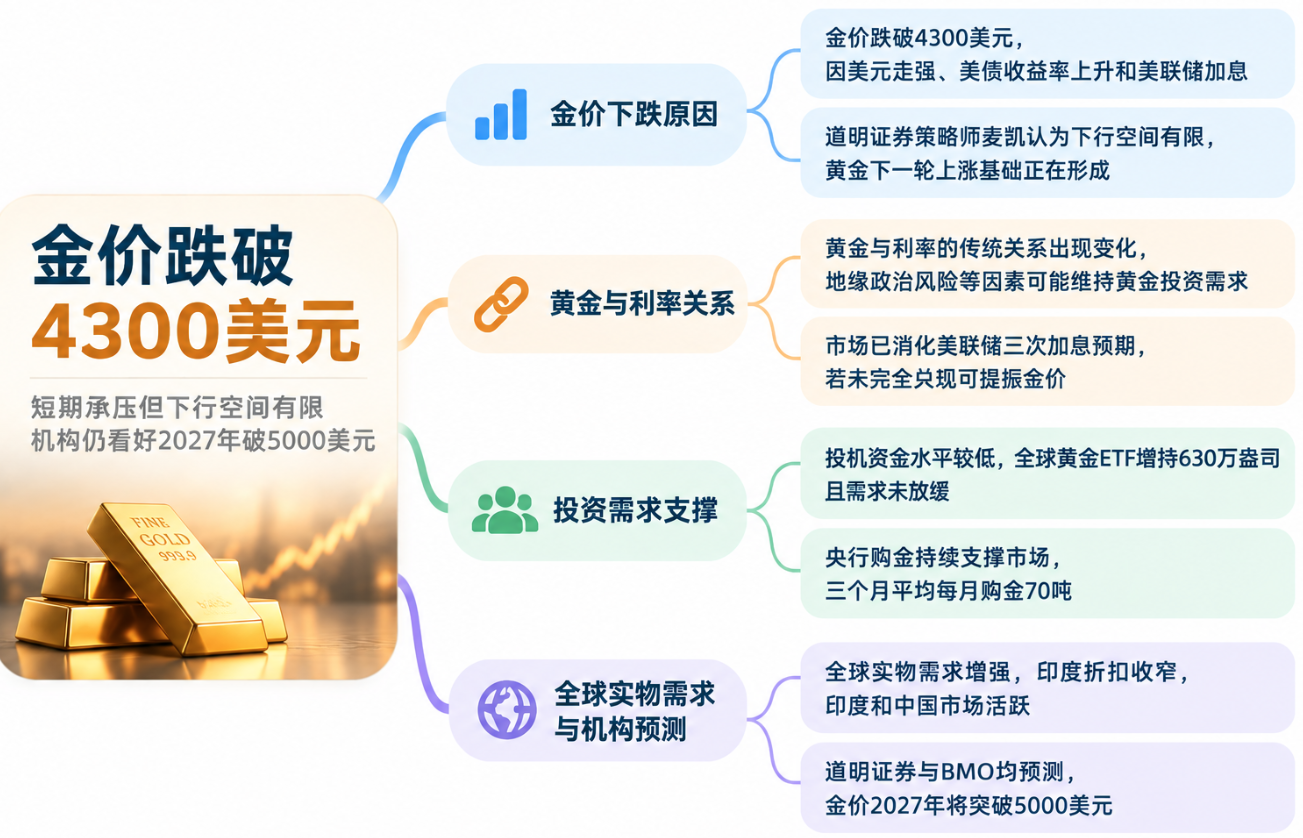
Gold continued to show clear weakness this week, falling to a level not seen in over two months in the second half of the week, with the Asian market on Friday briefly breaking below the $4,000 per ounce mark. The core issue remains the rise in energy prices, which once again pushes up inflation risks, while the market's previous expectations of high interest rates continue to suppress interest-free assets.
It is worth noting that even when global risk appetite plummeted and there was demand for safe-haven purchases of U.S. Treasury bonds and the Japanese yen, gold did not benefit significantly, indicating that funds are currently preferring high-liquidity bonds as a safe-haven. Silver weakened along with gold this week, but with greater volatility, and saw an accelerated decline in the second half of the week, suggesting that while the precious metals sector as a whole was reducing risk, silver was also dragged down by its industrial attributes. As of press time, spot gold and silver were trading at $4,031 and $53.85 per ounce, respectively.
Crude oil has maintained its strength this week, with the strongest gains occurring on Thursday. After Houthi militants launched attacks on Saudi targets, the market quickly re-estimated the risk of supply disruptions in the Middle East, and Brent crude prices rose to a level not seen in about five months. At the same time, disruptions to production in Libya further exacerbated concerns on the supply side. Overall, Brent crude is expected to continue to rise for the fourth consecutive week.
Non-U.S. currencies showed significant divergence this week, with the Japanese yen becoming the most prominent strong currency. On Thursday, after AI transactions faced concentrated selling and U.S. Treasury yields rapidly declined, safe-haven funds clearly flowed into the yen and Swiss franc. The yen is expected to record its largest weekly gain since early September.
The euro continues to be pressured by French fiscal and political risks, performing weakly; the pound has gained support due to high inflation in the UK and expectations of interest rate hikes by the Bank of England, and continues to strengthen relative to the euro. The Australian dollar has maintained its resilience overall, with the preferences of funds in the foreign exchange market shifting from pure interest rate differential trading to a focus on both hedging and policy differentiation.
The main theme of the U.S. market this week has been a re-evaluation by investors of the return on capital invested in AI. At the beginning of the week, chip and AI stocks rebounded after previous sharp declines, but subsequently funds gradually flowed into sectors such as healthcare and finance, with the healthcare sector reaching record highs for a time. On Wednesday, after a brief recovery in tech stocks, Meta revealed huge AI capital expenditures and negative free cash flow, which once again sparked concerns about valuation and financing. As a result, the Nasdaq experienced its largest single-day decline since June, and there was a concentrated sell-off in the semiconductor sector.
Selected Views from Investment Banks
Castle Securities CEO warns that a AI bubble is almost inevitable, and the current market environment is similar to the eve of the internet bubble burst. Citadel Founders claim that it is almost certain we are in the midst of a AI bubble. BlackRock CEO believes that slowing down AI infrastructure construction may threaten economic growth.
Goldman Sachs pointed out that hedge funds are reducing their holdings of tech stocks at the fastest pace in at least a decade. Morgan Stanley believes that the correction in U.S. stocks is nearing its end, and it's time to start preparing for positioning in risk assets. JPMorgan Chase thinks that if bond yields continue to stabilize, it will provide strong support for the stock market.
A Reuters survey shows that nearly all of the economists interviewed believe that the Federal Reserve will pause interest rate hikes in October and raise rates again in December.
Kaitou Macro believes that the expectation of interest rate hikes, combined with the recovery in the AI market, creates a dual pressure, and gold prices are likely to remain in a volatile downward trend until the end of this year.
Weekly Highlights
The Middle East is once again approaching a dangerous stage! Are the US and Israel preparing for a new round of strikes? Iran simultaneously escalates its deterrence measures.
The US-Iranian war is shifting from a phase of sustained consumption of resources to a new round of escalation preparations. Iran continues to increase military pressure on shipping through the Strait of Hormuz, while the United States and Israel are reportedly researching and advancing new plans for actions against Iran.
Tehran warns that if the US and Israel resume large-scale airstrikes, retaliation could extend to regional US military bases, warships, as well as the energy and transportation facilities of Gulf countries. The United States is simultaneously adjusting its forces in the Middle East and has ordered some non-essential government personnel and their families stationed in Saudi Arabia to evacuate.
The blockade pressure on Iran itself is also increasing. The major crude oil export hub of Kharg Island has been without normal tanker arrivals for several weeks in a row, and after the United States resumed its maritime blockade, Iran's maritime crude oil exports plummeted to near zero. High inflation and currency devaluation within the country have further exacerbated the costs of the war.
The situation in the Strait of Hormuz has seen a new escalation this week. On Thursday, the Iranian Revolutionary Guard Navy reported that four vessels involved in maritime oil transportation were simultaneously attacked and caught fire in the northern part of the Persian Gulf, while another three vessels were damaged by mines west of the Strait of Hormuz. According to The Associated Press, if these reports are confirmed, it could be the highest number of vessels damaged in a single day in the Strait of Hormuz since the outbreak of hostilities at the end of February.
Diplomatic negotiations are also increasingly influenced by electoral politics. Reports suggest that Tehran may intend to slow down the pace of reaching an agreement with the United States, hoping that high oil prices and the pressure of war will continue to affect the Trump administration until the U.S. mid-term elections on November 3rd.
Trump previously stated that he would not bomb Iran again before the mid-term elections, but Tehran continues to prepare for the possibility of the US and Israel resuming military actions after the elections. Qatar and Pakistan continue to mediate, but there are still significant differences between the US and Iran regarding the lifting of sanctions, nuclear issues, and the arrangement of the Strait of Hormuz.
The Israeli objectives have further expanded. Netanyahu has publicly called for the overthrow of the current Iranian regime, and the United States and Israel are also discussing new military options and strengthening related preparations. However, there is currently no evidence that Trump has approved a new round of large-scale attacks; therefore, the current troop increase serves both as a preparation for war and as a form of diplomatic pressure.
Meanwhile, the conflict continues to spread to Saudi Arabia, Yemen, and the Red Sea region. Houthi militants have recently intensified their attacks on Saudi airports and energy facilities. On October 22, Saudi authorities confirmed that an attack on King Fahd International Airport resulted in 2 deaths and 8 injuries. The situation in Yemen has worsened again, simultaneously increasing the risks associated with the Strait of Mandeb.
The energy market is re-pricing this risk, but Gulf countries are also accelerating their efforts to reduce their dependence on the Strait of Hormuz. Saudi Aramco stated that its daily transportation capacity through pipelines that bypass the Strait of Hormuz has increased from about 2 million barrels to 7 million barrels.
The next key milestones are the Israeli parliamentary elections on October 27th and the U.S. mid-term elections on November 3rd. After these two events, whether the United States and Israel will initiate a new round of large-scale military actions will determine whether the situation in the Middle East will enter a more dangerous phase of war.
2. This week's Russia-Ukraine situation: Increased negotiations, but no significant cooling down of combat operations
This week, the Russia-Ukraine conflict continues to feature a pattern of "fighting while negotiating." The United States has renewed efforts to facilitate contact between the two sides, and both have signaled their willingness to negotiate, but core differences over territory, security guarantees, and the terms of a ceasefire remain evident. Meanwhile, long-range attacks between Russia and Ukraine have continued to intensify, and tensions between the US and Ukraine regarding Patriot air defense missiles, military intelligence, and satellite communications have also become more public.
At the beginning of the week, Ukrainian President Zelenskyy accused U.S. President Trump of exerting pressure on Kiev, demanding that Ukraine reduce attacks on Russian refineries. Zelenskyy stated that Ukraine is willing to discuss reducing energy-related targets, but hopes that the United States will correspondingly increase the supply of Patriot anti-aircraft missiles.
He also stated that the United States has imposed restrictions on the satellite communication capabilities used by Ukrainian forces, and there have been delays in the delivery of some already paid anti-aircraft missiles. Trump later claimed that the relevant services had been restored, but Zelenskyy said that some of the restrictions have not yet been fully lifted.
Ukrainian air defense pressure subsequently increased further. Russia continued to use missiles and drones to attack Kiev and Ukrainian energy facilities, causing civilian casualties and power outages in multiple areas. As winter approached, Russia continued to target infrastructure such as power and fuel supplies, while Ukraine's stock of Patriot interceptors was already at a low level, putting its air defense capabilities under even greater strain.
Ukraine continues to expand its remote strikes against Russia's energy system, focusing on attacks on refineries, oil depots, and petroleum transportation facilities. It has also begun to carry out precision attacks on key refining and chemical equipment with longer maintenance cycles in order to sustain its impact on Russia's fuel production capacity.
New progress has been made on the diplomatic front. U.S. special envoy Wittkoff has contacted both Russia and Ukraine. Zelensky expressed support for the United States in promoting trilateral negotiations between Russia, the United States, and Ukraine and is willing to discuss plans for a comprehensive ceasefire, a ceasefire in energy supplies, humanitarian arrangements, and an end to the war. He also stated that considering freezing the current front lines as a practical path to stop fighting is an option, but he demanded that the United States and Europe provide reliable security guarantees.
Putin subsequently also confirmed that Russia is willing to resume negotiations, but emphasized that any future agreement should address the long-term security concerns of both Russia and Ukraine, as well as the overall European security framework. At the same time, Russia continues to insist on its territorial demands regarding the Donbas issue. This means that although the negotiating channels have been re-opened, the substantive positions of both sides have not significantly converged.
The battlefield has not cooled down despite the signs of negotiations. On Thursday, Russian forces once again attacked Kiev with ballistic missiles and drones; at the same time, Russia claimed that Ukraine launched large-scale drone attacks on Moscow and other regions of Russia. Both sides are clearly continuing to weaken their opponents through military actions in order to gain more leverage in future negotiations.
3. SpaceX sees soaring performance, Tesla's profits under pressure, both companies enter a critical restructuring period
The potential merger between Tesla and SpaceX is rapidly becoming one of the most important capital reorganizations in Musk's business empire.
It is reported that both companies have established special committees to study merger plans. SpaceX has recently taken the initiative to contact Tesla, and both parties have hired consultants to discuss structures including SpaceX acquiring Tesla, setting up a new holding company for the merger, and a full-stock transaction. Based on current valuations, the potential transaction size is approximately 3.5 trillion dollars.
Elon Musk publicly stated during the SpaceX earnings call that there are "many merits" to the merger of the two companies.
The direct catalyst that has fueled the increased expectations for a merger is the SpaceX's third-quarter performance, which far exceeded expectations. The company's revenue reached 14.6 billion US dollars, a year-on-year increase of 161%, surpassing the market's forecast of 12.72 billion US dollars; operating profit was 2.8 billion US dollars, and net profit was 4.4 billion US dollars, whereas in the same period last year there was still a loss of 1.05 billion US dollars.
More importantly, the infrastructure business of AI, which is referred to by SpaceX as "super intelligent," has reached $7.56 billion in revenue, compared to only $813 million in the same period last year, and has become the company's largest business segment. SpaceX also expects its revenue for the first quarter of 2027 to reach between $33 billion and $37 billion, significantly exceeding market expectations.
In contrast, Tesla's traditional business still faces profitability pressures. The company's net profit in the third quarter was $787 million, a year-on-year decrease of 44%; revenue was approximately $28 billion, remaining relatively stable. However, adjusted earnings per share reached 48 cents, slightly higher than expectations.
What was even more unexpected for the market was that Tesla achieved a free cash flow of $1.5 billion, whereas analysts had previously estimated that there might be a cash flow expenditure of $4.3 billion; capital expenditures also decreased from $5.8 billion in the previous quarter to $4.7 billion.
The divergence in financial performance between the two companies has actually strengthened the logic behind the merger. SpaceX relies on Starlink, its mining business, and AI's computing power for rapid expansion, while Tesla possesses electric vehicles, Robotaxi, Optimus robots, energy systems, and manufacturing capabilities.
Elon Musk has previously merged xAI with SpaceX, which means that its AI resources are being concentrated towards SpaceX. If Tesla is further integrated, a super-tech conglomerate spanning aerospace, satellite communications, AI computing, autonomous driving, robotics, and energy will be essentially formed.
But the real obstacle lies in corporate governance. Reuters reports that Musk's public support for the deal has raised concerns among some of those involved in the negotiations, as it may intensify shareholder scrutiny and repeat the legal disputes over the independence of related-party transactions that occurred during Tesla's acquisition of SolarCity in 2016.
Elon Musk holds positions in two companies CEO, and owns nearly one-fifth of Tesla's shares as well as slightly less than half of the shares in SpaceX. As a result, he has been requested to recuse himself from negotiations with the special committee.
The transaction could also significantly change Musk's personal wealth. Bloomberg estimates that if the merger triggers the “control change” clause in Tesla’s compensation agreement, approximately 286 million shares of Tesla stock that were originally scheduled to be awarded in 2028 might be granted ahead of time, with a current value of over $110 billion. His long-term compensation package for 2025 may also be affected by changes in the transaction structure.
From the streets of Paris to European bond markets: How does French political risk affect treasury bond yields of 5%?
The ongoing social unrest in France is rapidly spreading from the political and social spheres to the financial markets. This week, French government bonds faced significant selling pressure, with the yield on the benchmark 10-year bond briefly breaking through 5%, reaching the highest level since 2002; the yield spread between French and German 10-year bonds also approached the highs seen during the European debt crisis.
The market has begun to re-evaluate France's fiscal sustainability, as well as the government's ability to pursue austerity reforms amidst rising social pressure.
This round of unrest was fueled by dissatisfaction over educational conditions, living costs, wages, pensions, and public services, which subsequently led to arson, robbery, and clashes with the police in cities such as Paris, Lyon, and Marseille. CNBC cites data indicating that over 500,000 people participated in the protests, and more than 2,000 people were arrested.
The core concern in the bond market is the apparent conflict between social tensions in France and fiscal reforms. For the French government to reduce deficits and stabilize debt, it must control spending, increase taxes, or advance pension reforms; however, the current protests reflect public dissatisfaction with living costs and public services. If the government further tightens its finances, it may intensify social conflicts; if it tries to appease the public by increasing spending, it could further undermine bond investors' confidence in fiscal discipline.
France's current fiscal constraints are clearly more stringent than during the "Gilets Jaunes" movement in 2018. According to The New York Times, France's public debt has approached GDP 120%, and the government expects debt service costs next year to exceed 90 billion euros, which is even higher than the planned expenditures for defense and education. As a result, high interest rates will quickly translate into a heavier fiscal burden, further squeezing the government's budget for public services and economic support.
The budget for 2027 and the presidential elections will become key variables in the next phase. There is still significant uncertainty as to whether a minority government will be able to push through a credible fiscal consolidation plan; meanwhile, far-right leader Marine Le Pen leads in polls, and far-left forces also maintain strong competitiveness, further increasing market doubts about future fiscal policies due to political polarization. AP reports indicate that unrest has become an important issue in the upcoming presidential elections.
At present, it is not yet possible to equate the situation in France directly with a new round of the European debt crisis. French government bonds still have strong fundamental demand, and the European Central Bank retains policy tools to stabilize the market. However, with the 10-year yield breaking through 5% and the spread between French and German bonds approaching 160 basis points, it is clear that political risks in France are being more significantly reflected in asset prices.
5. Midterm Election Countdown: Trump Spends Heavily, but His Economic Support Rate Drops to 34%
The U.S. midterms have entered their final sprint. Trump has begun to engage in the campaign from three fronts: economic policy, campaign funding, and personal mobilization, while Republican candidates are increasingly having to find a balance between relying on Trump's base of support and avoiding his negative impacts.
Trump further ties economic policy to election results. This week, he proposed that if the Republicans retain control of Congress, they will push for a $5,000 payment to be distributed to American adults, and announced measures such as $8 billion in agricultural aid and healthcare refunds.
In some states, he even directly stated that whether certain agricultural and energy policies could be implemented depended on whether the Republican candidates won. This led Democrats to quickly accuse him of using government policies for electoral mobilization.
Meanwhile, Trump's camp significantly increased its political efforts this week. According to a report by The Associated Press on Thursday, MAGA Inc has invested nearly $277 million in Republican candidates since September, of which about $200 million has gone to political action committees that support Republican members of Congress.
Trump himself stated that the related expenditures on election day could exceed $400 million. Such a level of financial involvement by a presidential campaign is extremely rare in U.S. mid-term elections.
However, the financial offensive has not yet alleviated the economic pressures on the Republican Party. A survey released on Thursday by CNBC shows that Trump's economic policies have a recognition rate of 34%, with 65% of voters expressing disapproval; 80% of respondents believe that the economic situation is average or poor. The costs of food, gasoline, and housing remain the most prominent concerns for voters. On the issue of control over Congress, Democrats lead Republicans with 52% to 45%.
This pressure has also been transmitted to the Republican candidates. When Trump went to Iowa to support his campaign on Thursday, Republican Senate candidate Ashley Hinson needed to rely on Trump to mobilize conservative voters on one hand, but on the other hand, she publicly criticized his policies such as increasing beef imports, raising the cost of the Iran war, and relaxing sanctions on Russian diesel, indicating that some Republicans are actively distancing themselves from the White House.
6. South Korean stock market experiences sharp fluctuations: AI trading enters a period of readjustment after a period of strong growth
The South Korean stock market has become one of the most sensitive stress test grounds for AI trading globally. This week, the South Korean Composite Stock Price Index (KOSPI) experienced sharp fluctuations: it first rebounded, then tumbled due to rising U.S. Treasury yields, reduced foreign capital positions, and AI infrastructure IPO facing cold reception, only to quickly recover within a single day.
Weighty stocks such as Samsung Electronics and SK Hynix became the focus of volatility, while AI cloud computing company Elice tumbled 32% on its first day and hit a nearly 30% limit up the following day, which more prominently reflects the current vulnerability in the valuation of AI assets.
On Monday, South Korean President Lee Jae-myung stated that after a rapid rise earlier on, it was "inevitable" for the stock market to experience adjustments, but overall, South Korean stocks were still undervalued. On that day, KOSPI rose by 1.8% and closed at 5,768.01 points.
Previously driven by AI and storage chip market trends, KOSPI once approached a significant integer milestone. However, the rapid rise also accumulated considerable valuation pressure. The value of shares in major listed companies held by the South Korean National Pension Service also significantly diminished due to the declines in Samsung Electronics and SK Hynix, indicating that this round of adjustments has already had a strong wealth effect.
Pressure erupted on Tuesday. KOSPI tumbled 4.8% at one point, with Samsung Electronics and SK Hynix becoming the main drags on the market. Overseas investors sold approximately $480 million worth of South Korean stocks in a short period. The cumulative decline of KOSPI from its June high approached 40% at one point.
The IPO of Elice has become a microcosm of the market sentiment of the day. This AI cloud infrastructure company saw subscription demand before its issuance approximately 400 times the number of shares available, yet on its first day of trading, the stock price still plummeted by 32%. Investors began to question whether, despite strong demand for AI, the company's high capital expenditures and high valuation are still sustainable given the ongoing rise in financing costs. Similar concerns have also emerged among overseas AI infrastructure companies such as CoreWeave.
However, just one day later, the market quickly reversed its trend. On Wednesday, KOSPI rose by about 5% during trading, while Samsung Electronics and SK Hynix each rose by about 8% and 9%, respectively. Elice saw a rise of 29.9% and hit the daily limit up. The market shifted from panic to a rush to buy within 24 hours, indicating that funds had not completely withdrawn from AI trading, but they had become highly sensitive to changes in valuation and interest rates.
Fundamentals still provide support for South Korean semiconductor stocks. Samsung Electronics and SK Hynix are upgrading their factories in China to produce more advanced flash memory to meet the demands of data centers. However, both companies are facing restrictions on equipment exports from the United States as well as competition from Yangtze Memory Technology. Data shows that in the second quarter, Yangtze Memory Technology's market share in the Chinese market rose to 38.5%, while Samsung's fell to 33.5% and SK Hynix' to 17%.
Monetary policy is also a key variable in the future. On October 22, the Bank of Korea maintained its policy interest rate at 3.00%, but it may continue to raise it to 3.25% in November. Inflation in South Korea remains above the target level, and semiconductor exports and economic growth continue to be resilient, making it difficult to significantly ease the high-interest-rate environment in the short term.
7. PHP exposes serious security vulnerabilities; websites around the world initiate large-scale self-inspections or go offline
This week, there have been several high-risk incidents in the field of global cybersecurity. Among them, the most notable are two serious vulnerabilities exposed by PHP.
PHP is widely used on the server side and is adopted by a large number of websites and software such as WordPress, Drupal, Joomla, etc. Cybersecurity company Wiz estimates that PHP supports approximately 70% of the Internet. This vulnerability may lead to servers incorrectly handling memory, allowing attackers to read sensitive data, execute commands, and even take over websites. European Computer Emergency Response Teams have warned of the risk of unauthorized remote code execution.
What is more noteworthy is that these vulnerabilities may have existed for over a decade before they were discovered, only after a new generation of AI tools were used for code analysis. Wiz stated that during the research process, tools such as Wiz Atlas, Gemini, Argon, OpenAI, GPT-5.6, and Sol were utilized, which significantly reduced the time required to identify complex vulnerabilities.
The PHP team has urgently released a patch. Security agencies in the UK, the EU, and Australia have requested immediate updates, with the UK National Cybersecurity Center even advising systems that cannot be repaired in time to temporarily go offline. Subsequently, some government and corporate websites in the US and UK also took the initiative to go offline for repairs.
Attacker activities have already emerged. Cloudflare observed early signs of attacks, and Amazon stated that its "honeypot" system detected attempted exploits as early as October 17th, concluding that the vulnerabilities were being widely exploited. Security personnel are concerned that some servers that were not updated in time may have been compromised or implanted with backdoors. Axios has therefore referred to the recent spate of security issues as "Black October."
During the same period, several incidents further exposed the spread of risks: 3,897 customer records from the State Bank of India were leaked to the dark web; Iwai Securities in Japan was compromised due to a Trade Works attack, affecting the information of 4,975 people, with some accounts experiencing unauthorized transactions; Quest Diagnostics revealed that its Quanum LSM system had been illegally accessed; in Germany, the Alternative for Germany party is investigating a data breach involving over 420,000 emails and 281GB of data.
This round of incidents has shown that vulnerabilities in foundational software can rapidly amplify global risks. AI is also working to reduce the time gap between vulnerability discovery, public disclosure, patching, and exploitation by attackers. For enterprises, promptly applying patches, investigating abnormal access and backdoors, and synchronously checking third-party components have become emergency actions that need to be carried out quickly.
8. Meta First quarterly cash consumption in over a decade; AI The money-burning model faces scrutiny from Wall Street
The latest quarterly financial report from Meta shows that the company's core business continues to grow rapidly. However, the capital expenditures, cash flows, and financing pressures resulting from AI investments have become key factors for the market to re-evaluate Meta and the entire AI sector.
In the third quarter, Meta reported revenue of $64.6 billion, a year-on-year increase of 26%, exceeding Wall Street's expectations; net profit was $9.86 billion. The company expects revenue in the fourth quarter to be between $73 billion and $76 billion, with the mid-range also above market forecasts. The "application family" composed of Facebook, Instagram, WhatsApp, and Messenger reached 3.64 billion daily active users, a year-on-year increase of 3%.
At the same time, the number of accounts of AI intelligent entity under Meta in the United States and Canada has exceeded 10 million, indicating that AI products have begun to build a large user base.
Changes on the expenditure side are receiving more attention. Meta has narrowed its capital expenditure guidance for 2026 to between $135 billion and $145 billion, with the lower limit being raised from $130 billion to $135 billion. The funds will be mainly used for AI infrastructure such as chips and data centers.
In the third quarter, free cash flow turned negative at $2.12 billion, compared to a positive $10.63 billion in the same period last year, marking the first time in over a decade that there has been quarterly cash consumption. The company also announced the issuance of new non-voting Class C shares, which can be used in the future for financing, employee compensation, and mergers and acquisitions, thereby adding additional equity financing channels for continued expansion of AI investments.
After the financial report was released, the stock price of Meta initially rose after the market closed, but then quickly reversed. On Thursday, Meta fell by 8%, marking the largest decline since July; NVIDIA fell by 4%, SpaceX fell by 9%, and CoreWeave also fell by 9%, with the semiconductor sector under pressure simultaneously. The five-year credit default swap price of Meta also rose to a historical high, reflecting investors' growing concerns about the financing costs and return cycles of AI.
This pressure has extended to the entire AI industry. S&P Global estimates that the capital expenditures of the six largest technology companies—Amazon, Microsoft, Alphabet, Oracle, Meta, and SpaceX—for data centers and other AI projects between 2025 and 2030 will exceed $7 trillion.
Meanwhile, OpenAI is seeking approximately $30 billion in new financing, but its valuation has been reduced from $1.4 trillion to $1.25 trillion; Anthropic still plans to advance IPO, while several AI infrastructure and data center companies have postponed or withdrawn their listing plans.
Currently, the demand and adoption of AI are still growing, but the market pricing logic has clearly changed. In addition to model capabilities, user growth, and revenue expansion, investors have begun to scrutinize free cash flow, financing costs, capital efficiency, as well as the power and supply chain resources required for data center construction more rigorously.
9. Jensen Huang continues to support the needs of AI: The new type of cloud demand is "astonishingly high," and capital is currently the bottleneck.
NVIDIA CEO Jensen Huang announced the latest layout of its European AI business at the conference in Berlin this week, and in subsequent interviews, he responded to recent market concerns regarding investments in AI infrastructure and the demand for storage chips.
He stated that for Europe to develop a true AI economy, traditional industries such as automotive, finance, and healthcare all need to adopt AI. "All industries must become AI companies." Over the past year, NVIDIA has invested approximately $10 billion in European startups and partners.
One of the key focuses of this conference is to accelerate the construction of the AI data center. NVIDIA has introduced the DSX Pod modular data center solution, which allows for the prior installation and testing of servers, cabling, cooling, and other equipment. The company claims that this can reduce the deployment cycle for related hardware from the current approximately six months to just 14 days.
European customers have also begun to adopt the NVIDIA DSX data center design as well as the new generation of Vera Rubin processor architecture. Currently, Europe possesses only about 5% of the global AI computing power, while the United States accounts for around 75%. Insufficient computing power remains one of the main bottlenecks faced by local AI development.
NVIDIA is also expanding its chip supply chain capabilities. Ibiden, Samsung Electro-Mechanics, and Hon Hai Precision Industries will increase the supply of chip substrates. Amkor plans to quadruple its related packaging capacity by the end of 2028, and Kyungwon Electric also plans to enhance its testing capabilities.
Jensen Huang also listed robots, autonomous driving, and industrial applications as key areas for the next phase. NVIDIA stated that in the first half of this year, revenue related to "physical AI" increased by about 30%, reaching approximately $11 billion. The company also advanced cooperation in robotics, healthcare, and autonomous driving with Agile Robots, Siemens, and several European automotive companies.
In an interview with CNBC on Thursday, Jensen Huang further stated that the demand from enterprises for "new types of clouds" that specifically provide AI computing power is still "astonishingly high," and the current main limitation comes from the supply of capital.
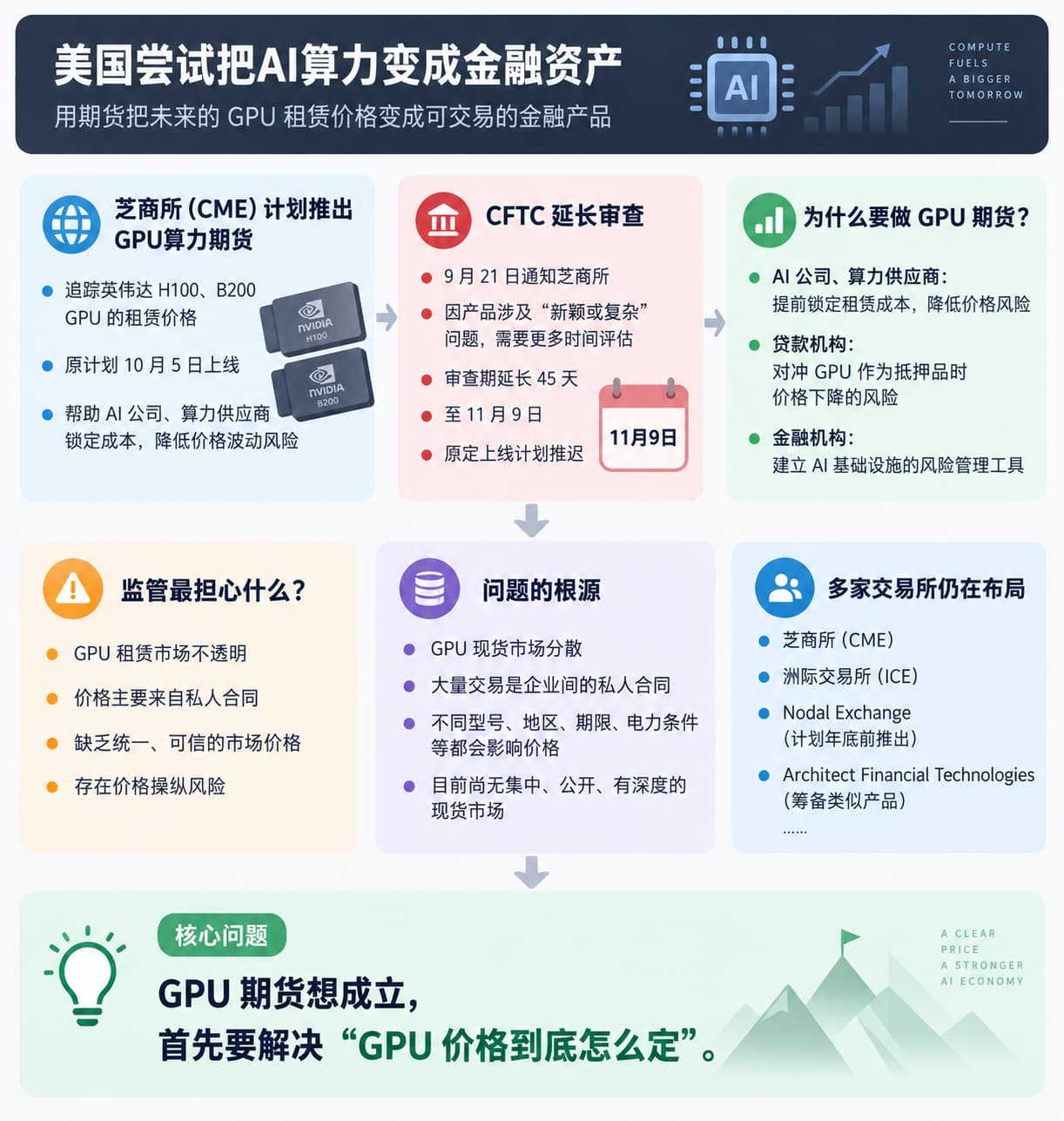
As the debts and financing capabilities of infrastructure companies such as CoreWeave and AI come under scrutiny from investors, Jensen Huang stated that the demand for AI spans multiple industries. As a result, the market is facing a shortage of capital. He also mentioned that NVIDIA is working to promote GPU computing devices as an asset category that can obtain financing.
Regarding the recent pressure on the storage chip sector due to the potential oversupply around 2029, Jensen Huang stated that he does not see any signs of a significant oversupply at that time. He mentioned that high-bandwidth memory HBM will still be widely used in the coming years, and data centers will continue to increase their usage of storage products such as LPDDR.
10. Anthropic vs IPO: Half-year revenue of $16.3 billion, yet undertaking a commitment to provide up to $750 billion in computing power
According to the draft prospectus of IPO seen by The Wall Street Journal, Anthropic achieved revenue of approximately $16.3 billion in the first half of this year, compared to only $1.1 billion in the same period last year; infrastructure expenditures during the same period approached $9 billion. Revenue in the third quarter further reached approximately $16.8 billion, showing a nearly 50% quarter-on-quarter increase, although the growth rate has slowed down compared to the first half of the year.
What truly attracts investors' attention is the capital requirement. Anthropic has already undertaken cloud computing contracts worth approximately $450 billion with a duration of seven to ten years, which include large-scale procurement obligations from Google Cloud, AWS, and Microsoft. Adding other chip and data center arrangements, its future infrastructure commitments have exceeded $600 billion. If all the projects currently under negotiation are finalized, the total amount could reach around $750 billion.
This week, there were also reports that Nscale is in talks with Anthropic regarding a computing power supply agreement that could reach a value of $45 billion.
This explains why it is difficult for Anthropic to continue relying on private market financing. Axios points out that as AI's capital expenditures approach the tens of billions of dollars, the capacity of venture capital and private credit to support them is approaching its limit. The yield on some debt financing has already exceeded 10%, indicating a clear rise in funding costs.
In addition, Anthropic recorded a net loss of $80.7 billion in the first half of the year, although about $72 billion of this came from changes in the fair value of financing instruments such as convertible notes and should not be simply regarded as an operating loss. Compared to this financial figure, what is more noteworthy is the concentration of customers: approximately one-fifth of the company's revenue in the first half came from just two customers.
At the governance level, Anthropic plans to invest 5% of its shares in a new public interest fund. At the same time, its Long - Term Benefit Trust has the right to appoint four out of seven directors, which significantly weakens the governance rights of future public shareholders compared to those of ordinary listed companies.
Anthropic This time, the core of IPO has surpassed the valuation itself. The capital market needs to determine whether this model, which involves investing substantial computing power in exchange for rapid revenue growth, can ultimately achieve a high enough return on capital. The listing of Anthropic is likely to become a crucial stress test for the public market regarding the business model of generative AI.