Amazon CEO Jassy: To widely apply AI in enterprise software, costs need to be reduced to one-tenth of the current level
The Block
1h ago
Ai Focus
Amazon's Andy Jassy stated that the inference costs of AI are still too high, and to widely apply AI in enterprise software, the costs need to be reduced to about one-tenth of the current level. He mentioned that Amazon's self-developed chips are expected to help lower these costs, and indicated that the company plans to invest $220 billion in capital expenditures this year. The main computing power supply for 2026 is already almost fully booked, most of 2027 has also been reserved, and a considerable portion for 2028 is also sold out.
Helpful
No.Help

News from the IT Home on October 24th: Andy Jassy of Amazon believes that the inference costs of AI are still too high. To enable AI to be widely used in enterprise software, the costs need to be reduced to about one-tenth of the current level. Amazon's self-developed chips are expected to help lower these costs.

In an interview released on the 23rd local time at the venture capital firm a16z, Jia Xi revealed: "In my opinion, to enable AI to be used as widely as possible, the inference cost is still an order of magnitude too high."

Amazon plans to invest $220 billion (Note from IT: the current exchange rate is approximately 1.47 trillion yuan) in capital expenditures this year, yet it still cannot build enough infrastructure to meet the demand of AI. Jassy revealed that the main capacity supply for 2026 is basically fully booked, most of 2027 has also been reserved by customers, and a considerable portion of 2028 has also been sold out. In his view, with such strong market demand, even if Amazon invests more substantial funds, it would not be considered a waste.

Jiaxi compared the AI requirement to a "barbell": one end is the AI laboratory, which consumes an unprecedented amount of computing power; the other end is corporate clients, who mainly use AI for tasks such as customer service and fraud detection.

What has truly not been fully developed yet is the intermediate market, namely the various software programs used by businesses on a daily basis. These software programs have not yet been widely integrated with AI, but Jia Xi believes that the greatest future demand for AI may come from this area.

The main factor that restricts enterprises from adopting AI is the reasoning cost. The AI model consumes computing power for each answer it provides and each task it completes. If the benefits brought by introducing AI are not sufficient to offset the higher operating costs, enterprises will have little incentive to restructure their existing software.

Jia Xi compares it to Amazon's experience from several years ago. At that time, Intel dominated the cloud server processor market. Amazon wanted to achieve higher computing performance at the same cost but found it difficult to persuade Intel to prioritize this need, so they ultimately decided to develop their own Graviton processors. In his view, "the same story is playing out again in the AI field."

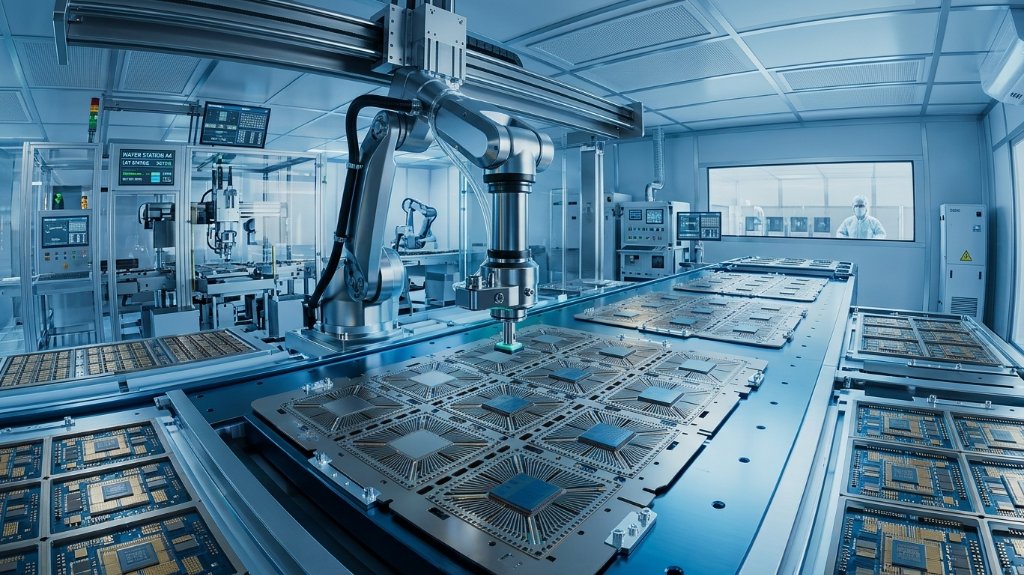
The chip market is currently dominated by NVIDIA. Amazon, on the other hand, has launched its own Trainium chips in an effort to provide customers with a lower-cost option. Jiaxi did not directly mention NVIDIA in the interview, but emphasized that the dominant supplier in the market remains an important partner for Amazon.

According to the introduction, the cost-performance ratio of Trainium is about 30% to 40% higher than that of similar processors. Customers can obtain more computing power for the same amount of money. 'Our chip business plays an important role in reducing inference costs.'

Amazon previously disclosed that Trainium has received future revenue commitments of over $225 billion (approximately 1.5 trillion yuan at current exchange rates), which includes agreements reached with Anthropic and OpenAI.

Tip
$0
Like
0
Save
0
Views 31
WalletJYS reminds readers to view blockchain rationally, stay aware of risks, and beware of virtual token issuance and speculation. All content on this site represents market information or related viewpoints only and does not constitute any form of investment advice. If you find sensitive content, please click“Report”,and we will handle it promptly。
Submit
Comment 0
Hot
Latest
No comments yet. Be the first!
Related
Storage expansion drives an increase in the production of thin-film deposition equipment
Domestic thin-film deposition equipment manufacturers have seen significant growth in orders and revenue driven by the expansion of storage chip production. Companies such as Microguide Nano and Tuojing Technology are accelerating their capacity expansion and platform-based development strategies, with new products like PVD also becoming key focuses.
The Block
·2026-10-24 11:46:09
0
Retail investors made a record-low purchase of US chip leveraged products ETF, followed by a sharp drop this week
Last week, investors poured a record $6.1 billion into nductor and Bull tokens from Direxion Daily Sem (3X ETF (SOXL)) in an attempt to buy into the continuously declining chip stocks at rock-bottom prices. However, this week, these ETF tokens fell another 10.8%, with a sharp drop of 20.5% on Thursday alone, and the cumulative decline since October has exceeded 43%. Doubts about the investment returns of AI continue to put pressure on the semiconductor sector.
Wallstreetcn
·2026-10-24 11:26:13
9
Google illegally logged forests in Finland to build data centers, with about 250,000 trees cut down
In early October, Finnish regulatory authorities demanded that Tuike Finland Oy, a data center developer under Google, immediately cease illegal deforestation. According to The Guardian in the UK, Google has cut down approximately 526 hectares of forest to build its data centers, resulting in the removal of around 250,000 trees, and the impacts have affected local wildlife and residents' lives.
The Block
·2026-10-24 10:46:05
21
Country deploys measures to slow down the replacement of AI employment; housing prices in first-tier cities stabilize | Weekly hot topic review
This week's financial highlights include: China's economy grew by 4.5% year-on-year in the third quarter, housing prices in first-tier cities continued to stabilize, national fiscal revenue exceeded 17 trillion yuan in the first three quarters, the General Office of the State Council deployed measures to mitigate the impact of artificial intelligence applications on job displacement, the establishment of a National Data Group, A-share markets rebounded sharply after volatile tech stocks, the central bank clearly designated the interbank overnight repurchase rate as the target interest rate for monetary policy regulation, and France faced dual pressures from politics and finance.
The Block
·2026-10-24 10:36:26
25
View More