

Microsoft's large-scale employee buyout plan launched this week has shocked the entire industry and has also raised an urgent question: Why would this software giant want so many people to leave?
Within the company, concerned employees have been discussing the implications of this move. Why does Microsoft want to lay off 60,000 employees? Will these positions be replaced by artificial intelligence? Will there be more layoffs in the future?
Business Insider recently interviewed several Microsoft insiders in an attempt to clarify what exactly happened within the company. The respondents requested anonymity due to the sensitive nature of the matters involved.
The main conclusion at present is that Microsoft seems to have unnecessarily frightened its employees due to the large scale of the buyout plan, resulting in management being busy soothing the team's emotions.
Chief Financial Officer Amy Hood explained in an internal memo that the purpose of this scheme is to "give employees the autonomy to choose when to leave the company," and stated that the company expects "very few" people to accept it.
Microsoft subsequently further informed Business Insider that it is expected that the number of employees who will accept the buyout will not exceed 3,000. Based on the eligible employees, this accounts for approximately 5% or less.
Layoff concerns
Earlier this year, the company offered a retirement buyout package to employees who met the age and length of service requirements, and about one-third of them accepted it.
Not long after, Microsoft carried out another round of layoffs. Some employees who did not accept the buyout for retirement eventually lost their jobs as well.
This has led to speculation among outsiders that there may be more layoffs following this larger-scale buyout plan this week.
Microsoft stated in a statement: "Future staffing needs will continue to be based on business requirements and priorities."
Misunderstandings and Differences
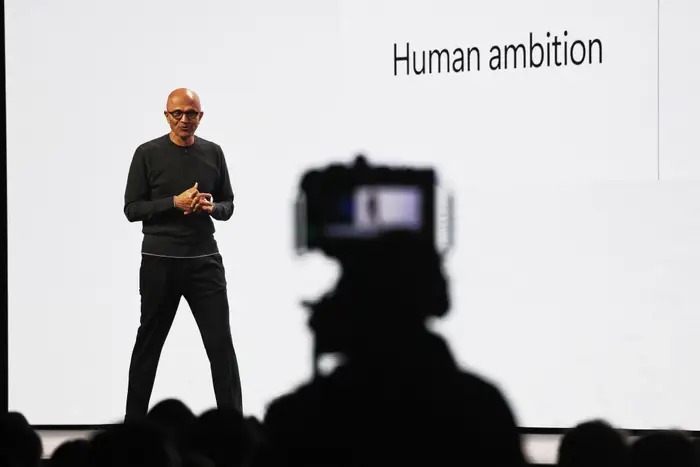
Business Insider interviewed Microsoft executives, who stated that there are some misconceptions about the current buyout plan in the outside world.
These executives can only discuss the situation of their respective teams and are reluctant to assert categorically that layoffs will not occur. However, they pointed out that there are several differences between the current buyout plan and the retirement buyout.
An executive who wished to remain anonymous stated, "Microsoft doesn't intend to lay off 60,000 people. We won't replace everyone with artificial intelligence."
In the case of retirement buyouts, after employees leave, Microsoft does not recruit replacements, and these positions are thus eliminated.
This week, the buyout scheme operates in a different manner. In some cases, after employees leave, the company will recruit new staff to fill these positions.
A Microsoft executive told Business Insider: “For very large organizations, it’s easier to accept a buyout.”
According to an informed source, Charles Lamanna, the executive in charge of Copilot Platform, AI, agents, Office, and Word, has decided to offer all employees within his organization a buyout option, including many key position holders. The source stated that if any of these key employees accept the buyout, the organization is prepared to recruit replacements.
Cloud + AI group adopted different approaches
Another senior executive of the company stated that Microsoft's core Cloud + AI departments adopted a slightly different approach.
Most of the other teams under Cloud and AI departments provided employees with the option to buy out their positions. The executive told Business Insider that this department could also recruit for some vacant positions.
Cut costs and avoid layoffs
Even if positions are filled through additional recruitment, Microsoft may still reduce labor costs. A company executive stated that if a senior employee leaves, the company is likely to replace them with junior employees who earn less. A Microsoft spokesperson said that this is not the company's official position.
If all of this seems too complicated, there might be a reason for it compared to simply laying off employees: Microsoft has always been criticized for laying off American workers while hiring foreign employees at the same time.
A Microsoft executive told Business Insider: “Never say absolutely never, but we are very reluctant to carry out large-scale layoffs, especially as an American company.”