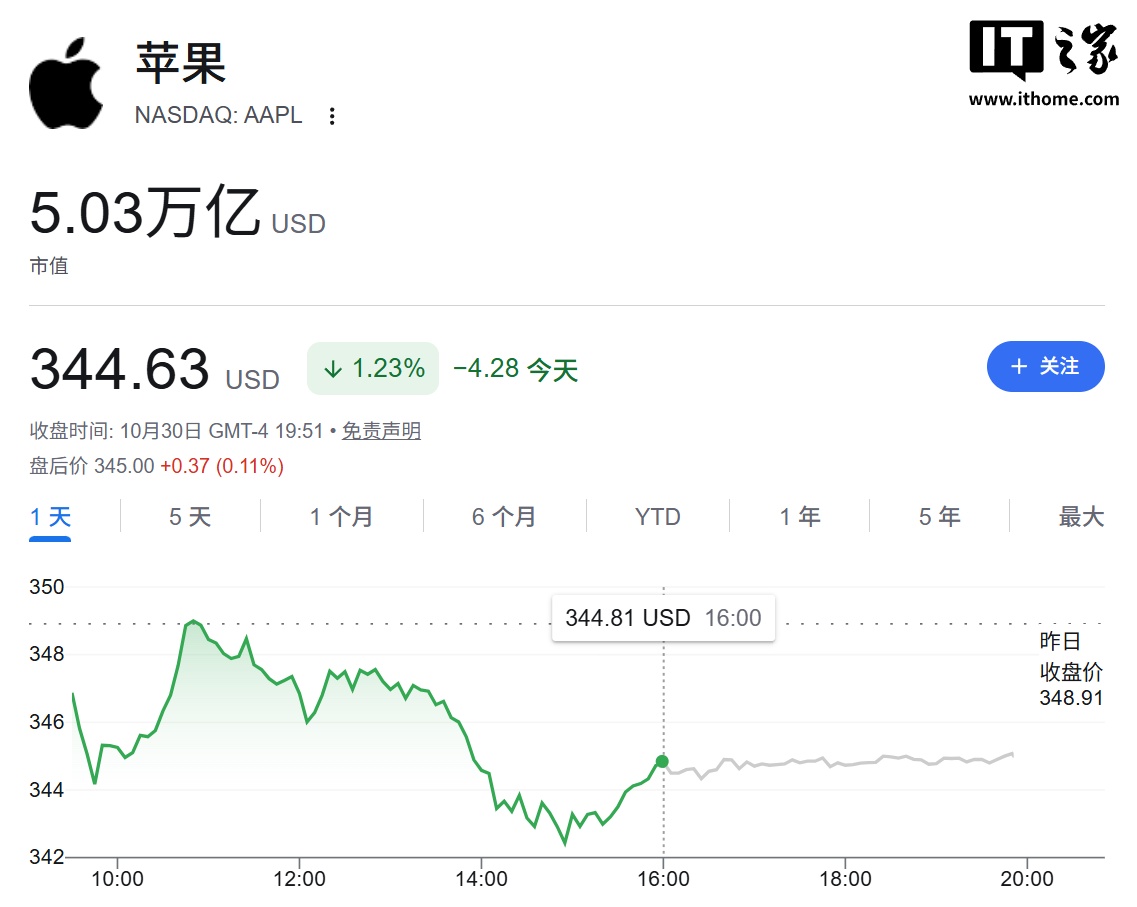
Tech stocks tumbled for a second consecutive day on Friday, with concerns over AI spending and weak core businesses of large tech companies putting pressure on them.
The Nasdaq 100 index fell 3.5%, recording its worst single-month performance since March 2025, with a temporary drop of 4.45% during the session, briefly breaking below the technical correction threshold.
Investors' tolerance for technology companies is declining, especially when these companies' traditional businesses are weakening and they also plan to make substantial capital expenditures.
Alphabet Inc. The performance of Amazon has exacerbated market concerns, as the technologies these companies are betting on may be eroding its core business.
Amazon's stock price fell by 1.4%, with the spending plans surrounding AI and the weak e-commerce business overshadowing the positive news of the steady growth of its cloud business. The related poor performance dragged down all seven major U.S. tech giants.
Intel's stock price fell by 29%, recording its largest single-day decline in history. The company's quarterly revenue outlook fell short of analysts' expectations, with weak demand for personal computer processors and supply chain issues facing its profitable data center components.
AMD and NVIDIA both fell by 11% and 4.2% respectively, while personal computer manufacturer Dell Technologies also fell by 11%.
The Philadelphia Semiconductor Index fell 7.2%, breaking below the 200-day moving average for the first time since June 2025.
"The bigger question now is whether the weakness in tech stocks will spread to the overall market, or will funds continue to rotate between different sectors?" wrote Jonathan Krinsky, Chief Market Technical Analyst at BTIG, in the report.
Apart from the communications services and information technology sectors, all other sectors of the S&P 500 index rose this month.
However, technology stocks carry a relatively high weight among the major stock indices and may drag down the overall market, especially since the mid-term elections in the United States are scheduled for next week.
"If the major stock indices start to decline, investors may choose to shift to cash rather than rotate to other sectors," said Miller Tabak & Co, Chief Market Strategists at Matt Maley.
As of the close, the S&P 500 index fell 1.8% to 7,580.07 points.
The Dow Jones Industrial Average fell 1.1% to 51,770.31 points.
The Nasdaq Composite Index fell 2.9% to 2,5437 points.
The Nasdaq 100 index fell 3.5% to 28,384.85 points.
The Russell 2000 Index fell by 1.7% to 2,811.844 points.