Chinese concept stocks performed strongly against the trend.
- The three major stock indices showed mixed gains and losses, with the Dow Jones rising by more than 200 points;
- The yield on 10-year U.S. Treasury bonds fell below 4.90%;
- Apple's revenue exceeded expectations.
The Nasdaq Composite Index and the S&P 500 Index fell on Monday, giving back some of their earlier gains, as investors continued to pull out of tech stocks and increased their allocation to other sectors of the market.
As of the close, the Dow Jones Industrial Average rose by 213.67 points, or 0.41%, to 51,983.98 points. The Nasdaq Composite Index, which is dominated by technology stocks, fell by 1.07% to 25,164.32 points, while the S&P 500 Index declined by 0.51% to 7,541.40 points. During the session, both indices briefly rose by 1.4% and 1.1%, respectively.
Apple releases its financial report after the event. This is Apple's first financial report since John Ternus took over from Tim Cook on September 1st to assume the position of CEO. The company's revenue increased by 12% compared to the same period last year, which was $102.5 billion. Earnings per share were $2.10, higher than the estimated $2.00. The gross margin for this quarter was 47.9%, with tariff refunds contributing positively by about 1 percentage point, a significant decline from the previous quarter's gross margin of 50.1%.
Among them, iPhone reported revenue of $57.58 billion, which is higher than Reuters' forecast of $56.54 billion. Service revenue was $31.57 billion, close to the estimated $31.58 billion. Mac had revenue of $10.79 billion, exceeding the estimated $9.7 billion. Revenue from wearable devices, home products, and accessories was $8.30 billion, lower than the estimated $9 billion. The business segment of iPad saw a year-over-year decline of over 10% to $6.22 billion, making it the worst-performing category among Apple's product lines. Ternus attributed the weak performance of iPad to supply constraints and the pressure of a high base from the same period last year.
Apple stated that, thanks to its extremely high customer satisfaction and user loyalty, the number of active devices across its various product lines and major regions has reached new highs.
Apple's board of directors announced a cash dividend of $0.27 per share. After the financial report was released, the company's stock price fell nearly 1% after the market closed.
Star tech stocks saw more declines than gains, with only Amazon and Tesla closing higher, while Microsoft fell by 2.83%.
The Philadelphia Semiconductor Index tumbled at the close, falling nearly 4%. Intel fell 8.80%, as the company forecasted quarterly revenue below market expectations and stated that its cash flow this year would not be positive. AMD fell 7.52%.
Storage chip stocks are sluggish, with SanDisk, Micron Technology, and Western Digital falling by more than 5%.
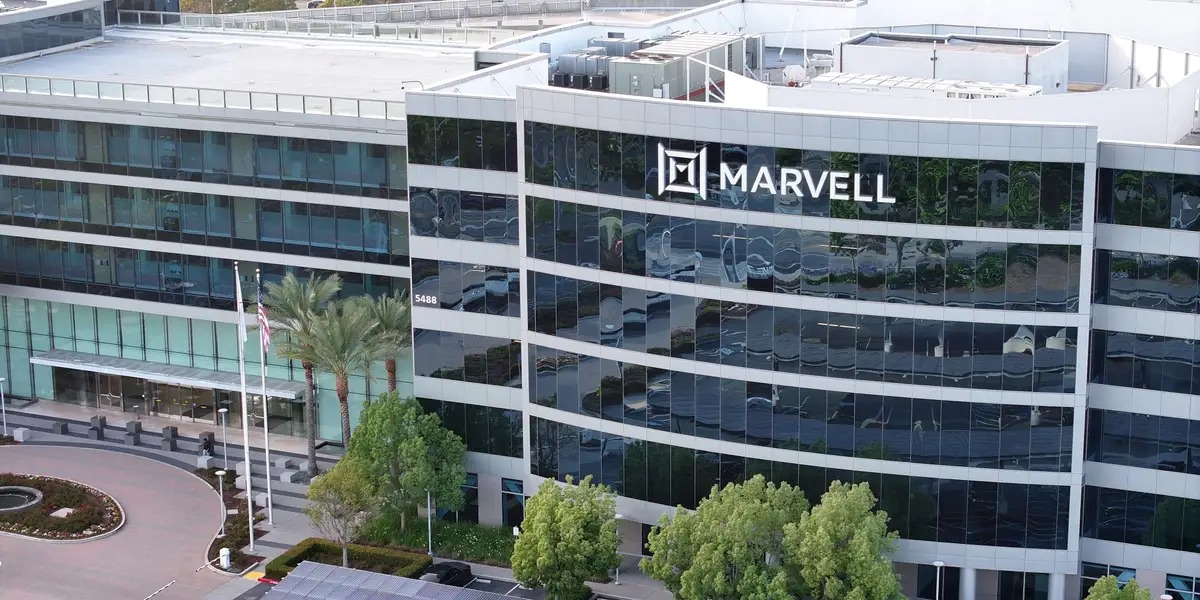
The optical communication sector is under pressure, with Lumentum plummeting by nearly 19%. Marvell Technology announced a $115 billion acquisition of Lumentum, Coherent fell by 4.93%, and Corning fell by 0.09%.
Oracle fell 8%. The company stated that it plans to sell $10 billion in common stock and $10 billion in bonds to fund the expansion of its artificial intelligence business.

Traditional cyclical stocks such as Sherwin-Williams and Home Depot drove the Dow Jones up, with increases of 5.6% and 3.3% respectively. Honeywell International, 3M, and Boeing also saw gains of over 2%.
The NASDAQ China Golden Dragon Index rose by 2.25%, Pinduoduo by 3.91%, Alibaba by 3.53%, and JD.com by 2.41%.
Market Overview
Major news has emerged regarding the Middle East situation. According to CCTV News, an official familiar with the talks stated that Qatari mediators traveled to Tehran on the evening of the 2nd local time, with plans to hold discussions with Iranian Foreign Minister Mohammad Javad Zarif regarding a potential agreement between the United States and Iran.
According to sources, breakthroughs have been made in the US-Iran negotiations under the mediation of Qatar, and the relevant procedural obstacles have been resolved.
However, on the same day, Iranian officials stated that Iran and the United States were still exchanging information through mediators, and the issues involved in the negotiations were quite complex. Iranian Foreign Minister Mohammad Javad Zarif said in an interview that the indirect consultations between Iran and the US, conducted through mediators Qatar and Pakistan, were "very intensive," and that Iran had put forward its own conditions. Zarif emphasized that the reopening of the Strait of Hormuz was contingent on the acceptance of Iran's terms; otherwise, the current situation would continue. "If the United States chooses sincere diplomacy, Iran is willing to participate; if the US attempts to deceive or launch military actions, it will face a more severe and substantial counterresponse than before."
Investors also paid attention to the U.S. mid-term elections on Tuesday, which will determine whether the Democratic Party will be able to take control of Congress from the Republican Party led by Trump. Polls indicate that the Democratic Party is likely to win the House of Representatives, while the outcome in the Senate is less certain.
Long-term U.S. Treasury yields declined, with the benchmark 10-year Treasury yield falling by 3.5 basis points to 4.893%, and the 30-year Treasury yield falling by 4.1 basis points to 5.268%.
The Nasdaq index fell 5.3% last month, as the market sold off due to concerns that large-scale spending on artificial intelligence infrastructure would exceed short-term cash flow growth.
Jack Dohlehead, CEO of Longbow Asset Management Company, stated that investors are still concerned about the pace of spending on artificial intelligence. "Companies must realize that spending is limited, and what that means for enhancing shareholder value. At a certain point, there is no additional value added; there is only expenditure."
Chris Larkin, Managing Director of Trading and Investment at E-Trade, stated: "The long-term bullish story for the stock market may have suffered some setbacks recently, but overall it remains intact. The challenge lies in short-term momentum—whether it can continue without being interrupted by soaring oil prices, artificial intelligence spending, inflation, or geopolitical issues for several days in a row. The market may face more 'volatility triggers' in the future, including this week's mid-term elections and employment data, but its ability to bend under pressure without breaking is always a positive sign."
International oil prices tumbled significantly on the 2nd. The price of light crude oil futures for December delivery at the New York Mercantile Exchange fell by $7.66, closing at $96.46 per barrel, a decrease of 7.36%; the price of London Brent crude oil futures for January delivery fell by $8.66, closing at $104.77 per barrel, a decrease of 7.63%.
Precious metals markets rose; on the New York Mercantile Exchange, COMEX gold futures for November delivery gained 1.83% to close at $3,956.90 per ounce, and COMEX silver futures rose 3.31% to close at $50.72 per ounce.