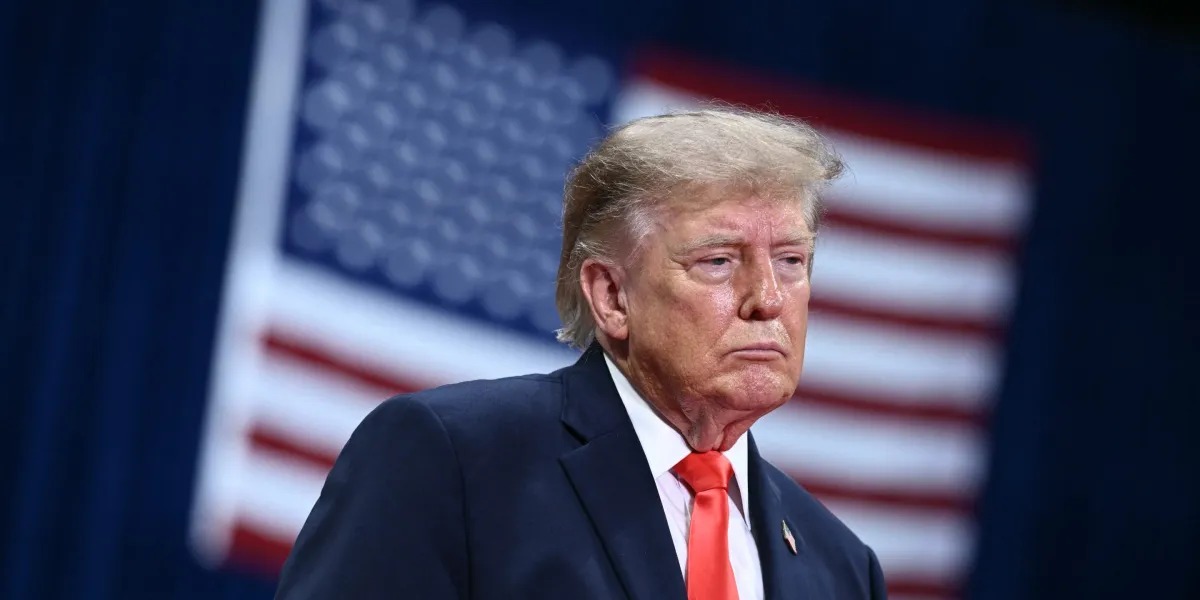


U.S. midterms are held today, on November 3rd, and control of Congress is still up in the air. Current market forecasts suggest that the Democrats have nearly an 80% chance of sweeping victory, which has raised questions about how the election results will impact Trump's policies, financial markets, and the ongoing Iran war.
The core question is whether the Republican Party will be able to maintain control of both the Senate and the House of Representatives, or whether the Democratic Party will win enough seats to challenge the government's agenda. According to Bull theory, here are five possible outcomes and their potential impacts on the financial markets.
The Republican Party wins both houses of Congress
If the Republican Party wins both the House of Representatives and the Senate, Trump's economic agenda could gain stronger support. Artificial intelligence companies and other businesses may benefit from continued deregulation, while cryptocurrency legislation may face less political resistance.
However, market expectations of increased government spending and borrowing may push up bond yields and could strengthen the dollar.
2. The Democratic Party wins both houses of Congress
A Democratic sweep could pose a significant challenge to the Trump administration.
Trump's policy plans could come to a standstill: Democrats can block major bills, while Trump can veto legislation passed by Congress. This could lead to a two-year political deadlock.
Investigation into the government: Democrats will regain the power to issue congressional subpoenas and may investigate Trump family's crypto business, tariff exemptions, and political donors. Public hearings could also increase the pressure on the government.
Impeachment becomes possible: Democrats could push for Trump's impeachment with a majority in the House of Representatives. However, removing him from office still requires a two-thirds majority in the Senate, which is unlikely to be achieved by the Democrats. Trump has said, "I will be impeached," but Democratic leaders have not yet pledged to initiate the process.
Uncertainty looms over government funding: Disagreements over the federal budget and debt ceiling could intensify. Democrats may also use their influence over government spending and Senate confirmations to challenge Trump's priorities. If no consensus can be reached on government funding, a government shutdown may follow.
Iran's war funding may face opposition: Democrats have pledged to end this war. However, the new Congress will not take office until next year, so their main leverage might be to restrict military funding rather than to immediately change U.S. war policy.
Cryptocurrency legislation may be delayed: Senator Elizabeth Warren could play a leading role in the Senate Banking Committee. CLARITY Act may face more difficult negotiations and could continue to be stalled for two years. Compared to other cryptocurrency policy proposals, Bitcoin, being classified as a commodity, may encounter less resistance.
There may be a differentiated reaction in the U.S. stock market: JPMorgan Chase believes that a Democratic sweep is the weakest outcome for the U.S. stock market in the short term, with an estimated potential return range of -0.25% to +0.50%. However, historical performance provides a different answer. Since 1954, there have been 7 instances where Republican presidents faced a Congress controlled by Democrats, and in the following 12 months, the S&P 500 index rose in all 7 periods, with an average return rate of 15.5%.
3. Democrats win the House of Representatives, Republicans retain the Senate
A divided Congress could limit major policy changes. Democrats could investigate the government in the House of Representatives and block proposals, while Republicans could resist Democratic legislation in the Senate.
For the market, the uncertainty surrounding government funding and debt ceilings may lead to short-term fluctuations. Cryptocurrency legislation may also be delayed, but fewer major policy changes could potentially provide some stability for businesses.
The Republican Party won the House of Representatives, while the Democratic Party took control of the Senate.
Trump may face resistance on legislative priorities, especially regarding spending and regulatory issues. Republicans can advance proposals in the House of Representatives, but Democrats can slow down the process in the Senate through negotiations and by opposing key appointments.
Investors may expect a slowdown in the pace of policy changes, while the market's reaction will depend on subsequent developments in Congress.
5. The election results are too close or are announced with a delay
If a quick determination of victory or defeat is not possible, the uncertainty surrounding control of Congress may persist until a final confirmation. As investors wait for a clear outcome, there could be short-term fluctuations in stocks, bonds, and the US dollar.
If the Democrats win, will the U.S. stock market fall?
A Democratic victory does not automatically mean a decline in the stock market, just as a Republican victory does not necessarily mean an increase in the stock market.
Historical data shows that since 1954, in all 7 instances where a Republican president faced a Congress controlled by Democrats, the S&P 500 index has surpassed its pre-election level 12 months later, with an average increase of 15.5%.
Election results will affect market expectations regarding U.S. policy, but interest rates, economic conditions, and corporate profits will also determine market performance.
Credibility statement for CoinPedia:
Since 2017, CoinPedia has been providing accurate and timely updates on cryptocurrencies and blockchain. All content is created by its team of expert analysts and journalists, and follows strict editorial guidelines based on E-E-A-T (experience, professionalism, authority, credibility). Each article undergoes fact verification against reliable sources to ensure accuracy, transparency, and reliability. Its review policy guarantees unbiased assessments when recommending exchanges, platforms, or tools. The website is committed to keeping users informed about the latest developments in the crypto and blockchain fields, covering everything from startups to industry giants.
Investment Disclaimer:
All views and opinions expressed in this text represent the author's personal perspective on the current market conditions. Before making any investment decisions, please conduct your own research. Neither the author nor the publisher assumes any responsibility for your financial choices.
Sponsorship and Advertising:
Sponsored content and affiliate links may appear on the website. Advertisements will be clearly labeled, and editorial content remains independent of advertising partners at all times.