

Key Points
Don't expect the results of the mid-term elections to cause huge fluctuations in energy stocks in the short term. However, from a longer-term perspective, there will still be some investment implications. Let me break it down for you below.
Yes, it is entirely possible that one or both chambers of Congress could come under Democratic control. This is not my opinion, but as of the time of writing, many research reports, polls, and market forecasts indicate this to be the case.
Assume that the polls are correct this time. If the election ends with a “slight blue advantage,” and the Democratic Party wins by a narrow margin in the House of Representatives, the Senate, or both chambers, that still wouldn’t be enough to truly change anything. Even if the election results lean slightly in favor of the Democratic Party, it’s not enough to form a majority that could override a veto. Candidates can propose policies at will—for example, calling for a halt to the expansion of data centers—but there is a chasm between being elected and passing new laws.
The research I've read, as well as our discussions on CNBC, indicate that in the next two years, Washington D.C. is likely to be filled with mutual accusations, investigations into the president and his family, and preparations for the more important 2028 presidential election.
Standard & Poor's Global does not entirely agree with my view. The institution stated that if either chamber of Congress is controlled by the Democrats, it would lead to "more stringent oversight of institutional decision-making" and could affect tax incentives as well as "other policies that support long-term energy investment."
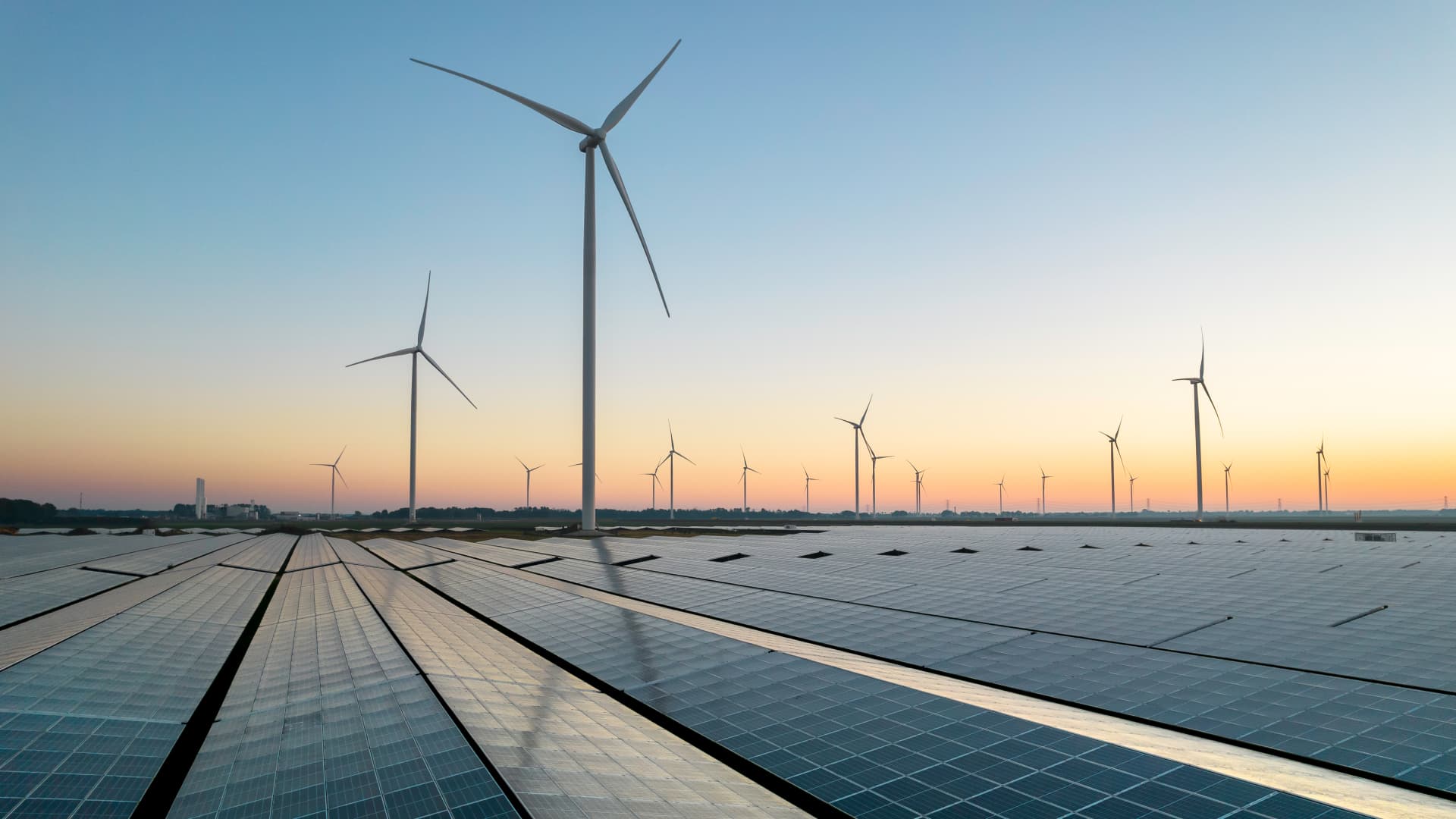
A Democratic-controlled Congress could be favorable to offshore wind power – a source of energy that seems to be highly displeasing to the president. Speaking of the sun, shifting towards blue energy could also be beneficial for the continued growth of solar power, perhaps through new tax incentives. Both are growing rapidly.
If the Republicans continue to control one or both chambers of Congress, we will continue to do the same things, only with more urgency. S&P Global added: "If the Republicans maintain their majority, it will provide more room for the government to pursue increased domestic production, faster approval processes, and relaxed environmental regulations. However, a narrow majority may limit major legislation."
Changes in congressional control are also unlikely to make a significant difference regarding the Iran conflict. By the time the new congress begins its operations in January, the situation will either have escalated, remained unchanged, or cooled down. The new congress could attempt to exercise the powers granted to it by the War Powers Act. The Piper Sandler team agrees with this view, stating, "Elections are important, but they may not change the direction of events," as Trump is more concerned with his own political legacy. To put it mildly, this means that the president will largely act according to his own wishes and is unlikely to pay much attention to Congress.
At the state level, mid-term elections may have a more significant impact, especially regarding the issue of power-consuming data centers. In Texas, changes in the state legislature could alter public attitudes towards data centers. Candidate Gina Hinojosa proposes to "end the madness of data centers" and supports a moratorium on new constructions. Amy Acton also advocates for a "conditional pause" on the construction of new data centers. Vivek Ramaswamy calls for additional conditions to be imposed on the construction of new data centers as well.
This issue is very important in many states. However, even if these candidates, or those with similar views who oppose large-scale new energy projects, win, they still need to truly drive change. Of course, such change is possible. So, let's assume it does happen: the new governor takes office and uses their power to slow down or even stop new projects. Even if some large new projects are put on hold or canceled, electricity demand will at least remain at the current level. This means that the demand for power generation from natural gas, nuclear power, and even coal will also remain at the current level.
Regarding energy-intensive utility stocks, Bank of America also largely agrees with my above electoral analysis. Their team writes that they believe "there are far fewer states that will truly impact utility stocks in the 2026 cycle than the headline figures suggest," but the appointments of state commissions will be very important. The Bank of America team indicates that the five most crucial states in terms of elections and utility stocks are Georgia, Ohio, Oregon, Pennsylvania, and Texas.
Texas is “the most critical” because the state’s environmental regulatory agency has suspended permits related to data centers. The Texas Commission on Environmental Quality ( TCEQ ) has actually stopped electronic approvals to ensure that no permits are issued in relation to data centers. Coming back to my point, this information is actually already well-known. It’s important, but the market is aware of it and has taken it into account in pricing. Nevertheless, if you invest in any assets related to data centers, the most noteworthy factor is still the elections in Texas.
There's a lot of information here. So let's take a deep breath first, step back, and look at where we are right now.
U.S. crude oil production is at a historic high.
Strategic oil reserves are at their lowest level in 40 years.
Two of the most important energy regions in the world are at war.
Backlog of orders for data centers — as well as the electricity required to operate them — have been scheduled for several years. Even if some of these are eventually canceled, other projects will continue to be built.
These days, it's very difficult to be completely certain about anything. But what I can be sure of is that the overall energy demand in the United States will not decline in the short term. The only direction is upward. The question is just how much more it will rise.
This is my opinion. It could also be wrong. Moreover, since I really enjoy hearing your thoughts, I initiated a poll on both X and LinkedIn. The results show that you don't agree with me.
NoteI am fully aware that the results of any vote on X or LinkedIn will be influenced by the types and composition of my fans on various platforms – they are highly inclined towards business, money, and energy.
If elections are not that important for energy in the short term, then what is?
I'm glad you asked. Here is my ranking of the most important factors in the energy sector for the coming year:
- Iran and the Strait of Hormuz
- The war between Russia and Ukraine
- Interest Rate
- U.S. and Global Macroeconomics
- Approve reforms
(Disagree? Contact me on X or LinkedIn and tell me why.)
The resolution of the conflict in Iran or the end of Russia's war in Ukraine would be extremely beneficial to the world and would relatively quickly bring down prices of crude oil, natural gas, and refined products. Let us all pray for peace.
Lower interest rates will help many stocks that are under heavy pressure and rely on debt and consumer credit to recover their performance. For example, residential solar panel companies.
The macroeconomy will operate at its own pace and will not change due to the U.S. elections, and there will also be basically no major changes in U.S. tax policy in the coming years.
Approval of reforms is certainly a factor that could be influenced by election results, but it is unlikely to be achieved in the short term.
Friends, regardless of the outcome of the U.S. elections, one thing is certain: the real focus of politics will be on Trump, more Trump, Trump's family, even more Trump, and the prospects for the 2028 presidential election.
If we could transform political infighting into some kind of energy, it might even be better than nuclear energy!
But I digressed...
I am going to Europe this week to continue our five-year coverage of the slowly brewing energy crisis in Europe. Although the word “crisis” is overused in the media, I don’t think that’s the case here. The import prices of natural gas are soaring, inventory levels are below recent averages, interest rates are rising, and the public is already angry about the higher energy costs. This is a toxic combination. I will discuss these issues in Europe later this week.
Thank you for reading and watching.
Brian
Operational observation
Firstly, from a macro market perspective, I still remain cautious about tech stocks and the overall stock market at present. As I stated in my post on October 14th, the market "feels very fragile."
Since then, the NASDAQ index has fallen by more than 5%. Artificial intelligence is not in a bubble, but not all companies will benefit from it. Some companies may disappear. We need to pay attention to the bond market, especially some high-yield bonds related to artificial intelligence, which are known as "junk bonds." State Street High Yield ( JNK ) ETF These are very prominent on my screen right now. You need to understand the term "leverage" ETF because these products are currently getting a lot of attention. The selling off of many such products could trigger a sell-off of other products and stocks as well. If the selling off of these products slows down, some of the large tech stocks that have recently fallen might stabilize.
To be more specific, let's get back to the topic that you all care most about here: energy.
The earnings season is almost over. ExxonMobil ( XOM ) and Chevron ( CVX ) both delivered impressive results last week. Marathon Petroleum ( MPC ) has just released its financials, and the numbers are even more impressive. The company reported earnings of $26.59 per share, amounting to $11.7 billion in EBITDA. In comparison, a year ago, earnings per share were $3.01, and the figure was $3.2 billion in EBITDA.
ConocoPhillips ( COP ) will make its final announcement later this week.
So what comes next?
Next, the world will wait, observe, and focus on Iran, the Strait of Hormuz, and Russia. The situation there will determine the trend of oil prices and many other markets. If peace arrives, prices will fall; if there are new attacks, prices will rise. Higher prices mean that many large oil and gas stocks will continue to rise. If Russia continues to wage a brutal war against Ukraine, the prices of diesel and aviation fuel will continue to fluctuate.
My opinion is: Pay attention to any news related to Russia selling diesel to the United States. There is currently a ship on its way (see RBI below); let's see if there will be any more.
The ongoing risks surrounding Iran and Russia have prompted Goldman Sachs to raise its oil price forecasts for the rest of this year. The bank has raised its target price for Brent crude to $105, and for WTI crude to $94; it has also raised its average target prices for next year to $88 for Brent (previously $80) and $78 for WTI crude (previously $73). Let's see if other institutions will follow suit.
While American analysts are busy with financial reports, Goldman Sachs' European team is also busy, updating their "European Confident List" of stocks. Some of the companies they are most optimistic about are related to energy, including the German power generator RWE ( RWE-DE ) and the more well-known Siemens Energy ( ENR-DE ).
Concerns about artificial intelligence, rising electricity prices, and increasing interest rates have recently pressured these two stocks. RWE has fallen by 4% this quarter, while Siemens Energy has declined by more than 10%. Goldman Sachs remains bullish. The bank's target price for Siemens Energy is 212 euros, and for the power generator RWE, it is 75 euros. This means that RWE still has approximately 30% room for return, while Siemens Energy has a potential upside of up to 70%.
Europe may face a host of energy problems, but that doesn't mean stocks there can't make you money. For more information, please watch my live broadcast from Italy on Thursday, November 5th, at CNBC.
Take a look at this.
We recently interviewed Toby Rice, the CEO of the natural gas giant EQT (EQT). His company has just completed a major acquisition of Range Resources (RRC). We discussed this transaction, the energy market, and the importance of American natural gas to Europe with Toby.
Another important interview this week regarding energy and artificial intelligence featured Brian Nowak from Morgan Stanley. Brian mainly focuses on tech companies such as Amazon, but his comments on some of the beneficiaries of artificial intelligence in the power sector – namely those companies mentioned above – are worth listening to.
Internal connections
This week's Inside Line interviewee is Christoph Halser, an analyst from Gas and LNG of Rystad Energy.
Random but interesting.
That ship carrying Russian diesel fuel destined for the United States... could it be that it won't actually go to the US? It's possible.
We have been closely monitoring this ship for a week; it is slowly sailing across the Atlantic Ocean. So slowly, in fact, that some people have begun to doubt whether it will actually be able to reach New York. Could it change its destination en route? Such things are quite common in shipping. Once a new buyer takes over the cargo, the ship may alter its course.
It’s indeed curious… Which American company would be willing to buy a batch of Russian diesel now? Putting money into Putin’s pocket is probably not a public relations move any company I know would choose, but one never knows what might happen in this world.
This ship was originally scheduled to dock in New York on November 7th. Tracking this ship now is certainly a bit random, but it's indeed interesting as well.
Information Board
- The CEO of the United Arab Emirates National Oil Company ( ADNOC ) stated that the global energy supply cushion has been eroded (Reuters)
- The United States pushes for the resumption of Russia's natural gas sales to Europe through Ukraine (The Wall Street Journal)
- For more energy-related content, including interviews and videos with CNBC and Power Insider, please continue to follow us.