

The Democratic Party swept multiple seats in the midterms, which could lead to changes in economic policies related to trade, spending priorities, and artificial intelligence. However, economists say that the most influential forces shaping the U.S. economy will not change due to a change in the ruling party.
They believe that the pressure of affordability, persistently high government spending, and reliance on the favorable winds of artificial intelligence may all continue to exist, and these factors pose risks to the economy.
"The economy is currently in a very fragile position, and I don't know how much of a shock it would take to knock it off track; the risk of recession would rise significantly," said Mark Zandi ( Mark Zandi ), chief economist at Moody's Analytics. "That's not the case right now, but I don't think that risk has disappeared."
Zandi stated that before the election, he was already concerned about the economy being threatened by inflation, a weak labor market, and geopolitical risks, and now he is still worried about these issues.
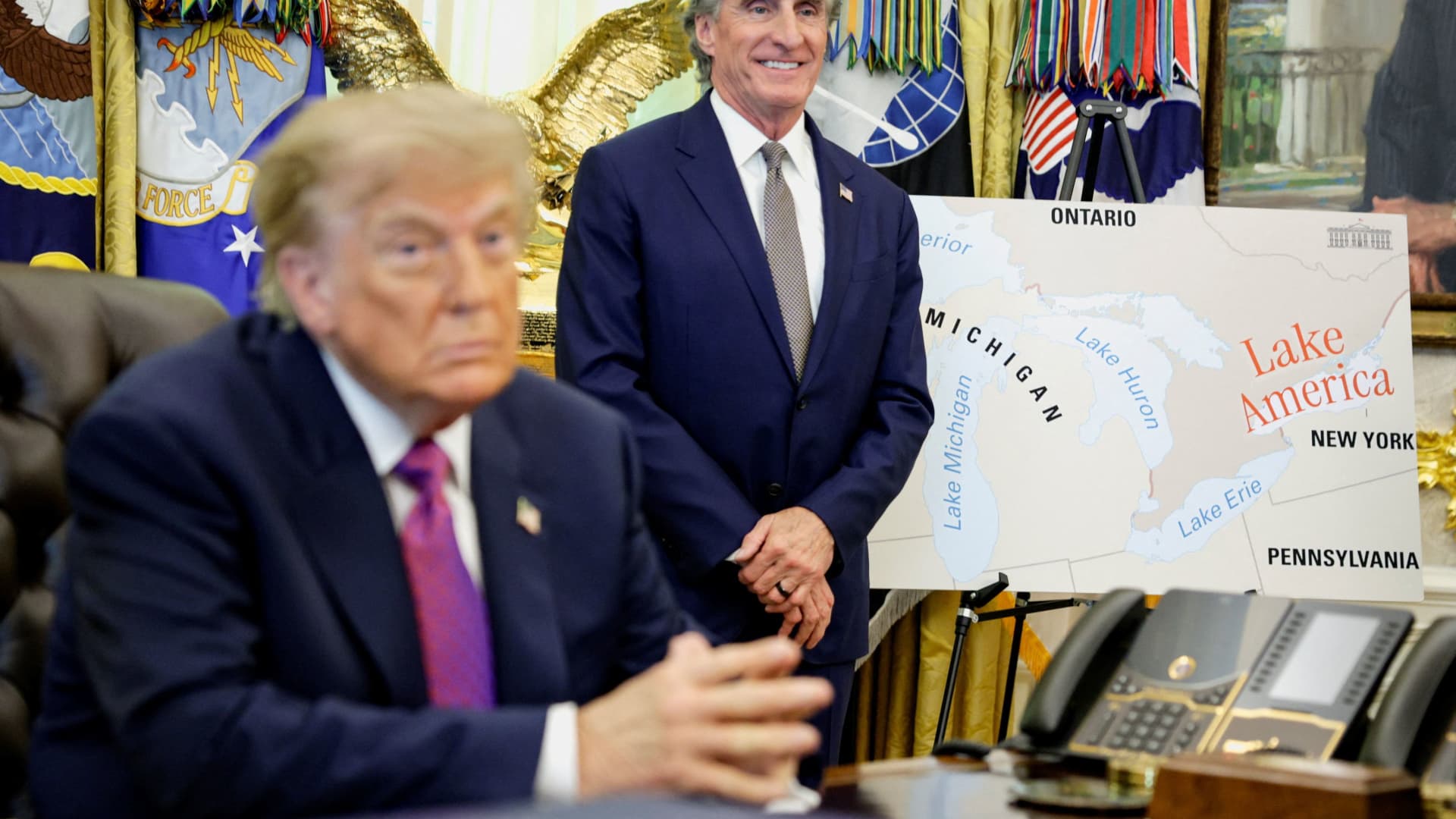
The Democrats not only achieved unexpected victories in the House of Representatives and Senate elections but also won gubernatorial and other state-level elections. However, economic and foreign policy are primarily determined by the executive branch, and President Trump is still far from reaching an agreement with his Democratic opponents, despite his statement on Wednesday indicating that he expects to cooperate with them.
"I don't think there will be any changes in economic policy. The Iran war, tariffs and trade policies, and the strict immigration policies are all implemented through executive orders. They are not driven by legislation," said Zandi.
"The president thought these were good policies before the election. I don't know why he changed his mind after the election," he added, "so I think these policies will continue to exist and will continue to suppress growth, increase inflationary pressures, and interest rate pressures."
Zandi believes that the construction of large-scale artificial intelligence cloud service providers is key to economic growth, but it is also a potential source of risk.
"The risk is clearly leaning downward, as growth relies too much on artificial intelligence, and the growth effect brought by artificial intelligence in turn depends heavily on the stock market, which itself relies heavily on valuations," he said. "This feels like a very fragile situation, and the labor market is not functioning well either."
According to the poll from CNBC, data centers have become a rather important local issue of opposition during the elections, especially among Democratic voters. Therefore, this could also lead to further economic headwinds, although the importance of this issue is lower than that of other problems such as living costs and corruption.
Two economies
This election took place against the backdrop of economic cognitive divergence.
Headline figures such as gross domestic product (GDP), consumer spending, and unemployment rates paint a picture of rapid economic growth: consumers continue to spend, and most people who want to work are indeed employed. In the third quarter of GDP, the annualized growth rate reached 3.4%, with consumer spending increasing by 3.8%. The unemployment rate was 4.2%, and the scale of layoffs was near the lowest level since 1969.
However, rising prices have masked these otherwise robust indicators.
Measured by the Consumer Price Index, the inflation rate in September was 3.7%, a significant increase from 2.3% in April 2025. In April 2025, Trump announced a round of aggressive so-called "reciprocal tariffs" against U.S. trading partners. The Iran war will only exacerbate this situation. When the United States and Israel launched attacks on Iran in late February, the inflation rate was only 2.4%; this war has led to soaring gasoline prices.
Salaries have not kept up with the continuously rising costs. Data from the U.S. Bureau of Labor Statistics shows that wage growth, adjusted for inflation, has turned negative, declining by 0.7% year-on-year in September.
One area where consensus may emerge on both sides of political disagreements is tariffs.
Democrats in Congress are not inherently opposed to tariff measures aimed at 'leveling the playing field,' but Trump's tariffs have been criticized for being too broad in scope.
Gary Cohen, who served as the Director of the National Economic Council during Trump's first term of office ( Gary Cohn ), stated on Wednesday that he believes there is room for adjustment on trade issues.
"People have developed a more widespread view of what tariffs are and what they can achieve," Cohen said in an interview with CNBC. "Protecting American workers, protecting manufacturing, protecting American jobs, especially in the face of China, is generally a good thing and good policy."
Cohn pointed out that "closing the borders between Canada, Mexico, and the United States might not be so beneficial for policy," but he believes "a compromise can be found to incorporate tariffs into the legislative process, making them law. In that way, they would not be executive orders that the next president could revoke as soon as they step down from the podium."
Addressing affordability issues
Morgan Stanley analysts stated in a report to clients that Democrats may also seek to reverse the food stamp benefits and Medicaid cuts ( Medicaid ) approved by Congress, which is under control of the Republicans, under the Great and Beautiful Act ( One Big Beautiful Bill Act ). However, other policies opposed by Democrats are more difficult to reverse.
"We believe that since the beginning of President Trump's second term, policy uncertainty has been related to executive actions rather than legislative actions," the institution stated. "Policies such as tariffs, geopolitics, trade, deregulation, and export controls are likely to continue, which means we should expect a certain degree of policy uncertainty to persist."
High government debt and budget deficits may also continue to exist.
The total amount of U.S. national debt is currently 40.5 trillion dollars, which has increased by more than 4 trillion dollars since Trump took office in January 2025. In fiscal year 2026, the net interest expense on debt reached 1.05 trillion dollars, surpassing any other category of expenditure except for social security and medical insurance.
The deficit at the end of this fiscal year in the United States was slightly less than $2 trillion, accounting for about 6.1% of GDP. Morgan Stanley expects that this level will continue to exist even though some Democratic officials advocate for fiscal discipline.
Goldman Sachs' chief economist, Jan Hatzius ( Jan Hatzius ), stated in a report that although there are concerns that a change of power could lead to a deadlock over the debt ceiling, "it is very likely that Democrats will use this deadlock to negotiate policy concessions."
"It's not yet clear what the Democrats will demand in exchange, but limiting the war in Iran, rolling back tariffs, reversing spending cuts, and expanding healthcare benefits all seem to be at the top of their priority list," he said.
Despite various headwinds and political uncertainties, most people on Wall Street still expect U.S. economic growth to continue – albeit with possible setbacks along the way, and the issue of rising living costs will persist.
RSM Chief Economist Joseph Brusuelas ( Joseph Brusuelas ) said, "My feeling is that economic expansion will continue to progress, with growth rates exceeding the trend, approaching 2.5%."
Brusuelas also believes that after a year and a half of tensions caused by Trump's tariffs and retaliatory measures, there is an opportunity for the United States, Mexico, and Canada to "reset" their trade agreements.
"We estimate a 15% probability of recession in the next 12 months," he said, "and the election results have no impact on this assessment."