The Indian stock market is gradually becoming an attractive hedging option as investors seek refuge from the brutal selling pressure in artificial intelligence-driven trading, making it a formidable competitor to global capital.
As sentiment towards AI in the market deteriorates, due to high valuations, weak profit growth, and a lack of local AI technology leaders, foreign capital that has been underweight in the Indian market over the past two years may begin to flow back.
Rajiv Batra, Co-Head of Equity Strategy for Asia and Emerging Markets at JPMorgan Chase, and Head of Asia, said to CNBC: "If these long-term foreign investors increase their allocation to Indian stocks from a low level back to a neutral position, this could translate into a potential net inflow of about $115 billion."
He stated that there are currently multiple factors favorable to India, including a decline in global oil prices, a reduction in the yield of U.S. Treasury bonds, a recovery in profit growth of Indian companies, as well as the closing out of AI trades globally.
Batra said, "For portfolios that are reducing or diversifying their crowded AI trading exposures, India has become a kind of 'AI hedge'."
Over the past month, India's benchmark Nifty 50 index has risen by nearly 9%, outperforming global markets with a heavier exposure to AI such as the United States, Japan, South Korea, and Taiwan; these markets have seen significant declines due to investors selling off tech stocks.
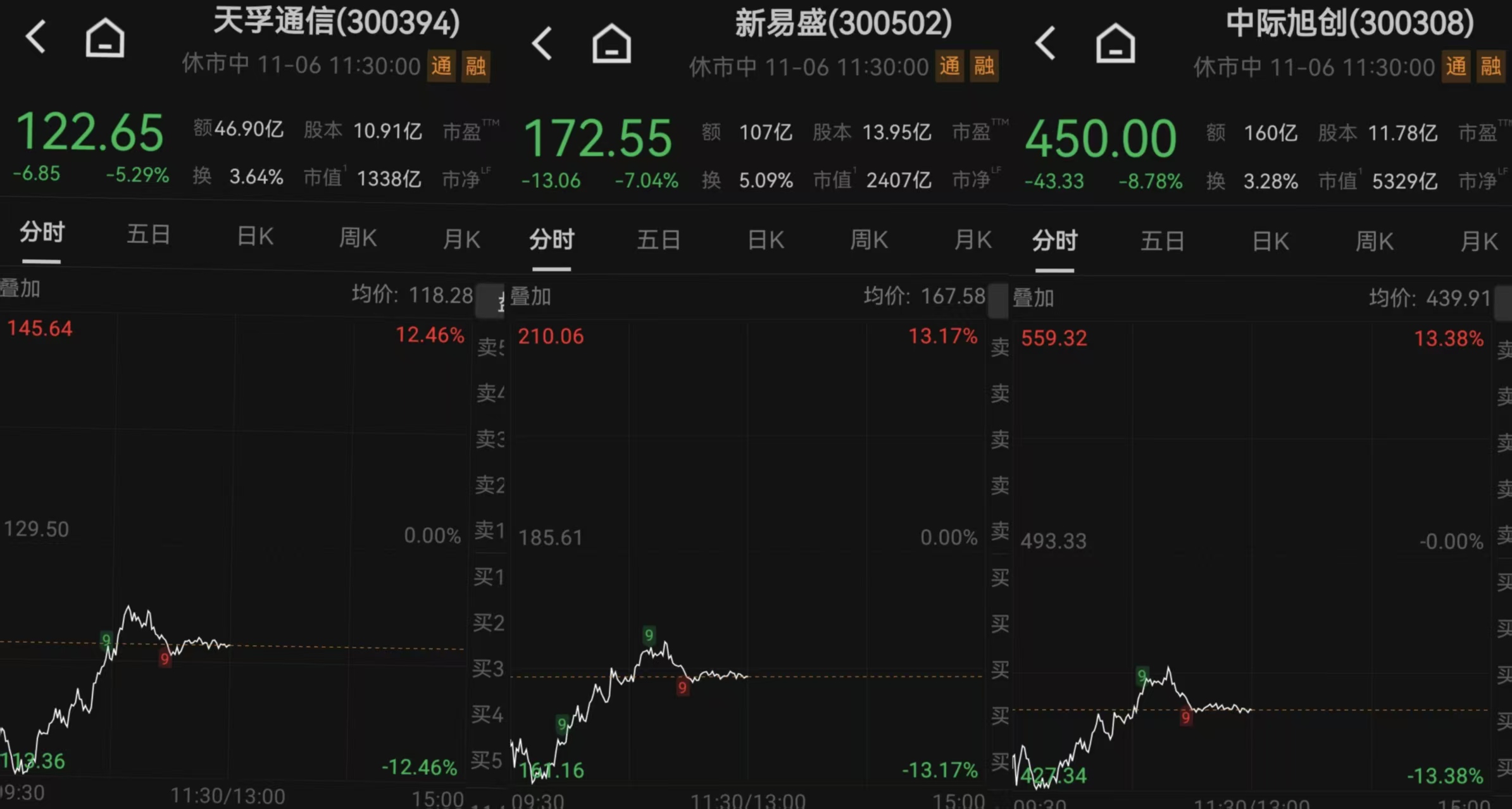
On Friday, while the overnight slump in the U.S. stock market dragged down major Asian markets, India's benchmark index moved higher against the trend. Meanwhile, Japan's Nikkei 225 index and Taiwan's weighted index have entered bear market territory, and the bear market decline of South Korea's Kospi index has further expanded. The Nasdaq Composite Index, which has a high proportion of tech stocks, also entered a correction zone overnight.
Goldman Sachs' Chief Asia-Pacific Equity Strategist and Co-Director of Asian Macroeconomic Research, Timothy Moe, said in an interview with CNBC's Squawk Box Asia on Friday: "India is somewhat regarded as anti-AI trading, but our view is that its underlying economic fundamentals are actually better."
He added that markets with a smaller exposure to AI transactions, such as India and Australia, will experience “some relative outperformance,” and noted that India’s “domestic demand story” gives it an advantage over the other two.
Situation reversed
Unlike South Korea and Taiwan, the indices in these two markets are highly concentrated in AI hardware stocks, whereas India's benchmark index has a much smaller exposure to this sector, with a greater focus on financial services, consumer goods, energy, industrial, and other service companies.
Co-CEO Feroze Azeez said to CNBC: "As global investors seek to reduce their exposure to AI-related stocks, India emerges as an attractive alternative due to its size, liquidity, and relatively lower dependence on the AI cycle."
According to NSDL data, foreign capital has accumulated a net sale of over $31 billion as of the end of October this year, but in the past four trading days, it has turned into a net buy, with an investment of over $2.3 billion.
This wave of optimism regarding the Indian market emerged during the third quarter of September, when corporate profits saw a significant improvement.
Data provided by JPMorgan Chase shows that the profit growth rate of Indian listed companies currently exceeds 20%, while market consensus forecasts for earnings per share have been raised by 0.5% for 2026 and 0.6% for 2027 over the past month.
However, despite the Indian index performing significantly poorly over the past year – and even though the main benchmark indices are still in a downward trend so far this year – and despite some improvement in earnings growth, its valuation is still relatively higher than that of other emerging markets.
Is it too expensive?
However, the global brokerage firm Bernstein does not agree to regard this South Asian country as a hedging tool for AI.
In a report on Monday, the institution stated: "India is increasingly being presented as a hedging tool for global AI trading. We disagree. India is neither a beneficiary of AI nor is it against AI trading." The institution believes that India's valuation is still on the high side.
The report shows that India's trailing 12-month price-earnings ratio is 18.6 times, which is higher than China's 9.3 times and Brazil's 7.9 times, as well as higher than markets with a larger exposure to AI such as South Korea and Taiwan.
Marcellus Investment Managers founder and chief investment officer Saurabh Mukherjea said about CNBC: “There are easier and cheaper ways to hedge against AI than investing in India.” However, he added that India’s profit growth over the past two quarters has been “very outstanding,” and the valuations of some “high-quality large-cap stocks” are at their lowest levels in a decade.
JPMorgan Chase' Batra indicates that since 2007, the Indian stock market has traded at a premium of 1.4 times over emerging markets on average, due to its 'sustainable profitability and growth engine driven by domestic demand.'
Due to the slowdown in profit growth, the Indian market has been under pressure since the end of 2024, but this situation has changed in the past two quarters.
Templeton Global Investments, Vice President of Indian Equities and Senior Institutional Portfolio Manager, Hari Shyamsunder stated to CNBC that India's short-term attractiveness was once diminished due to "high crude oil prices, a weak rupee, and high-growth opportunities in other regions."
He pointed out that the current valuation of Nifty is lower than its “10-year average forward price-earnings ratio,” while the forward valuation multiple of the MSCI Indian index was at its lowest level since 2020 in October.
He said, "If crude oil continues to weaken and growth in other regions faces headwinds, the situation could change rapidly." He added that the inflow of foreign capital will depend on whether profit growth can be sustained in the coming quarters.