Key Points
- Money market funds attracted nearly $118 billion in inflows.
- Concerns about expenditures related to AI have led to a shift in funds towards safer assets.
- Despite market fluctuations, stock funds continue to attract funds.
As of the week of November 4th, investors poured nearly $118 billion into U.S. money market funds. Driven by concerns about spending on artificial intelligence and political uncertainty, there was an increase in demand for cash-like investments, which also resulted in the largest single-week inflow in six months.
According to a report by Reuters on November 6th, citing data from LSEG Lipper, money market funds saw a net inflow of $117.97 billion that week, marking the strongest single-week performance since May 6th.
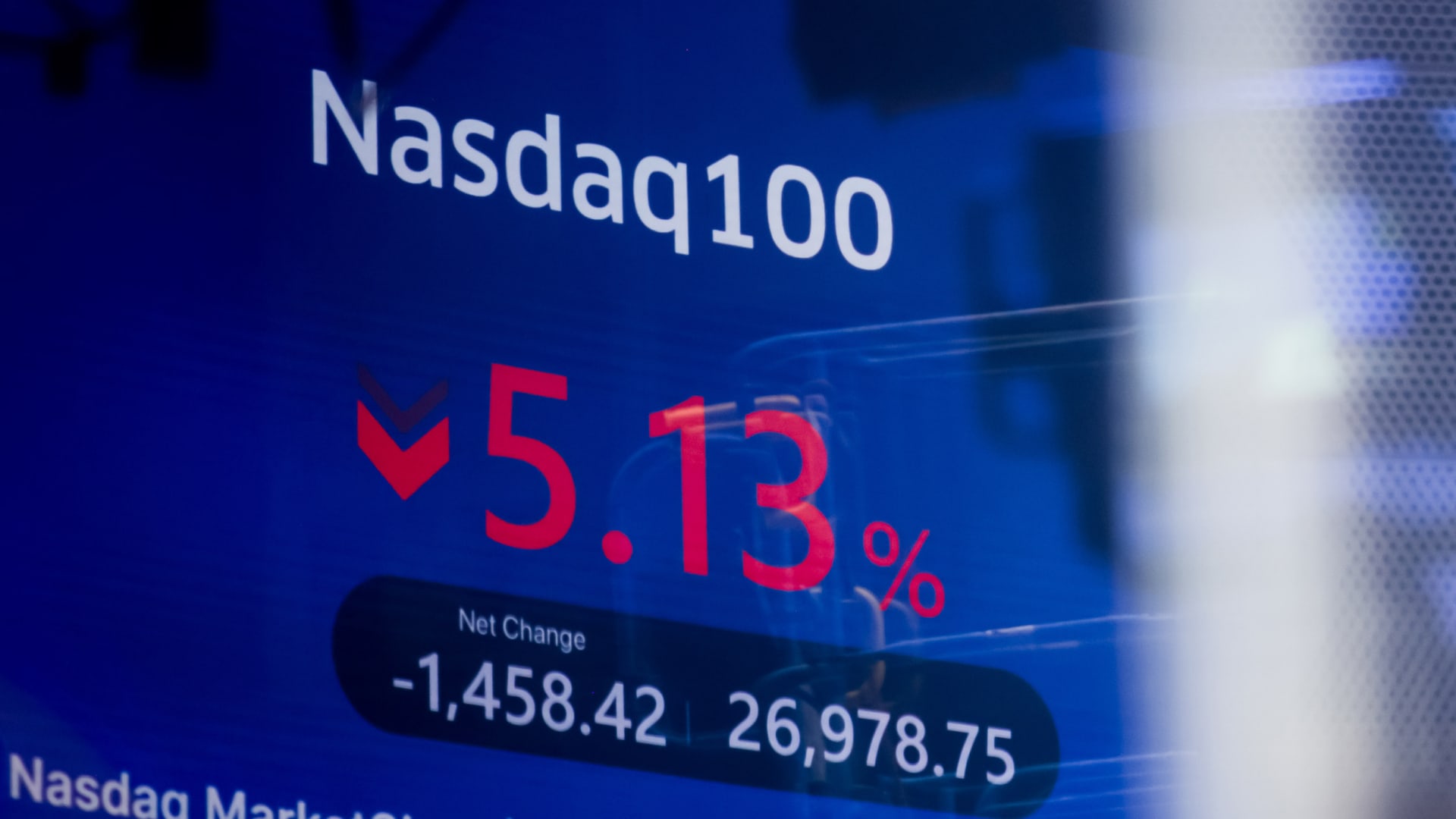
This surge in funds occurred before a significant sell-off of tech stocks on Thursday. On that day, the Nasdaq index tumbled 5.52%, and the S&P 500 index fell 4.36%. These figures indicate that investors may have begun to build defensive positions before the latest round of market declines.
As concerns over AI intensify, money market funds attract $118 billion
Money market funds primarily invest in short-term, highly liquid instruments such as U.S. Treasury bills, government securities, and high-quality commercial paper.
These types of funds provide investors with a relatively stable place to park their cash, while also offering interest income. However, they are not completely risk-free, nor are they equivalent to insured bank deposits.
As investors begin to question the massive capital investment supporting the AI industry, the related demand has further accelerated.
Coinpaper previously analyzed that AI's infrastructure borrowing has exceeded $400 billion, which has raised concerns in the market about whether future computing power revenue will be able to justify the financing costs of this industry.
The latest fund flow data also appeared after the previous adjustment to the Nasdaq 100 index. That adjustment caused this index, which has a high weight of technology stocks, to fall by more than 10% from its October high.
At the same time, investors are also weighing the impact of the U.S. mid-term elections and potential stricter regulatory reviews on data center development.
Despite increasing market concerns, equity funds still saw a net inflow of $14.8 billion.
It is worth noting that the funds flowing towards cash-like assets did not coincide with an overall withdrawal of investments from U.S. stocks.
Stock funds attracted $14.81 billion in capital, reversing the net outflow of $6.54 billion from the previous week.
Among them, large-cap stock funds saw inflows of $10.35 billion, financial sector funds received about $1.3 billion, and healthcare funds had inflows of $1.09 billion.
However, $160 million flowed out of the technology fund.
This differentiation reflects that as investors re-evaluate the valuation premium enjoyed by AI stocks, the market's selectivity is increasing.
Bond funds also attracted $7.31 billion, marking the strongest weekly inflow in four weeks.
This shift occurred after an earlier period during which the yield on U.S. Treasury bonds approached 5%, which led to an increasing importance of borrowing costs and fixed-income returns in portfolio decisions.
Does a surge in cash indicate that the stock market will continue to fall?
A large-scale inflow into money market funds may reflect defensive positioning, but this does not guarantee that the stock market will fall again.
Investors may simply be temporarily parking the proceeds from asset sales, reconfiguring maturing investments, or maintaining liquidity while assessing market conditions.
The latest inflows also highlight the uncertainty surrounding the sell-off of Wall Street tech stocks, and this round of selling-off has further intensified after the end of the statistical period.
Meanwhile, the fluctuations that affected the Dow Jones Index and S&P 500 Index futures before the election had already prompted investors to be cautious some time earlier that week.