The global chip shortage continues to intensify, and TSMC is considering entering the field of memory chips. This move will profoundly reshape the hardware supply chain landscape of AI.
According to The Information on Friday, TSMC is evaluating the feasibility of producing advanced memory chips, a move prompted by NVIDIA's request. If the plan is implemented, this world's largest wafer foundry will play a more central role in AI's hardware supply chain. This will not only provide clearer chip supply prospects for NVIDIA and other AI customers but is also expected to alleviate the current supply shortage in the medium to long term.
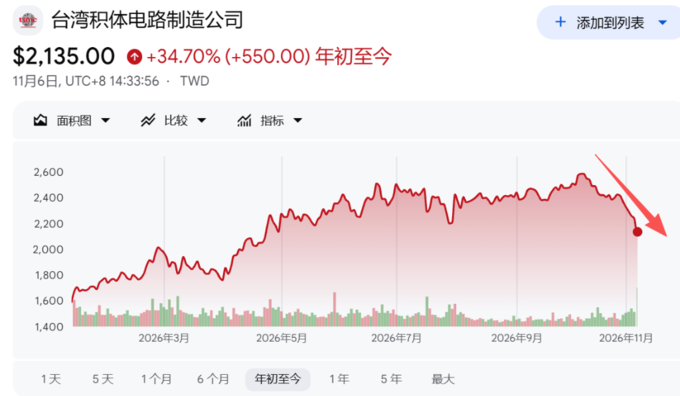
This round of chip shortages has clearly put pressure on the profit margins of major global equipment manufacturers and has driven up the retail prices of consumer electronics products ranging from Apple iPhone to Sony PlayStation. Meanwhile, TSMC's stock price tumbled significantly this week along with China Taiwan's benchmark index Taiex, which plummeted by nearly 9% at one point during trading on Friday, entering a bear market and recording its worst weekly performance since 2001.
NVIDIA "urges orders," 3D DRAM becomes the focus
According to The Information, TSMC's core technology focus this time is on three-dimensional dynamic random access memory (3D DRAM). This technological approach represents the cutting-edge development direction of storage chips and has certain synergistic potential with TSMC's existing advanced process logic chip business.
TSMC is currently the main foundry for NVIDIA AI processors. If it further takes on the production of memory chips, this will extend its coverage in the AI hardware supply chain from logic chips to the memory sector, thereby helping customers such as NVIDIA to gain a more comprehensive forecast and control over future chip supplies.
However, TSMC has not made any production commitments regarding this yet. The reports with The Information also do not disclose a specific timeline, investment scale, or production capacity targets.
Supply gap persists, with multiple parties competing to expand production
One of the causes of this round of storage chip shortages is the debt-driven investment boom in AI infrastructure construction, which has significantly increased the demand for high-bandwidth memory. As can be seen from the price tracking data of 64GB memory sticks on the Amazon platform, the market pressure at the retail level has already begun to manifest.
On the supply side, ChangXin Memory, a leading company on the mainland, also plans to expand its production capacity. If TSMC enters the market, it will introduce a new competitive force with strong technical capabilities into the global memory chip market.
It is worth noting that on the political front in the United States, after the Democrats swept both houses of Congress this week, AI companies and investors have begun to worry about potential restrictions on data center construction. They fear these measures could slow down the pace of AI investment and even burst the AI bubble. This policy uncertainty has added variables to the demand prospects for the entire AI supply chain.