Newsletter
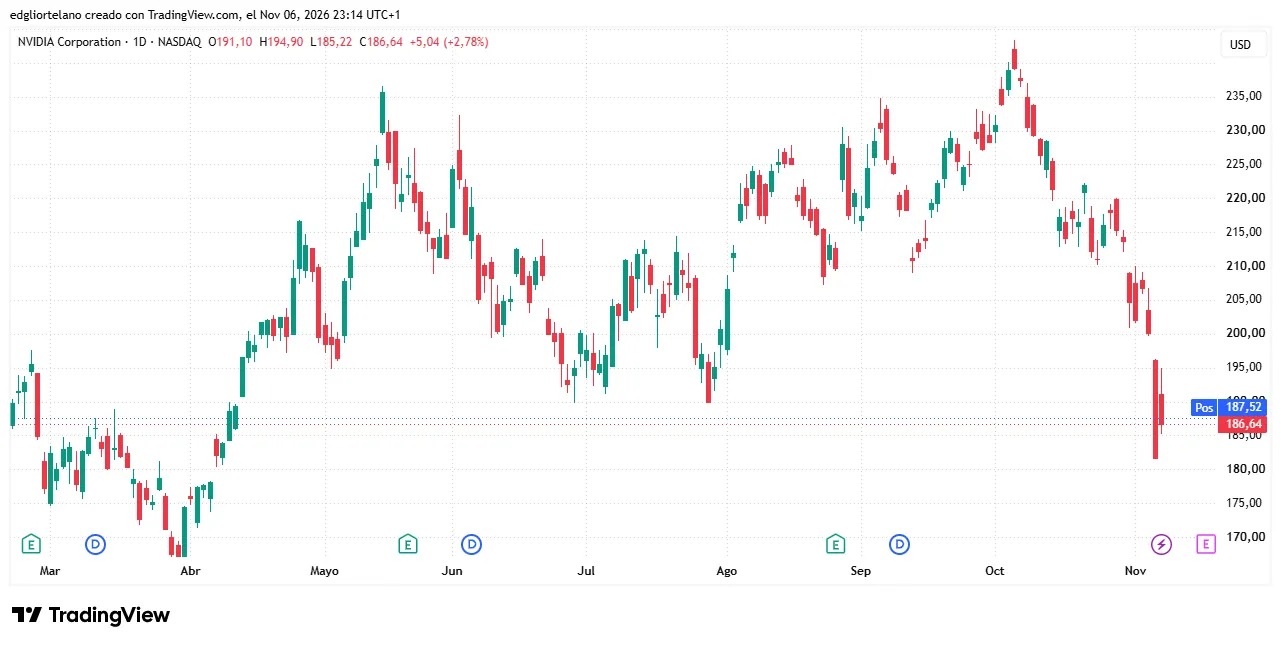
- NVIDIA rose 2.78% on Friday, while AMD rose 11.04%, but only managed to recover some of the losses from Thursday's decline.
- This round of turmoil has spread to Asian chip manufacturers, prompting Taiwan to take measures to stabilize the market.
- Data center restrictions, along with the high costs of AI infrastructure, are testing investors' confidence.
After experiencing a sell-off that spread from Wall Street to Asia, AI shares staged a rebound on Friday. However, a single-day turnaround does not answer the more significant question facing investors before the weekend: is this a belated correction, or is the AI bubble beginning to burst?
NVIDIA rose 2.78% to close at $186.64, following a sharp drop of 9.3% on Thursday. AMD also rebounded to $449.04, despite a 17.3% decline just a day earlier. Both stocks are still far below their October highs, indicating that a strong technical rebound is not sufficient to reverse the previous significant declines.
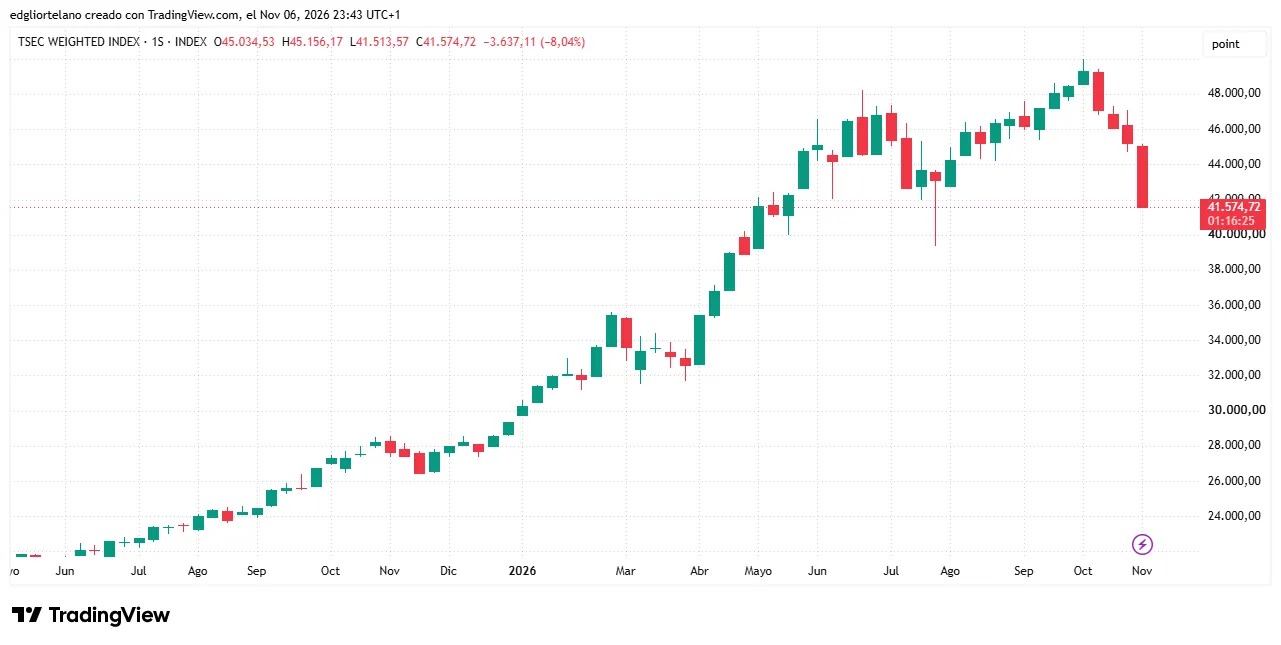
Not only is the U.S. market in a dismal state, but also South Korea’s KOSPI index fell by 6% on Friday, while Taiwan’s benchmark index experienced a decline of over 8% this week, marking its worst single-week performance in months. During this round of selling, TSMC hit the daily limit-down. Reuters reported that Taiwanese officials have requested state-owned banks to assist in supporting stock prices.
The U.S. Technology 100 Cash Market Proxy Index also rebounded, rising by 1.85% to 27,007.3 points, but still saw a cumulative decline of over 5.5% this week. Looking at the daily chart, this rebound occurred after a more significant drop from October levels, rather than returning to the previous upward trend.
AI Why have transactions started to loosen?
The mid-term elections in the United States have intensified market concerns that if Democrats make more progress, they will implement stricter regulations on data centers. Ballotpedia found that among the 41 local votes held on November 3rd, 40 votes supported restrictions on development, including the rejection of proposals to support construction. Some of these votes were merely consultative in nature, but the political signal is very clear.
This is very important for chip companies, as data centers represent their biggest source of growth. Each project requires substantial investment in processors, servers, power supply, and cooling systems. If there are restrictions on increases, it may lead to delays in orders or force projects to be moved to other locations.
However, these concerns did not begin with the election. AI and its customers have been making aggressive investments to build capacity in advance, but the returns on these investments are often not clear. Higher borrowing costs make such bets more difficult to sustain. Reuters quoted market strategist Steve Sosnick as saying that stocks that are already too heavily held have been “priced perfectly” before.
Callback, or is it a bubble bursting?
A callback refers to a decline of at least 10% from the market's recent high, but this does not necessarily mean that the underlying business is shrinking. Imagine a chip manufacturer's stock is traded at 60 times its annual earnings because investors expect its growth to be extremely rapid. If investors later are only willing to pay 40 times those earnings for the same stock, then even if profits do not decline, the stock price could still fall by a third.
It gets worse when the bubble bursts: This is what happens when expectations prove unrealistic and the funds that supported the prosperity begin to withdraw.
History provides a useful warning. During the bursting of the internet bubble, the NASDAQ index fell by approximately 77% between March 2000 and October 2002. The internet was not a fleeting phenomenon, but investors seriously overestimated the speed at which companies could turn it into profits.
Telecommunications operators once spent huge amounts of money to lay fiber optic cables, but they couldn't wait for a sufficient number of customers. The company Global Crossing responsible for building international networks filed for bankruptcy in 2002. The technology itself survived, but many of the companies and shareholders did not.
AI may also face a similar mismatch between long-term prospects and short-term returns, and some investors have already begun to discuss this point. For example, the shortage of memory is also a business opportunity, and many companies are trying to capitalize on it. Former cryptocurrency miners are renting out their hardware, and cloud service providers as well as inference startups are emerging everywhere.
Imagine another hypothetical company that borrows several billion dollars to build a data center filled with NVIDIA chips, expecting to rent out the computing power at high prices for many years to come. If customer spending falls short of expectations, borrowing costs rise, or construction is delayed, the debt still needs to be repaid.
Operators may cancel chip orders, resulting in their contractors losing their jobs, and utility companies that were planning to expand may also lose their expected customers. Lenders and investors holding their debts could also suffer losses. Consequently, a sell-off in the stock market could evolve into a broader economic problem.
However, compared to the year 2000, there is still one important difference. Microsoft, Alphabet, Amazon, and Meta are all profitable companies with mature customer bases and considerable cash flows, unlike many speculative internet startups. They are better equipped to withstand setbacks than those smaller AI cloud service providers that rely on repeated borrowing for expansion.
AI is very likely to continue to transform various industries, while a number of individual AI companies may fail – and the investors in these successful companies may have paid too high a price for it.
Financial warning lights have begun to flash. Reuters reported on Friday that the insurance cost for the risk of default by the cloud service provider CoreWeave regarding AI has risen to over 1,000 basis points. This type of protection is somewhat similar to loan insurance: the higher the price, the stronger the investors' concerns about solvency.
However, the broader bond market is still functioning relatively normally. This indicates that the pressures are intensifying in the most vulnerable areas of AI financing, but it is not yet sufficient to prove that a systemic crisis has occurred.
Next week will bring a more concrete test than another day of alternating red and green trading. The performance results of CoreWeave, Applied Materials, and Cisco may reveal whether customers are still placing orders to purchase production capacity and equipment, while inflation data will affect expectations of borrowing costs. Stable orders and controllable debt will support the judgment that "this is just a pullback."
If projects are repeatedly canceled, refinancing fails, and sales shrink, it indicates that the financial foundation of this boom is beginning to crack. The issue is not whether AI has a future, but whether each company that has bet billions of dollars on that future can afford to make it to that day.