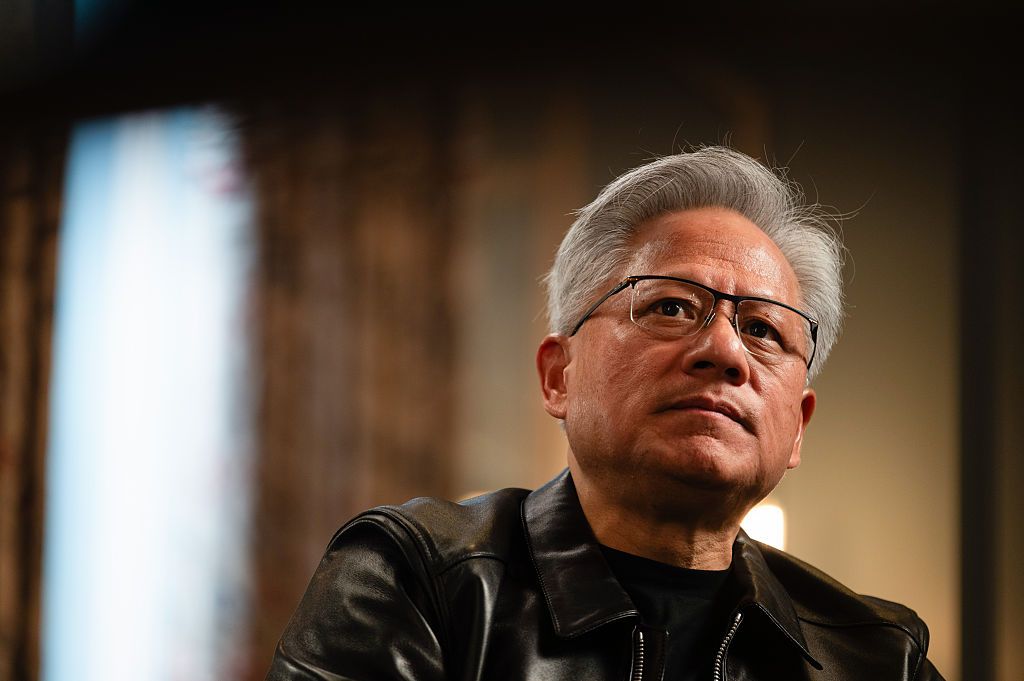
NVIDIA's stock price fell by more than 4% on Monday, which was the first trading day after the board of directors announced that it would investigate the relationship between CEO Jensen Huang and Alice Huang ( Alice Huang ). U.S. intelligence agencies believe that Alice Huang is engaged in espionage activities for China.
Securities lawyers have already taken action. Los Angeles-based shareholder rights law firms Schall, Brown, and Schwartz are among the first to speak out. On Monday morning, these firms announced that they are investigating whether NVIDIA made false or misleading statements, or failed to disclose information of significant importance to investors. Robert Bartlett, a professor at Stanford Law School and an expert in securities law ( Robert Bartlett ), expects that more law firms will join in.
In an interview, Bartlett said, "I'm sure someone will file a lawsuit." He added that he wouldn't be surprised if someone had already done so before the close of trading on Monday. There's a good reason why the plaintiffs' lawyers are rushing to file their lawsuits: under federal securities law, the first complaint triggers a public notice, and investors then have 60 days to request that the court appoint them as lead plaintiffs. The law firm that files the complaint first will have the opportunity to reach out to investors who have suffered larger losses more quickly and will also have more influence over how the case is presented. Since NVIDIA's headquarters are located in Santa Clara, it's likely that this case will be heard in the Northern District Court of California. (It's also entirely possible that the case has already been filed; newly filed cases may take up to 24 hours to be available for online search.)
Although there are still many unknowns, the legal theory of this case does not depend on what the board of directors' investigation will ultimately uncover about Jensen Huang's personal life. Last month, when The New York Times first reported on the relationship between Jensen Huang and Alice Huang, a senior executive of this Singapore-based data center company Megaspeed, was described by an NVIDIA spokesperson to another media outlet The Hill as "not uncommon or surprising." A representative of the company also said, "Our company is no different from many other regional cloud customers. Meeting with clients is part of the CEO's job; Jensen Huang talks with thousands of client executives every year."
Thereafter, Jensen Huang has acknowledged to the board of directors that this relationship was intimate. Meanwhile, according to a report by The New York Times, U.S. intelligence agencies have been monitoring Alice Huang for over a year.
From the perspective of securities law, Bartlett stated that the company's previous statements were "clearly misleading." Moreover, since Jensen Huang is the CEO, Bartlett said, "his knowledge is attributed to the company." In other words, NVIDIA will be considered to be aware of what its CEO is aware of.
Bartlett believes that the most likely course of action in litigation would be to claim "typical market fraud," meaning that investors purchased stocks based on false or incomplete public information, and thus suffered losses when the truth came to light. The decline in stock prices on Monday provided the plaintiffs with a wealth of material to use in their claims. Compensation in such cases is usually linked to the extent of the price drop, and since NVIDIA is one of the most valuable companies in the world, it is conceivable that the settlement amount could be quite substantial.
Bartlett pointed out that the usual course of action is for cases to reach a settlement after lengthy litigation. This means that the company, as well as its directors and executive liability insurance, will have to pay a substantial amount of money, but it usually does not result in any personal consequences for the CEO or the board of directors. Since this is also a civil case, Jensen Huang will not face the risk of imprisonment as a result. The irony, Bartlett noted, is that the lawsuit was filed in the name of NVIDIA's shareholders, who will ultimately have to foot the bill for the settlement, either by paying directly or indirectly through higher insurance premiums.
Bartlett categorized NVIDIA's various risks into several categories. The first category is allegations of securities fraud, which are the most direct issues for the company and, potentially, for Jensen Huang as well. The second category is corporate governance: what the board of directors knows and when they know it. It is possible that the directors were unaware of these matters, but the board also has a supervisory responsibility. Moreover, once The New York Times began reporting on the Megaspeed-related issues, the company should have established a mechanism to report such significant risks to the board. If this was not done, or if the directors did not take action, there could be liability at the board level.
The third scenario would only arise if an investigation by the board of directors reveals that Jensen Huang was aware of the intelligence-related matters, in which case it would "be a completely different matter," Bartlett said. (The board of directors issued a statement to the public on Sunday stating that there is no reason to believe that national security or NVIDIA's secrets have been compromised.)
In addition, there is the issue of government action. Bartlett stated that if there are intentional securities fraud violations, it is technically feasible for SEC to seek penalties such as prohibitions from serving as executives or directors. However, he doubts whether the current SEC team, led by Paul Atkins ( Paul Atkins ), would be willing to do so, given President Trump's support for Jensen Huang. There is a time limit of about two years from the discovery of the facts, which theoretically leaves room for future governments to take action, but that window would be very narrow. When asked about this possibility, Bartlett believed it was quite unlikely.
It should be emphasized that announcements like Schall, Brown, and Schwartz do not necessarily indicate that a case is strong in itself. SBS often issues "investigation" notices. Such notices merely indicate that the plaintiff's law firm has seen an opportunity. Ultimately, which law firm will lead the case will be decided by the court, and this decision usually depends on which investor has suffered the greatest loss.
Other law firms that have also initiated actions against NVIDIA include Rosen Law Firm, Levi & Korsinsky, Bronstein, Gewirtz & Grossman, as well as Law Offices, of, Frank R, and Cruz. All of them announced their respective investigations on Monday, and Rosen also stated that they are preparing to file a class action lawsuit.