Washington, November 10th ( PR Newswire ) – As artificial intelligence tools continue to develop rapidly in various fields, new benchmark tests are being conducted to assess the understanding of large language models regarding complex texts, historical contexts, and theological frameworks.
An in-depth analysis by Just Facts, and emphasized by HillFaith, recently evaluated the capabilities of artificial intelligence systems – including ChatGPT, OpenAI, Google Gemini, and Claude – in responding to comprehensive assessments that focus on biblical literature and historical context.

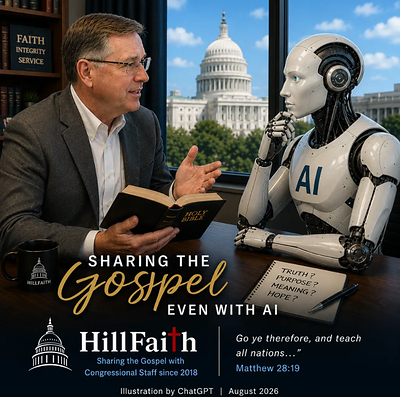
The report highlights some important milestones in the development of generative AI. It shows that advanced algorithms have achieved astonishingly high accuracy when answering questions regarding the facts, context, and structure of ancient biblical texts. These analysis results have sparked ongoing discussions: the use of AI tools is increasingly expanding in educational research, academic studies, and text analysis, and they also provoke reflections on how digital algorithms handle subtle cultural and historical frameworks.
Evaluating the understanding of complex documents by digital systems
Researchers, digital experts, and technical analysts often evaluate large language models in specialized fields to measure their contextual understanding, reasoning consistency, and data accuracy. In standardized assessments focused on biblical literature and historical narratives, these models have demonstrated increasingly complex capabilities, enabling them to process vast amounts of textual data, cross-reference historical records, and synthesize complex concepts in a rather consistent manner.
In addition to basic text retrieval, modern artificial intelligence models are also capable of classifying literary genres, analyzing the origins of languages, and providing objective overviews of complex analytical arguments that have been developed in academia over hundreds of years. For academic researchers and public policy practitioners, these technical capabilities represent a significant change: how to query and summarize vast historical literature databases in real-time environments.
Wider Impacts on Public Policy and Education
As this milestone in performance emerges, it coincides with the time when congressional offices, educational institutions, and policy research organizations are assessing the broader social impacts of the rapid integration of artificial intelligence. Despite the strong performance of the AI model in standardized fact-based question answering, scholars, ethicists, and digital policy experts are still debating whether public platforms can maintain consistent accuracy, objectivity, and balance across different topics.
As legislative staff and public policy leaders assess proposals for potential regulatory frameworks targeting emerging artificial intelligence technologies, understanding the milestones of performance in various specialized academic fields provides a valuable context for the real world. Observational reports on software capabilities contribute to ongoing discussions surrounding data reliability, algorithm training methods, ethical considerations, and the interpretation of text in digital formats.
HillFaith tracks the emerging developments at the intersection of technology, culture, and ancient literature, providing public officials working on Capitol Hill with comprehensive and well-informed perspectives. By objectively analyzing key technological milestones, HillFaith supports congressional assistants who seek a balanced and evidence-based approach, helping them understand contemporary developments that affect public policy, culture, and technology.
Through regular reporting, educational promotion, and open discussion forums, HillFaith provides opportunities for legislative staff to examine the logical, historical, and technical dimensions of foundational texts, encouraging staff from various parts of the U.S. Congress to engage in informed thinking and professional growth.
HillFaith provides a unique combination of news reporting, Christian apologetics, and community building content, aimed at fostering in-depth dialogue among political professionals. By closely monitoring the attitudes of staff towards emerging legislation and local issues—from the integration of technology in urban infrastructure to changes in daily operations—HillFaith hopes to continue to be an important source of connection, information, and support for those dedicated individuals within the two major political parties who help drive the day-to-day operations of the U.S. legislative bodies. For more information, please visit www.hillfaith.org. For more information, please visit www.hillfaith.org.
Contact Information: Name: Mark Tapscott; Email: [ email protected ]; Telephone Number: 301-275-6645