Newsletter
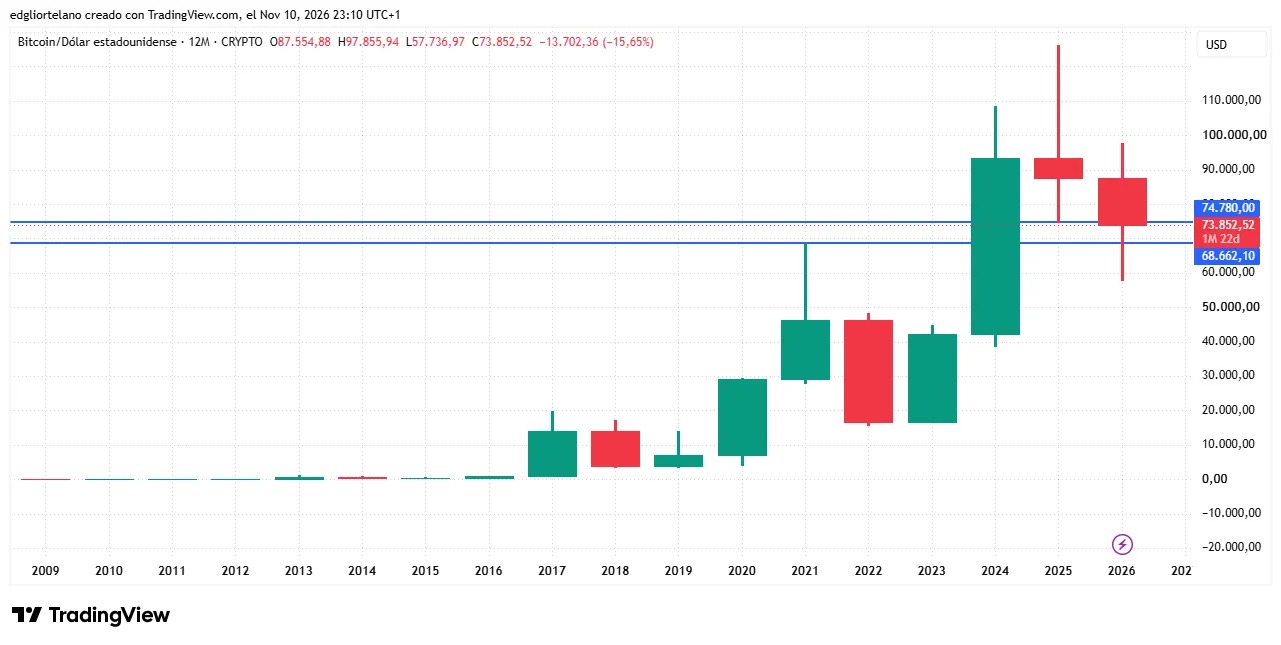
- Bitcoin fell by 6.34% in 2025 and has since fallen by about another 16% in 2026, which could result in it recording negative returns for the first time in two consecutive calendar years.
- The combined decline over two years is approximately 21%, which is much lower than Bitcoin's sharp drop of 74% in 2018 or 64% in 2022.
- Although the performance calculated on a calendar year basis appears relatively modest, the decline of Bitcoin since its peak in 2025 is much more significant.
Bitcoin is approaching a historical first that bulls might not want to hear about: two consecutive years of decline. This has never happened in its 18-year history.
The world's largest cryptocurrency has seen a decline of 6.34% in 2025, and as of yet in 2026, it has fallen another 15.65%. As of November 10th, its trading price is around $73,850. If Bitcoin fails to rebound above its annual opening price of around $87,500 by December 31st, it will close in the negative territory for the first time in two consecutive calendar years.
Historical annual returns show that since its inception, Bitcoin has experienced several severe declines, but each year of negative returns has been followed by years of positive returns. Even after the catastrophic bear markets of 2018 and 2022, there were no consecutive years of losses.
The laws of history are clear. However, their significance still deserves a more careful examination.
Two "Red Years" Don't Necessarily Mean a Worse Outcome
Bitcoin's previous annual crashes were significantly more painful than the current round of continuous declines. In 2018, Bitcoin plummeted by 73.56%; in 2022, it fell by another 64.27%, erasing most of the value of investors' holdings during those respective years.
In comparison, the decline of 6.34% in 2025 is relatively mild. Adding to this, the decline of about 16% so far this year, the cumulative decline over two years, after compound interest calculations, is approximately 21%.
Although the market may record longer sequences of annual negative returns, this decline is only a fraction of the losses that investors have suffered during previous rounds of the crypto winter.
The performance of Bitcoin in 2024 also provides some reference points. This cryptocurrency rose by more than 120% that year, which means that even if there was a subsequent decline, investors who bought at the beginning of 2024 would still have retained a considerable profit.
However, if we measure not by the boundaries of the Gregorian calendar year, but from the actual high points of the market, the situation becomes significantly different.
Bitcoin once rose to around $126,000 in October 2025, before falling below $58,000 in 2026. This represents a decline of over 50%, which is much more painful than the cumulative 21% decline reflected by the two annual candlesticks.
Analysts point out that the growing base of institutional Bitcoin investors, spot exchange trading funds, and greater market liquidity may be reasons why the bear market pullback has been relatively modest.
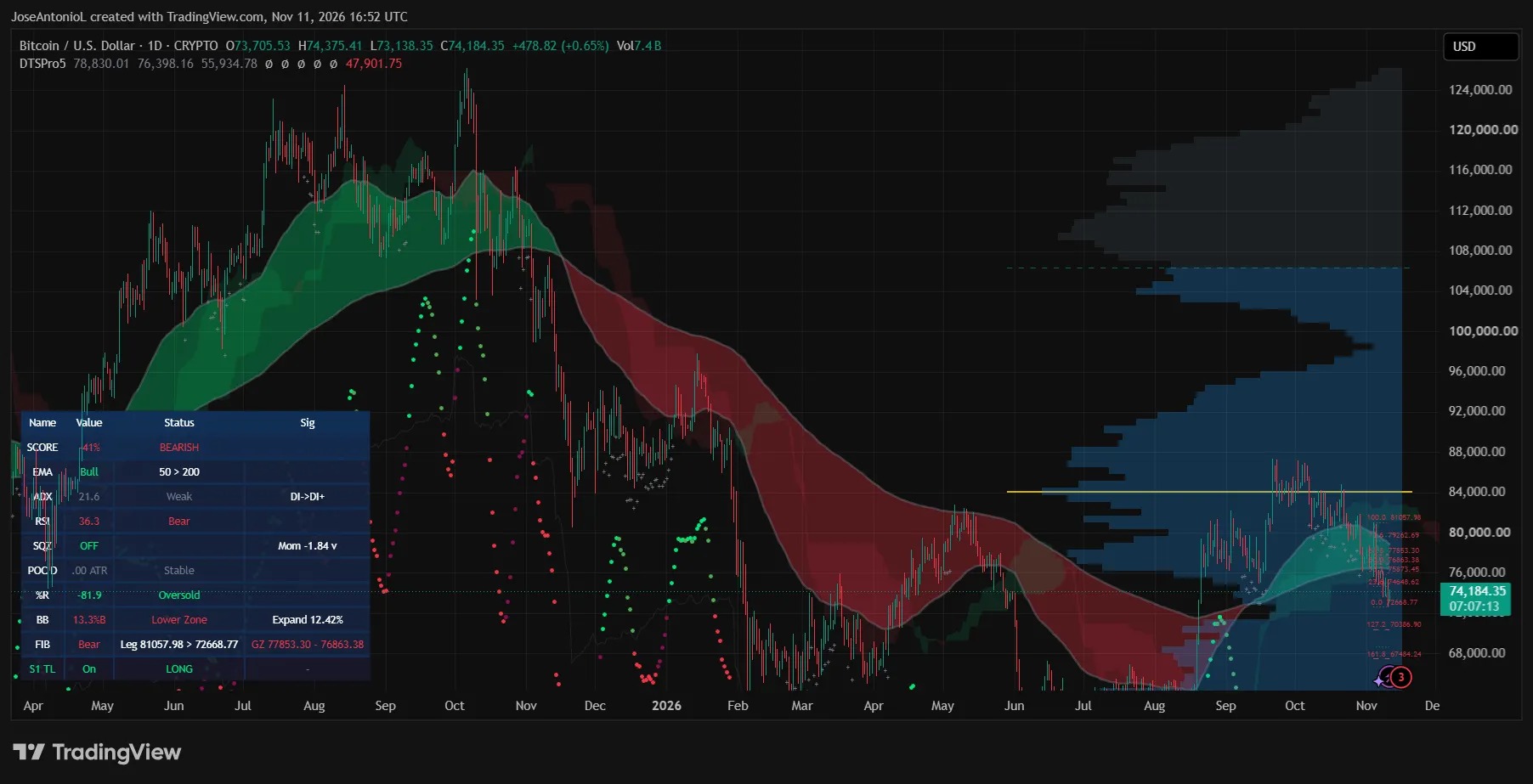
These structural changes may help to explain why the current market cycle of Bitcoin seems different from previous ones, although they have not eliminated significant price collapses.
In addition, there is also a difference between the duration of consecutive declines and the severity of losses. A market may experience a gradual downward trend over several calendar years, but the resulting harm may not be equivalent to that of a single catastrophic year.
Moreover, Bitcoin has proven that a poor year does not necessarily mean a long-term downturn. After the collapse in 2018, Bitcoin rose by about 92% in 2019; after a dismal performance in 2022, it rose by more than 155% in 2023.
As of now, there are 50 days left until 2026 for Bitcoin to avoid experiencing its first consecutive annual decline for two years. If it falls again in 2027, the streak of declines will be extended, but this scenario is still just a hypothesis for now.
Calculated at a price of around $73,850 on November 10th, Bitcoin would need to rise by about 18.5% to regain its opening price from 2026 and close the year with a positive return for the whole year.