



Tuya Cloud Devices allows Muse users to use natural language and a API key to query and control devices within their graffiti accounts, without the need for local device keys or firmware modifications.
Santa Clara, California, USA, November 12th / PRNewswire / -- Doodle Smart ( NYSE : TUYA ; HKEX : 2391) announced the launch of Tuya Cloud Devices, an official open-source Skill that allows individuals' AI to control smart devices through natural language queries. This Skill runs via Doodle's cloud platform, therefore it does not require local device keys, network connectivity, or firmware modifications.
AI The proxy now has external devices, but it is still difficult to access the existing devices at home.
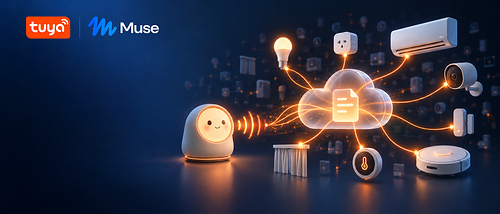
Muse is a personal AI agent launched by Meta in September 2026. It runs on a cloud-based virtual machine that is exclusive to each user, and it can continue to process tasks such as emails and scheduling in the background even after the application is closed. Meta has also open-sourced Muse Gadgets, which is a hardware interface for Muse. This allows developers to use mainstream Wi to Fi MCU development boards or Raspberry Pi to create their own AI toys, desktop robots, electronic ink display panels, and other smart devices, in conjunction with the official open-source SDK.
External devices can allow proxies to see, hear, and display information. However, to control existing lights, sockets, air conditioners, cameras, and sensors in a home, current community solutions typically require users to obtain the local keys for each device, as well as confirm the version of their communication protocols and the definition of data points. Once the devices are re-networked, the keys become invalid, and the entire process must be repeated. This poses a barrier for developers and is even more difficult for ordinary users.
One Skill key, one API key
Tuya Cloud Devices ( Skill Name: gadget-tuya-cloud-devices ) is an official Skill adapted from tuya-smart-control. The latter is an officially open-source AI by Tuya. It is written in pure Markdown format that complies with Muse Gadgets specifications, and has been adapted and open-sourced by Tuya engineers. Muse provides dialogue and proxy capabilities, while Tuya provides device connection capabilities.
This Skill is built around three design principles. First, it connects through a single API key: users can apply for a free API key on the Doodle AI website ( tuya.ai). The key starts with “sk -”, and the following two characters are used to identify the data center where the account is located; therefore, this Skill will automatically select the correct API endpoint from seven data centers without the need for manual configuration. Second, it provides direct cloud access: Muse calls devices through Doodle’s cloud API, so no local key is required, and the devices do not have to be on the same local network; if a device already has a model-specific or local control Skill, requests will be routed to that Skill first. Third, it reads the device before sending instructions: each Doodle device describes its own capabilities through a standardized Thing Model; this Skill will first read the Thing Model, and then generate instructions based on its read/write permissions, value range, and steps – thus allowing one Skill to cover a wide range of product categories without the need for individual adaptation for each model.
With the help of graffiti devices, Muse can handle various daily requests. Users can simply say "dim the lights in the living room a bit" to control the device, or ask questions like "Are the bedroom lights on right now?" to check the status. Muse can also manage the home and rooms – listing devices in a particular space or renaming sensors – and answer practical questions such as whether an umbrella is needed today, or how much electricity the air conditioner used yesterday. For more proactive monitoring, users can request notifications when conditions change, with reminders sent only via text message, voice call, email, or app push notifications to the user themselves. Muse can also take camera snapshots – for example, "Take a photo at the entrance for me" – and return a photo or a video up to 60 seconds long. For real-time automation, requests like "Turn on the hallway lights as soon as the door opens" will set up an automation driven by changes in device properties and online/offline events. Real-time events and event-triggered notifications require a Linux device that is always online to receive event subscriptions. This works well in conjunction with Muse Gadgets Linux SDK: once Raspberry Pi is connected to Muse, Muse can deploy a resident subscription program on it to continuously receive changes in device properties and online/offline events, and then execute automations according to the "trigger-action" rules confirmed by the user.
Security is built into every step.
When a proxy controls physical devices, reliability is more important than intelligence. Tuya Cloud Devices has built-in security boundaries at every step. If multiple devices meet the request, Skill will list the rooms they are in and ask the user for confirmation. If a device is offline, Skill will report its status without issuing any commands. This Skill will not write to read-only attributes; all values are strictly confined within the range and steps defined by Thing Model. After issuing a command, Skill will re-read the device status after 1 to 2 seconds, and only after confirming that it has taken effect will it confirm the change to the user. To prevent notification fatigue, reminders triggered by device events are sent at least once every 30 minutes.
In addition, this Skill only writes to attributes of basic data types and does not provide features such as door lock control, real-time video, firmware updates, network configuration, or device removal; requests involving these functions will be redirected to the graffiti application. The API key is considered a credential: it is only used in the request header and is not echoed in the conversation. This key can only be used to access devices under the user's own account, and notifications are also sent solely to the user.
Connect Muse Gadgets to existing devices at home.
Muse Gadgets is an open-source project that allows developers to quickly prototype external devices for Muse using off-the-shelf hardware. However, devices that remain at home for extended periods are typically large-scale, mass-produced smart devices that are always online and supported by platform services. Tuya Cloud Devices serves as a bridge between these two worlds.
The graffiti platform covers more than 3,000 categories of smart hardware and serves over 200 countries and regions. As of June 30, 2026, Graffiti has over 2.09 million registered AI developers. Once a device is connected to the Graffiti AI Cloud platform, its Thing Model, cloud services, and account system are already in place. With the official Skill, agents can access these devices in a unified manner without the need for any firmware modifications.
Tuya Cloud Devices also possesses portability. It was initially developed for the open-source proxy OpenClaw, and after being adapted to the Muse specifications, it can now be used in Muse. As more and more proxies adopt SKILL.md-formatted Markdown and skills, device capabilities can be reused across different proxies. The approach to getting started varies depending on the type of user. Muse users can obtain this Skill from the official GitHub repository of Google Home, apply for a free API key at tuya.ai, and provide both to Muse to control their Google Home devices using natural language; this feature is currently available to users in the United States and Canada. Developers can access the open-source tuya-openclaw-skills repository on GitHub to integrate these same device capabilities into their own proxies, or build their own AI hardware based on the TuyaOpen and T5AI modules. For brands and solution providers, devices that integrate with the Google Home platform can be accessed by a wider range of proxy ecosystems through the official Skill, eliminating the need to integrate each device separately for each proxy.
Individuals AI are moving from answering questions to completing tasks on behalf of others. In addition to emails and scheduling, devices at home should also become targets that they can operate, and Tuya Cloud Devices is taking this step forward.
Looking to the future, graffiti will continue to advance in areas such as deeper integration with more device categories, camera vision understanding, intelligent energy consumption analysis, and scenario automation templates. The goal is to gradually make "controlling everything with one sentence" the default capability of personal AI agents.
Available developer resources include the Muse Gadgets open-source repository, the Muse Skill access portal, the official AI repository, the skills repository, and the tuya.ai developer documentation.
About Graffiti Intelligence
Doodle Smart ( NYSE : TUYA ; HKEX : 2391) is a globally leading provider of AI cloud platform services, dedicated to bringing AI into daily life. Through its TuyaOpen open-source development framework and universal AI Agent engine, including the AI Agent development platform, Doodle integrates multi-modal AI capabilities, reduces the AI development barriers, efficiently advances the realization of AI that drives lifestyles, and accelerates the integration with the physical world. Doodle offers innovative physical AI solutions for smart devices, commercial applications, and industry developers through cloud computing and spatial intelligence capabilities. The company also provides a complete, open, and neutral global AIoT ecosystem. This approach has fostered a vibrant global developer community, which includes brand owners, OEM, AI agents, system integrators, and independent software vendors, who together create intelligent solution ecosystems that embody principles of sustainability, security, efficiency, agility, and openness.
As of June 30, 2026, the AI developer platform has over 2,092,000 registered AI developers from more than 200 countries and regions.
Safe Harbor Statement
This press release contains forward-looking statements. These statements are made under the “Safe Harbor” provisions of the U.S. Private Securities Litigation Reform Act of 1995. Statements that are not historical facts, including the company’s beliefs and expectations, are considered forward-looking statements. Forward-looking statements involve inherent risks and uncertainties, and various factors could cause actual results to differ significantly from those contained in any forward-looking statements. In some cases, forward-looking statements may be identified by words such as “may,” “will,” “expect,” “anticipate,” “target,” “intend,” “plan,” “believe,” “potential,” “continue,” “might,” or other similar expressions. For more information regarding these and other risks, uncertainties, or factors, please refer to the documents submitted by the company to the U.S. Securities and Exchange Commission. The forward-looking statements in this press release are as of the date of issuance only, and the company assumes no obligation to update any forward-looking statements due to subsequent events or circumstances, except as required by law. All forward-looking statements should be evaluated with awareness of their inherent uncertainties.