Newsletter
After NVIDIA's CEO Jensen Huang resigned, the company's stock price fell by 4.59%, following a previous plunge of over 14%.
Competitors AMD and Broadcom both rose by nearly 6%, while Alphabet rose by 2.06%.
NVIDIA, which supports CoreWeave, fell by 7.49%, and semiconductor suppliers TSMC and Micron also saw declines.
Wall Street is determining who the winners and losers are based on Jensen Huang's departure from NVIDIA, and the market seems to be more favorable towards the competitors of this chip manufacturer than towards its business-related companies.
This rebound has mitigated the initial plunge of over 14%, but the stock price is still clearly in a downward trend.
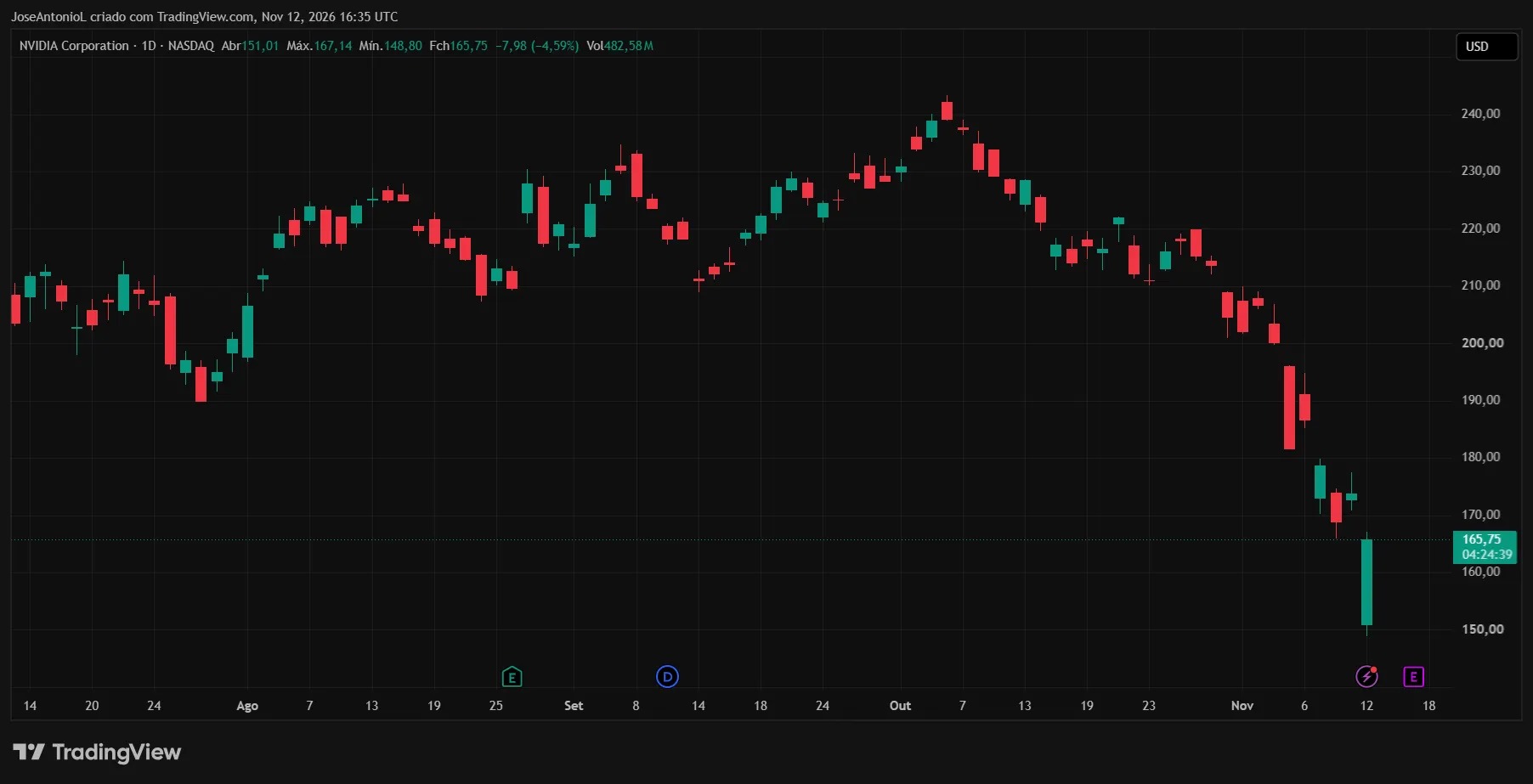
NVIDIA's low point in November
After reports surfaced that Jensen Huang was involved in an extramarital affair and allegations related to a suspected Chinese intelligence officer, he immediately resigned from his positions as CEO, President, and Board Member, which subsequently led to a sell-off of the company's shares. NVIDIA appointed Chief Financial Officer Colette Kress as the interim CEO, although the company has not yet confirmed whether any corporate secrets were leaked.
Before Jensen Huang stepped down, NVIDIA's stock price was already under pressure. Between October 6 and November 6, NVIDIA's market value evaporated by approximately $1.27 trillion, which indicates that before the leadership crisis intensified, the market had already begun to question AI spending.
NVIDIA's competitors performed much better today.
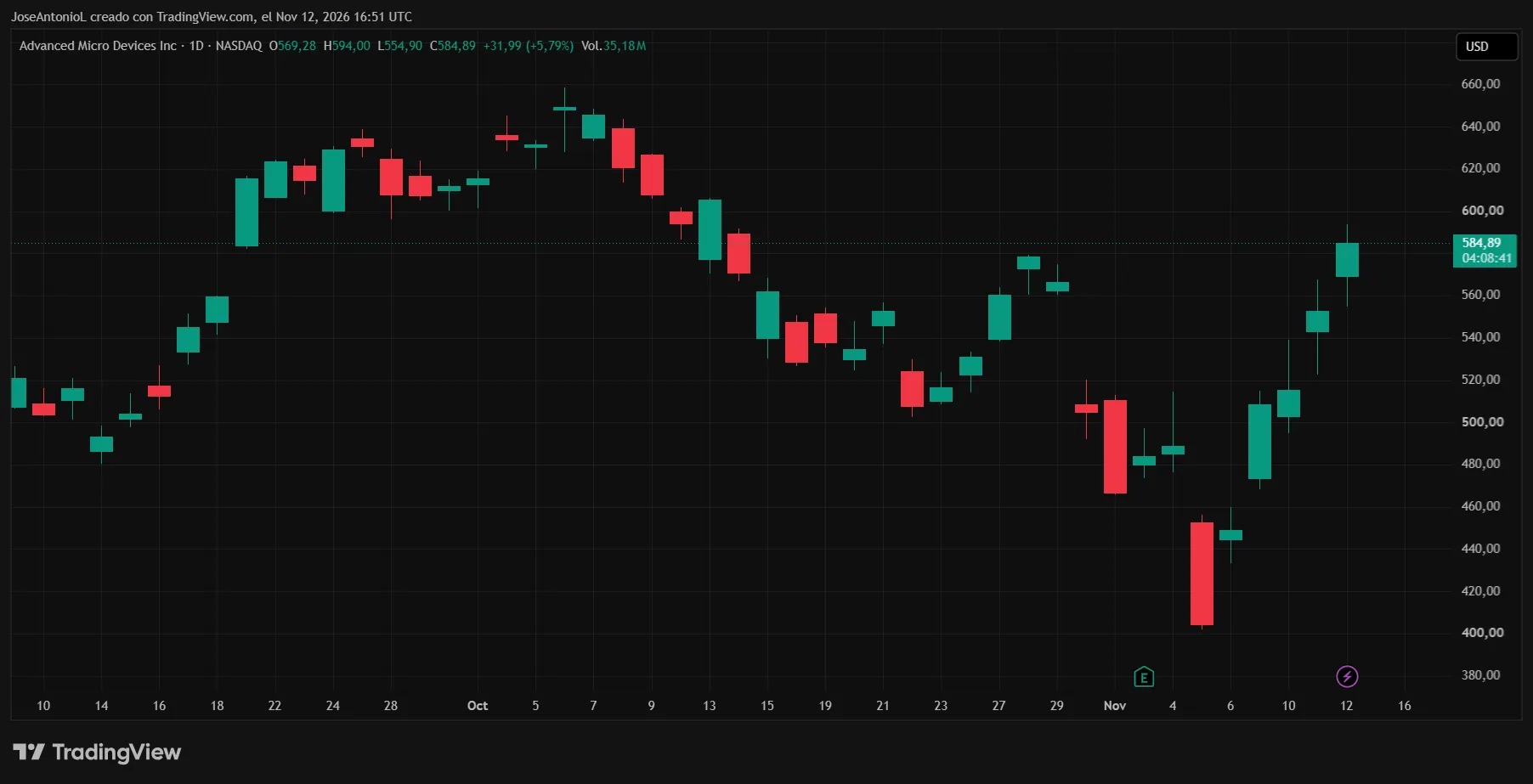
AMD opened at $569.28 and closed up 5.79% at $584.89, becoming one of the most obvious beneficiaries of Thursday's trading.
The company competes directly with NVIDIA in the field of AI accelerators, and the uncertainty in NVIDIA's leadership may make customers more interested in diversifying their chip suppliers.
Broadcom followed a similar trend, opening at $356.80 and closing up 5.65% at $364.73.
Unlike AMD, which competes with its own GPU products, Broadcom focuses on custom AI processors and networking technologies, providing large customers with another way to reduce their dependence on NVIDIA.
Google's parent company, Alphabet, also rose by 2.06%, from an opening price of $293.77 to $299.49.
Google has been expanding its tensor processing unit business, including the launch of two new AI chip systems on Monday, aimed at privacy-sensitive and memory-intensive workloads.
These alternative solutions already existed before Jensen Huang resigned, and the rise on Thursday does not mean that NVIDIA has lost customers. Investors may simply believe that if a change in leadership disrupts NVIDIA's strategy or customer relationships, the competitive landscape will become more favorable.
NVIDIA's partners are under pressure
NVIDIA’s CoreWeave faced a tougher trading day, opening at $50.91 and closing down 7.49% to $56.22.
This decline occurred not long after the previous day. The cloud service provider's stock price soared by 24.7% following a 168% increase in quarterly revenue, so this setback may be both a correction after the sharp rise and a response to Jensen Huang's resignation.
In any case, the relationship between the two companies explains the concerns of investors. In January of this year, NVIDIA invested another $2 billion in CoreWeave, and the two parties initially reached an agreement worth $6.3 billion. NVIDIA will purchase computing power capacity that has not been used by April 2032, which makes NVIDIA both an investor, supplier, and customer of that company at the same time.
Therefore, any change in NVIDIA's investment priorities could affect CoreWeave beyond the scope of regular chip procurement, although neither party has announced any changes to these agreements yet.
Pressure has also been transmitted to the semiconductor supply chain. TSMC, which produces advanced processors for NVIDIA, fell by 1.15% to $408.61; Micron, a supplier of memory chips, fell by 2.70% to $789.43.
Another important supplier of high-bandwidth memory for AI hardware, SK Hynix, fell by 3% to $137.98.
However, these companies also rely on a broader demand for chips, so their declines cannot be entirely attributed to problems with NVIDIA's leadership.
For investors, the more immediate concern at present is not whether the AI chips will continue to be sold, but rather how NVIDIA will manage its partnerships, financing commitments, and product roadmaps in the absence of this executive who built a vast network of relationships.
NVIDIA's board of directors stated that it is expected that the company's operations and customer commitments will continue to progress without impact. The company is scheduled to release its quarterly financial report on November 17th, and Kress will lead the company through the first financial report release since the departure of Jensen Huang.
Disclaimer
The views and opinions expressed by the author are for reference only and do not constitute financial, investment, or other advice.