

There are quite a few issues the market has to face at present: the Iran war, rising inflation, and the scandal surrounding NVIDIA CEO Jensen Huang, among others. However, as we move towards 2027, there is another risk that is quietly approaching: a significant slowdown in corporate profits.
Some analysts say that profits have been the engine behind the four-year bull market in U.S. stocks, but with the slowdown in AI investment, growth may cool down quickly. They point out that corporate profit momentum is expected to decline, which could make the stock market more volatile in 2027; at the same time, the market has already begun to digest a slower pace of profit expansion, and valuations are also falling.
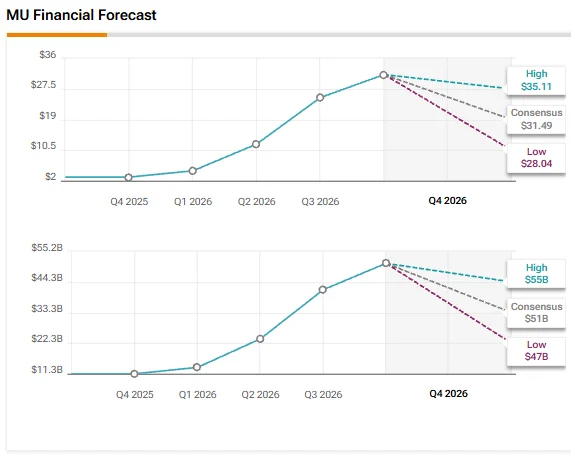
This year, there has been strong growth in earnings, which has also raised concerns about whether the market is in a "profit bubble." The latest updates from FactSet indicate that the S&P 500 index is expected to record a composite year-over-year earnings growth rate of 31.4% in the third quarter. According to data from Multpl, this level is higher than the average annual earnings growth rate of 14.8% during the period from 1989 to the end of 2024.
Goldman Sachs stated that it expects profit growth to slow significantly over the coming year, declining from a annual growth rate of 36% in 2026 to 11% in 2027.
It is stated that profits are expected to slow down significantly, mainly due to the slowdown in capital expenditures by large-scale cloud service providers, while costs related to the AI craze—such as interest expenses—are on the rise. Amazon, Alphabet, Meta, Microsoft, and SpaceX are projected to spend over $800 billion in capital expenditures in 2026, setting a new historical high.
Goldman Sachs also pointed out that stock valuations have significantly declined, reflecting that the market has begun to take into account slower economic and earnings growth expectations.
The team led by Peter Oppenheimer stated: "2026 was a year of strong profitability. Entering 2027, profit growth in major global regions is expected to slow down significantly, and the growth rate of AI capital expenditure is likely to peak, while capital costs remain high."
"We expect the stock market to continue to rise, but it will be accompanied by volatility," the bank added.
Raymond James indicates that profit growth is expected to return to normal next year, due to the anticipated slowdown in AI expenditures. The institution states that the earnings per share growth rate of the S&P 500 index may decline from 28% this year to 23% in 2027, which means that after the first quarter, the year-over-year profit growth rate will "slow down more significantly."
Tavis McCourt, a strategist at that institution, wrote: "This is driven by the fact that it has become more difficult to compare on the basis of AI (although a significant slowdown is more likely to be a theme for 2028 rather than 2027)."
The strategists at Ned Davis Research describe the prospects for profit growth next year as "doubtful." This research institution points out that the number of companies in the S&P 500 that exceeded expectations has slightly decreased, which is a sign that the optimism about profits "has gone too far."
In their market outlook for 2027, the institution stated: "However, if profit growth slows down, valuations may limit the upside potential." They added that the bull market in U.S. stocks has lasted for an "abnormally" long time.
Strategists also stated, 'This is more likely to lead to a decline in profit margins when the market strengthens, and may put the stock market at risk of reaching a peak in the bull market by mid-year.'
As the market enters a new year, new sensitive points have emerged within the AI trading sector. Recently, there has been a significant increase in volatility in technology stocks, and investors are panicked due to capital expenditures and the fact that Jensen Huang no longer serves as the CEO of NVIDIA. Concerns in the market have diversified into several directions; investors are worried about both excessive and insufficient spending on data centers, as well as the potential impacts of these two scenarios on the broader AI trading environment.