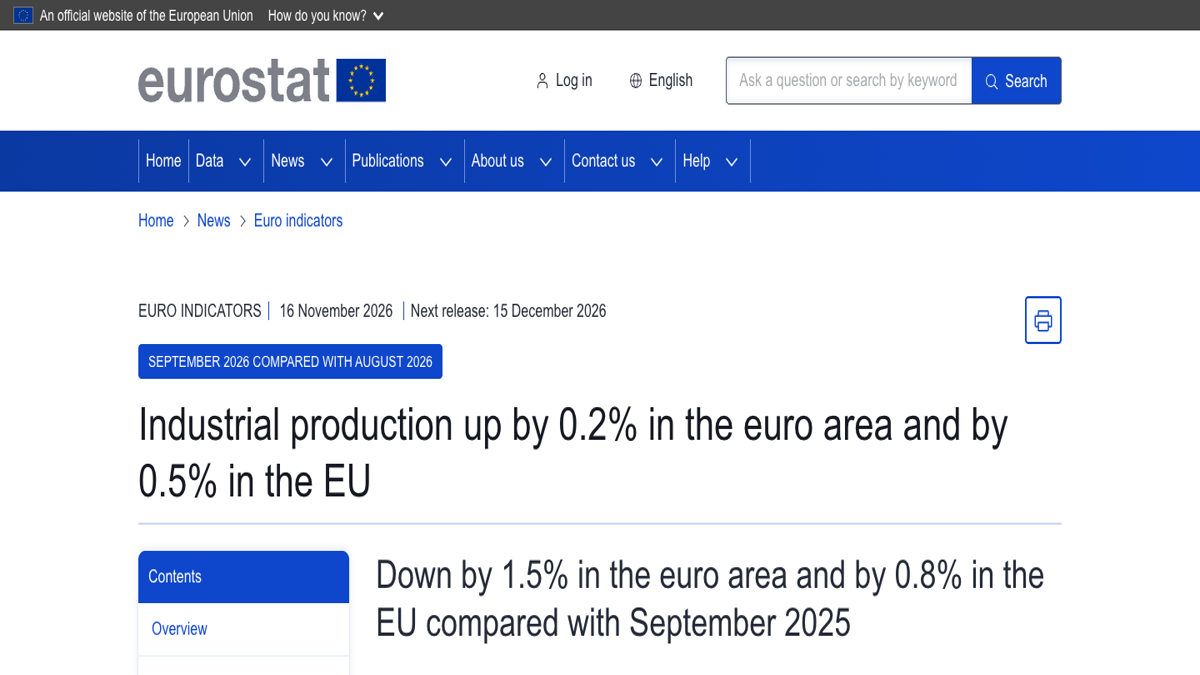


In 2024, the EU exported services worth 157.9 billion euros to outside the region, representing a 9.7% increase from 2023. Data on corporate characteristics released on November 13 by Eurostat further shows that large enterprises with more than 250 employees contributed 41.7%, small enterprises contributed 11.8%, and medium-sized enterprises contributed 9.0%; another 37.4% could not be classified according to enterprise size.
The overall increase indicates an expansion in demand for cross-border services, but orders have not evenly distributed among all enterprises. The share of each enterprise is determined by factors such as the size of the enterprise, the national industrial structure, and the degree of statistical identifiableness. In particular, more than one-third of exports cannot be categorized into known scales, so any conclusion that 'large enterprises are responsible for all the growth' goes beyond the boundaries of the data.
The advantage of large enterprises comes from their networks, not just their number of employees.
Cross-border services often require customers to have access to networks for compliance, taxation, payment, and local delivery. Large enterprises are better able to maintain teams in multiple countries and can also meet the requirements of long-term contracts and data security. In Denmark, large enterprises account for 71.7% of cross-border service exports; in Finland, it's 71.2%; in Germany, 69.1%; and in Slovakia, 65.0%. This indicates that exports in some economies are highly concentrated among large organizations.
However, small businesses in Malta, Estonia, and Luxembourg contribute 78.6%, 61.4%, and 56.8% respectively, indicating that scale advantages are not a universal rule. Small economies may rely on professional consulting, digital services, or cross-border platforms, and a small number of employees can still serve global customers. National comparisons must take into account the industry mix, rather than equating the number of employees directly with competitiveness.
Medium-sized enterprises account for only 9.0% of the market share, and this cannot simply be interpreted as meaning that "medium-sized enterprises are the weakest." Classification based on the number of employees, corporate group structure, outsourcing, and multinational subsidiaries can affect affiliation. The fact that 37.4% of companies are of unknown size serves as a reminder to readers that the identified categories do not represent a complete map of the market, and conclusions should take into account statistical uncertainties.
Information and communications have become the largest source of industry revenue.
In terms of the main business activities of enterprises, information and communications contributed 22.9%, amounting to 362 billion euros, making it the largest source of service exports; manufacturing enterprises contributed 15.8%, and transportation and warehousing contributed 15.0%. It is not surprising that manufacturing enterprises are also involved in service exports, as they provide additional services such as maintenance, licensing, design, and engineering.
The marginal cost of cross-border delivery of digital services is relatively low, allowing companies to reach customers without having to establish a large number of overseas entities. However, data localization, cloud infrastructure, copyright issues, and labor costs still limit expansion. The high proportion of information and communications indicates that software and digital capabilities have become export channels, but this does not mean that all online businesses are inherently global by nature.
The 236.2 billion euros spent on transportation and warehousing are closely linked to physical trade, tourism, and supply chains. Its growth may be affected by changes in volume, freight rates, and routes. When the total value of service exports is considered, rising prices can also increase the amount; therefore, a nominal growth of 9.7% cannot be entirely attributed to a corresponding increase in business volume.
The focus of policies should shift from the total amount to the entry barriers.
If we want more small and medium-sized enterprises to participate, mere promotion of export opportunities is far from enough. What these enterprises actually face are contract standards, cross-border taxation, data regulations, as well as credit and payment collection risks. Platforms and public services can reduce these fixed costs, but they may also lead to orders and customer relationships being concentrated in the hands of a few intermediaries.
For investors, a large corporate shareholding indicates advantages in terms of scale, brand, and compliance capabilities; small companies, which dominate in some countries, demonstrate that specialization can overcome scale limitations. To determine whether a company will benefit, it is necessary to consider in which service category it operates, whether its customer base is diversified, and whether its revenue depends on a few markets.
157.9 billion euros and a growth rate of 9.7% reveal the scale of European service exports, while corporate characteristic data indicate who is better able to transform their capabilities into cross-border contracts. What is truly worth tracking is not the simplistic story of "large companies winning and small companies losing," but rather which fixed costs prevent new entrants, which digital tools lower the barriers to entry, and how the unknown 37.4% of potential market will be identified in the future.
Statistically, "main business activities of enterprises" do not equate to the content of each export service. Manufacturing companies may sell software and provide maintenance services, while information and communication companies may also undertake consulting work. To turn macro shares into industry opportunities, it is necessary to further break down service types, destinations, and the relationships between corporate groups. Otherwise, it is easy to mistake the registered industry for the actual orders themselves.