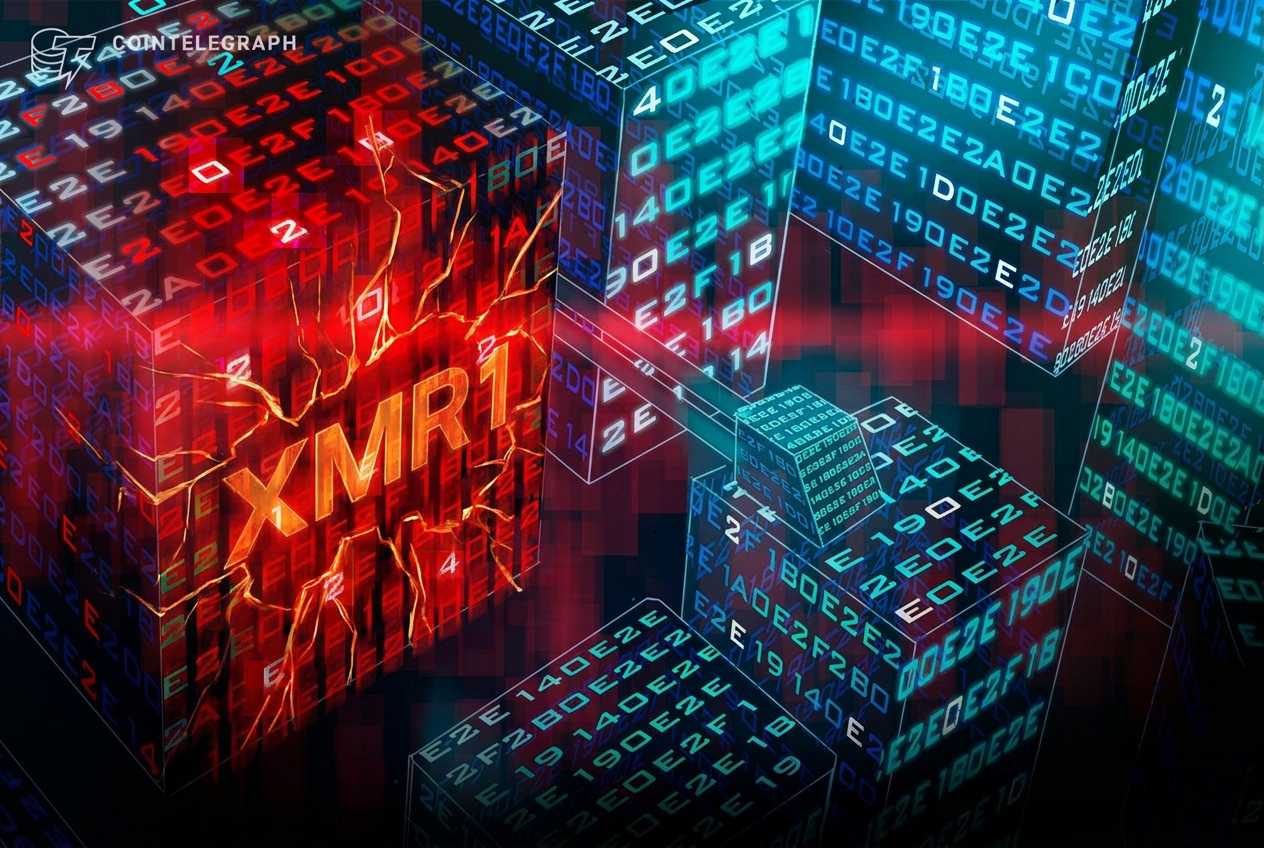














According to blockchain analysis firm Bitquery, the encapsulated version of Monero (XMR) plummeted by over 99% on Hyperliquid on Friday, with a wallet that had received tokens from the deployer's account selling off assets worth approximately 13.5 million US dollars.
Bitquery indicates that this token, named XMR1, fell from around $500 to $1 in just about 30 minutes, representing a decline of 99.8%. Encapsulated tokens are designed to represent cryptocurrencies from other blockchains, allowing them to be traded outside of their native networks. This collapse affected XMR1, not the native cryptocurrency of Monero.
According to the on-chain analysis of Bitquery, before selling approximately $13.5 million in assets on Friday, the wallet received 5.2 million XMR1 tokens from the deployer's account first.
The institution traced that $13.28 million USDC was transferred to Arbitrum, of which $13.22 million was exchanged for 7,467 Ethereum coins (ETH) through CoW Protocol. Subsequently, most of the ETH was bridged to Ethereum.
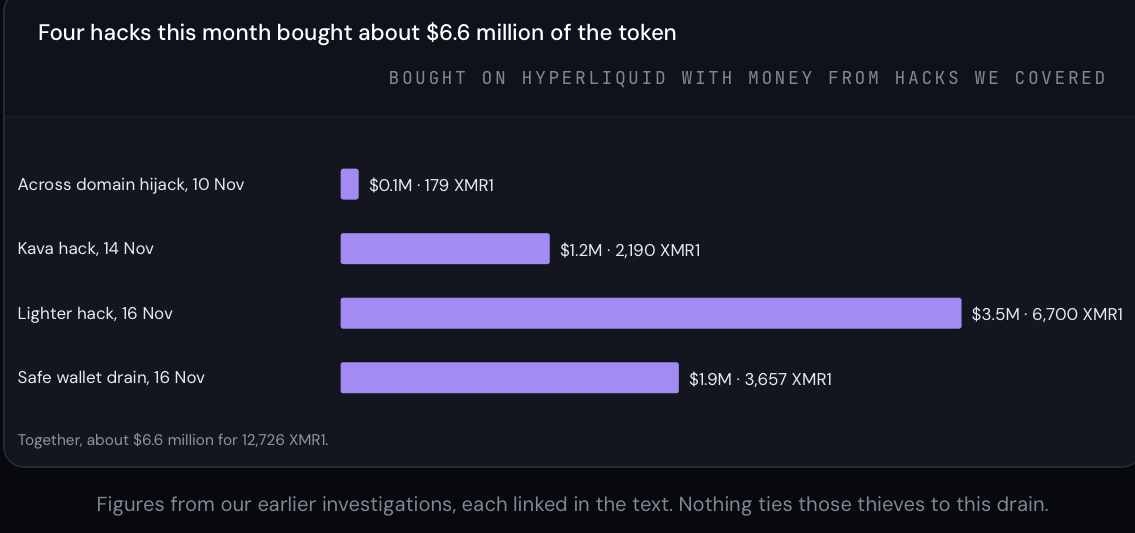
It was also discovered that the profits from four hacking incidents earlier in November – involving Across Protocol, Kava, Lighter, and Safe – were used to purchase approximately $6.6 million of XMR1, which seems to be a path leading to the native Monero. The institution stated that no on-chain evidence linking these incidents to the suspected exploitation on Friday was found.
Bitquery stated that their on-chain investigation was unable to determine how the private key of the deploying account was obtained, nor could they determine who controlled that account at the time of these transactions. Therefore, the specific circumstances of this suspected compromise incident have not yet been confirmed.
Wagyu The operator attributed the cause to a suspected infrastructure leak
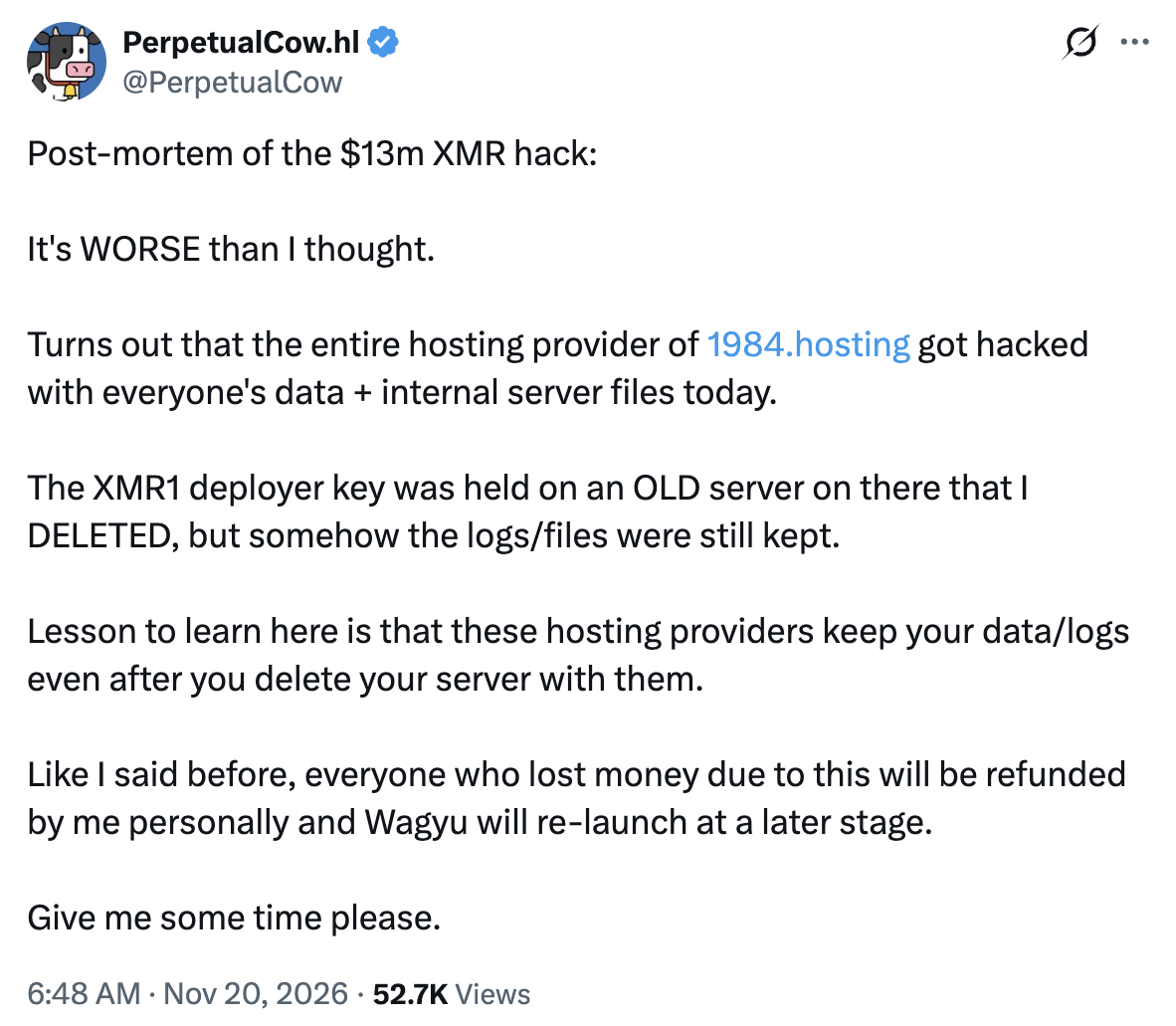
The operator Wagyu, who goes by the alias PerpetualCow, which is a project behind XMR1, attributed this collapse to a so-called security vulnerability of the hosting service 1984, claiming that customer data and internal server files have been leaked.
According to PerpetualCow, the deployer key of XMR1 was once stored on a server that was later deleted, but the hosting service provider is said to have retained the related logs and files.
PerpetualCow also promised to personally compensate the affected traders and stated that Wagyu would be relaunched later, but no timeline was provided.
Cointelegraph contacted the operator regarding this suspected data breach incident and the compensation plan to seek more details, but as of the time of publication, no response has been received.