













Bitcoin prices tumbled below $60,000 by noon on November 20, 2026, a significant drop from the record high of over $126,000 set in early October 2025. Bitcoin fell in tandem with stocks, rather than acting as a buffer when the stock market was under pressure, which once again thwarted its attempt to establish itself as "digital gold." Pressure from institutional selling, security concerns, and corporate treasury strategies are all adding to the downward trend.
Key Points

- Bitcoin is on its way to a seventh consecutive week of decline.
- Since late September, its correlation with the Nasdaq 100 index has increased.
- Spot ETF and positions held by enterprises financed through debt may lead to increased selling pressure.
- During both periods of market downturn, Bitcoin's decline exceeded that of the S&P 500 index.
Bitcoin's decline is increasingly resembling that of tech stocks.
Earlier on November 20th, the trading price of Bitcoin briefly fell below $62,000, and then dropped below $60,000, reaching its lowest level since July. By noon of that day, it was on track for its seventh consecutive week of decline, which would be the first time such a streak of declines has occurred since May 2022.
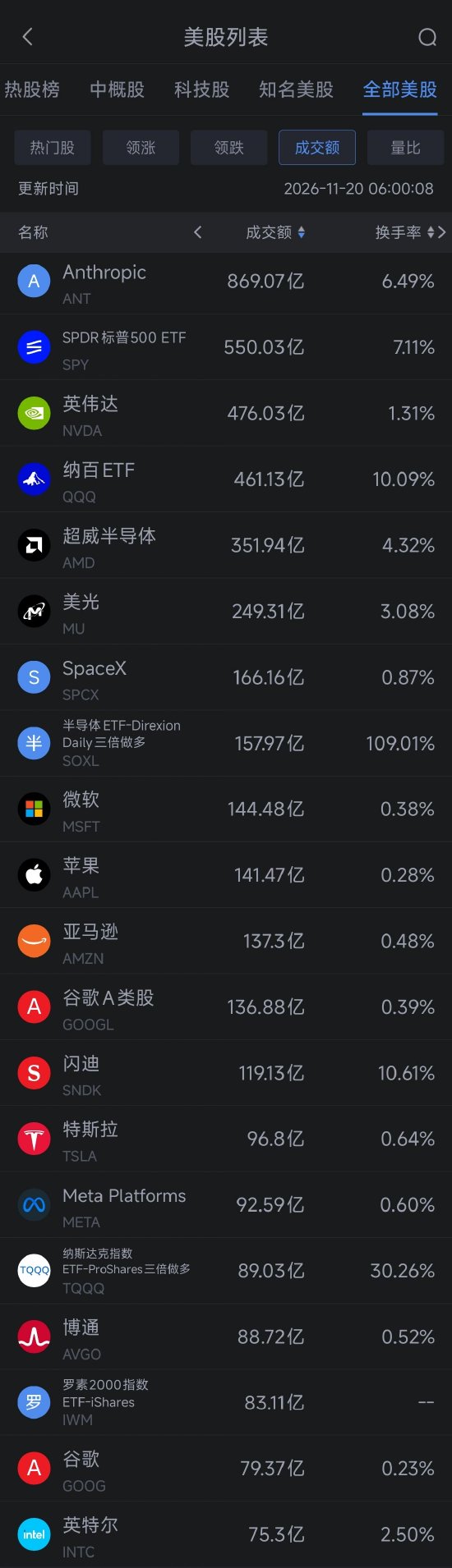
This kind of correlation with tech stocks has also occurred before and after some major listings. In the 30 days prior to Anthropic IPO, Bitcoin fell by 22.7%; in the month before SpaceX went public on June 12th, Bitcoin fell by 22.3%. These similar declines do not prove that investors sold their crypto assets in order to raise funds for the subscription of IPO; capital outflows, leverage, and broader market uncertainties also pressured prices.
What drove the sell-off in Bitcoin prices?
The Republican Party's losses in the midterms, the Binance hack in October, and concerns about tech security all contributed to this round of decline. Hyphen Wealth Management Chief Investment Officer Cyrus Amini stated that the downward trend of Bitcoin had already begun before Democrats regained control of both chambers of Congress.
Clarity Act failed to pass in the Senate in September. Nevertheless, cryptocurrency legislation remains a priority for members of both parties, and SEC appointed by Trump, along with the leadership of the Commodity Futures Trading Commission, continue to favor cryptocurrencies in rule-making.
Global Settlement Network, co-founder and CEO, Ryan Kirkley, linked investors' unease and concerns about encryption, system disruptions, with the vulnerabilities in Binance. He also conservatively estimated that institutional investors account for about 20% of the Bitcoin market price.
After the U.S. Securities and Exchange Commission (SEC) first approved spot Bitcoin trading in January 2024, it opened another channel for institutional demand and also provided a convenient exit route. Data as of November 18 for ETF Database indicates:
- Research from Galaxy for the third quarter shows that among the spot Bitcoin exchange-traded product positions disclosed in the 13F filings, advisors and wealth planning firms accounted for a record 40.5%, which is equivalent to 11.2% of the Bitcoin held by these funds.
Corporate treasuries have experienced another layer of volatility
As of September 2026, listed companies held a total of approximately 1.29 million bitcoins, accounting for more than 6% of the total supply. Among the holders are SpaceX and Strategy.
Digital asset treasury companies, or DATs, hold a large amount of digital assets as a core business strategy. Cordoba Advisory Partners, the chief investment officer of Abe Sheikh, stated that such enterprises buy Bitcoin through borrowing or financing to amplify upward trends in prices, but they also sell tokens in order to pay bond interest.
As the largest holder of the tokens, Strategy disclosed in a regulatory document in mid-November that it held 850,849 BTC tokens, which accounts for approximately 4% of the total supply. The cost of its holdings was about $64.2 billion, with an average cost of around $75,452 per token.
Bitcoin fails to pass the "digital gold" test
During the two declines mentioned in Sheikh, the sell-off in Bitcoin prices was more severe than that in the stock market. From October 6 to November 18, 2026, Bitcoin fell by about 27%, while the S&P 500 index fell by 6.3%.
Gold itself has fallen by more than 35% from its peak at the beginning of 2026, while the yield on cash accounts is 5%; neither gold nor Bitcoin provides any returns. Between January 21 and April 8, 2025, Bitcoin also underperformed stocks, falling by 27.8%, whereas the S&P 500 index fell by 17.4%.