













Americans are shopping as if "tomorrow will never come."
A recent series of high-profile technical failures, which led to flight cancellations, interruptions in email access, and slowed down bank transactions, have made many people start to worry about AI-driven cyberattacks, as well as the state of the US energy grid.
Government officials have refuted the rumors and speculations circulating online that there might be a malicious entity behind this series of failures. Nevertheless, consumers like Sabrina Cepeda have already begun to prepare for larger-scale technical outages or other emergency situations.
In recent days, this resident of Houston has purchased propane and lighter fluid for cooking and heating devices that do not require electricity. This mother of three children has also stocked up on non-perishable food, hygiene products, and allergy medications in case her family is trapped at home for several days.
“I have ways to ensure that my family has food to eat, stays clean, stays hydrated, keeps warm, and is safe,” said 39-year-old Cepeda. “You’d rather have these things ready but not need them than wait until you do need them and then not have them.”
"The doomsday economy" is attracting attention. Wall Street and retailers are both keeping a close eye on it.
Emergency preparedness procurement
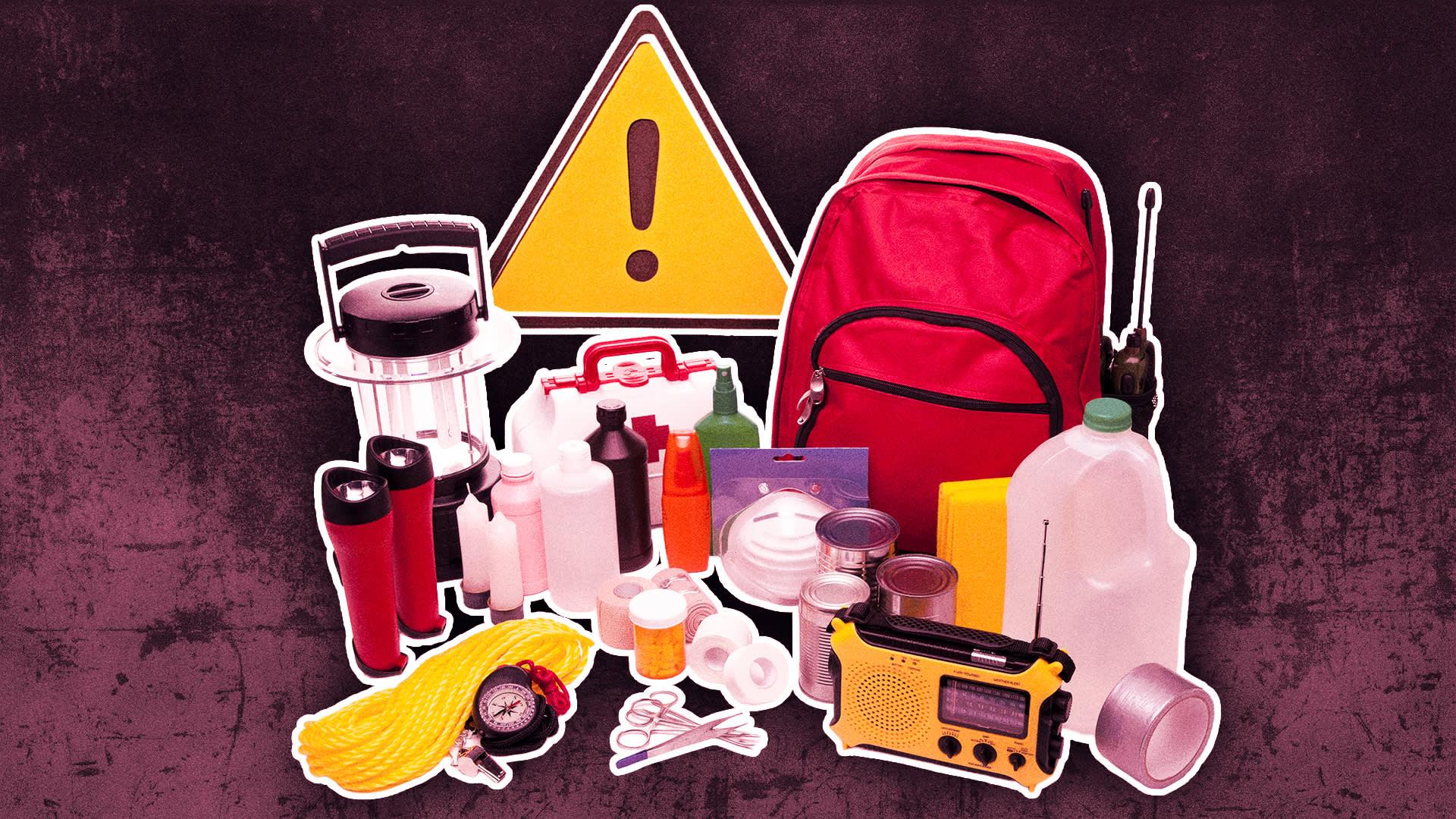
According to the card-swiping data analyzed exclusively by Consumer Edge for CNBC, there were at least six major technical failures in the United States from November 12th to November 17th. During this period, brands that specialize in selling emergency products saw their expenditures surge by about 400% compared to the same time last year.
Ready America sells emergency survival kits, pre-packaged drinking water, and high-calorie energy bars, among other products. The company stated that in recent days, sales on its e-commerce platform have increased by approximately five times. In addition, some corporate customers who had stored the company's supplies in their offices for emergencies have also called to place additional orders.
The president of the company, Trevyn Reese, stated that since the COVID-19 pandemic forced Americans into a state of lockdown, the company has rarely seen such strong demand. As a result, Ready America has instructed suppliers to increase production. Due to a shortage of water purification filters, this family-owned business has directed consumers to other alternative products, such as pre-packaged drinking water bags.
Reese said, "With all that's happening in the news nowadays, we see many people wanting to get prepared."
Although this series of failures has pushed concerns related to electricity to the forefront, data shows that these anxieties had actually begun to accumulate weeks earlier.
Consumer Edge indicates that consumers began to significantly increase their purchases of brands geared towards emergency preparedness at the end of last month. Around that time, Fox News reported that the Pentagon was preparing for U.S. military bases to be able to operate without external support for at least 90 days. What further exacerbated these concerns was President Donald Trump's hints about a possible resumption of the ongoing war with Iran.
Gun trade organizations NSSF indicate that gun sales in October increased by about 8% compared to the same period last year. Retailers and gun manufacturers have also sporadically mentioned that demand remains high in November. NSSF believes this can be attributed to uncertainties related to the mid-term elections, as well as recent technical failures.
NSSF, General Manager of Public Affairs, said: "If people are investing in guns and ammunition, they are very clearly telling you with their wallets what their priorities are. In essence, you are investing in a product that can protect your life and the lives of your family." Mark Oliva
"Doomsday-like worries"
Today, this kind of doomsday discussion has begun to spread to Wall Street.
Sumitomo Mitsui stated on Monday to its customers that consumers' concerns about these malfunctions, coupled with what the bank referred to as a "doomday-like panic" spreading on social media, have prompted shoppers to stock up on emergency supplies during Costco. As a result, Sumitomo Mitsui expects that a key non-fuel sales growth indicator in November Costco will rise above 10% for the first time since 2022.
Royal Bank of Canada stated that the so-called “doomsday preparedness” has had a “real impact” on global shopping behavior in the past few weeks. However, the bank noted that this trend has only boosted sales of a few types of products so far, such as long-lasting proteins, water purification products, and dried goods.
The private wealth advisors of SRM, who are clients of Richard McWhorter, have been rushing to Costco to purchase goods in bulk, and they are also making substantial investments in generators. McWhorter mentioned that they have also received questions regarding how to prepare in case the financial system crashes.
“I’ve never seen such a situation in my life,” said McWhorter, “The work I do involves both financial and psychological aspects. But in the past two weeks, it’s been more about the psychological aspect.”
Metal dealer American Hartford Gold stated that there has been an increase in customer inquiries this week. The company's president, Max Baecker, said that he heard from some customers that their interest in products such as gold – which has long been regarded as a safe-haven asset during turbulent times – stems from new concerns about over-reliance on digital financial networks; previously, a malfunction at JPMorgan Chase affected customer transactions for several hours.
Vice President JD Vance suddenly canceled his attendance at a summit with The New York Times on Wednesday to attend a meeting regarding technical failures instead. A day earlier, the Director of National Intelligence of the United States, Jay Clayton, informed CNBC that these recent failures were not the result of cyberattacks nor coordinated actions by foreign forces.
However, Senator Mark Warner (a Democrat from Virginia) stated on Wednesday that people were "terrified" by these failures. Warner, who serves as the vice chairman of the Senate Intelligence Committee, said that the United States is "lucky" to have not yet encountered a major cyberattack generated by artificial intelligence, or a crisis triggered by the loss of control of an AI intelligent entity.
Macro Hive CEO Bilal Hafeez believes that after these failures, investors may, out of caution, push companies to accelerate their spending on network security. Such a situation reminds one of the craze for antivirus software during the Internet bubble era.
Global X Cybersecurity ETF ( BUG ) has risen by about 2.5% in the past two weeks, outperforming the downward trend of AI stocks and the broader tech sector. The Nasdaq Composite Index fell into negative territory for the first time since 2026 on Friday, indicating that this tech-heavy index is likely to record its first annual decline since 2022.
"Old-fashioned method"
Of course, not all social media users believe that they should prepare for a "doomsday scenario." In a satirical video posted on TikTok, users joked that their way of preparing is to place orders for Starbucks Drive-Thru or to buy large quantities of alcoholic beverages.
However, it seems that this topic is indeed appearing more and more frequently in the minds of Americans. The search volume for the term “prepping” in the United States has more than tripled over the past month compared to the same period last year. Meanwhile, the search volume for “survivalism” (referring to practices for preparing for emergencies) on YouTube has soared by over 5000% during the same time frame.
Houston's mother, Cepeda, believes that emergency preparedness is about "it's better to be prepared and not have to use it than to need it and not be prepared." She has previously utilized her emergency food reserves during extreme weather events such as Hurricane Harvey in 2017 and the winter storm Uri in 2021.
But she said that this year is the first time she has felt the need to prepare for potential emergencies caused by technical failures. Cepeda and her husband have made sure to keep enough cash at home and have fuel in the car, in case the US power grid suffers more widespread disruptions.
“We’re too reliant on technology,” said Cepeda, “You need to be able to do these things in a more traditional, old-fashioned way.”