

Can meme coins still be a long-term investment? With the meme sector's market cap share among altcoins dropping to just 2%, is this a bottoming signal or a precursor to a fade? According to the latest CryptoQuant data, in October 2026, meme coins' market cap share of altcoins dropped to about 3% (ratio 0.027), approaching the 2% threshold and hitting a historic low. To find the projects truly worth holding long-term in this shakeout, you first need to understand three things: what 2% means, the three risks you must avoid, and which of DOGE, SHIB, and PEPE is more worth holding.
What Does Meme Coins' 2% Market Share Mean?
Looking back at this cycle, meme coins' peak moment was in November 2024, when their market cap share of altcoins briefly exceeded 10%. Since then, it has continued to decline, falling below 4% in December 2025. By July 2026, the ratio further dropped to 3.7%, simultaneously hitting a three-year low in holder count. In October, it finally fell to around 3%, approaching 2%.
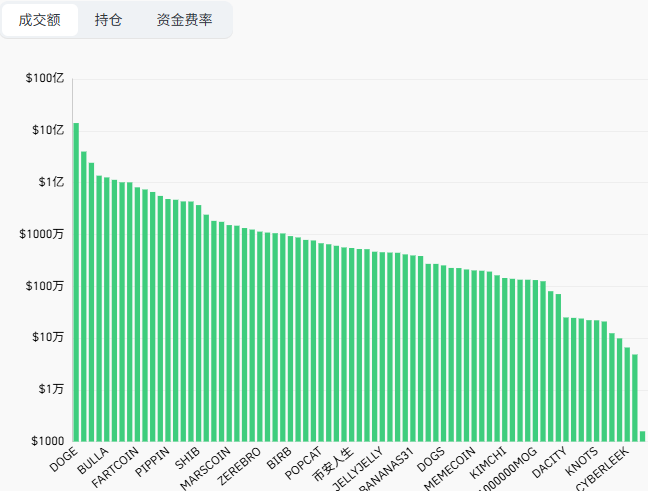
Image: Meme Coin Trading Volume Ranking
Looking at market cap, total meme coin market cap was about $28 billion in July 2026, while RWA tokens exceeded $64 billion over the same period. Additionally, the number of altcoins with a market cap over $1 billion has shrunk from 105 in 2021 to 58.
In our view, this means meme coins are also becoming "top-heavy" internally, and the safety margin of leading projects is far higher than that of mid-tier and tail-end projects.
3 Risks to Avoid Before Long-Term Holding of Meme Coins
Risk 1: Regulatory Classification Risk
In 2026, 68 countries globally have introduced dedicated cryptocurrency legislation, and 92% of jurisdictions have tightened relevant regulations. In the joint classification framework issued by the US SEC and CFTC in March 2026, meme coins were explicitly classified as "digital collectibles" rather than securities. Additionally, the EU's MiCA regulation requires meme coins with a market cap over €5 million to meet additional investor protection obligations. In mainland China, virtual currency trading and issuance are illegal financial activities.
In our view, as regulatory frameworks become clearer, the clearance rate for meme coin projects without compliance awareness will accelerate.Risk 2: Zeroing Out and Liquidity Dry-up Risk
Industry statistics show that about 90% of meme coins ultimately go to zero. A typical case is the once-popular FARTCOIN, which plunged 93% from its high; since 2026, 82 crypto projects across the industry have shut down. For ordinary investors, practical criteria to avoid pitfalls are: don't touch those without code updates, don't touch those with liquidity below $1 million, and don't touch "single-address" coins shilled by just one address.
Risk 3: Chip Concentration and Narrative Fade Risk
On-chain data shows that the top ten wallets of many meme coins hold over 50% of the supply, and so-called "community consensus" is fragile against whales. Well-known meme coin advocate Murad Mahmudov hasn't sold his holdings for over two years since his Token2049 speech in 2024, but his portfolio market value has shrunk about 81% from its peak. Since 2026, prediction markets have seen single-week trading volumes exceeding $4.5 billion and monthly volumes reaching $9.5 billion, far exceeding meme coins' revenue level of about $2.4 billion over the same period, showing that the narrative baton has been passed to other tracks.
Top 3 Meme Coins Worth Long-Term Investment
In a "survivor takes all" landscape, we recommend that long-term meme coin investment should only focus on the top targets with the strongest liquidity and longest consensus. The following three constitute the current first tier.
| Coin | Core Features | Suitable For |
|---|---|---|
| DOGE | Deepest consensus, most practical payment narrative | Investors willing to hold for 3+ years |
| SHIB | Elasticity coexists with risk | Advanced investors who can withstand 50%+ drawdowns |
| PEPE | Pure sentiment high-beta asset, no utility roadmap | Speculative investors with high risk appetite |
Dogecoin (DOGE)
Keyword: Deepest consensus, most practical payment narrative
Holding Value AnalysisAccording to CoinMeta data, Dogecoin remains the largest meme coin by market cap at about $9.38 billion. In mid-November, the price was about $0.063, having retraced over 90% from its all-time high of $0.7399, with risks largely released. On the fundamental front: the Dogecoin Foundation is collaborating with Brag House Holdings to develop a mobile payment app called "Such," featuring a built-in merchant tool "Hustles," positioned for daily payments and small merchant collection scenarios. DOGE is the only one of the three with the prototype of "evolving from a meme to a payment tool."
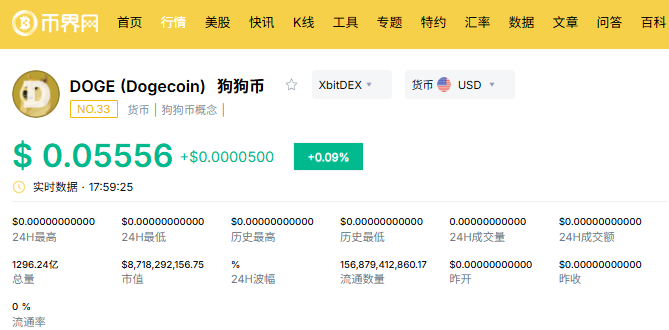
Image: Dogecoin Latest Price
Suitable For
In our view, Dogecoin is suitable for investors with moderate risk appetite who recognize the long-term logic of "payment-type memes" and are willing to hold for 3+ years.SHIB
Keyword: Burn deflation + Layer 2 ecosystem, elasticity coexists with risk
Holding Value AnalysisSHIB currently has a market cap of about $2.5 billion (about a quarter of DOGE's), with a circulating supply of about 589 trillion tokens. Its value has two pillars: first, the ongoing burn mechanism (195 million burned in a single week in July 2026), and second, the ecosystem development of the Shibarium Layer 2 network. However, it must be acknowledged that SHIB's market cap fell 33% in a single month in June 2026, and burn activities remain largely event-driven, not yet forming sustained deflationary momentum.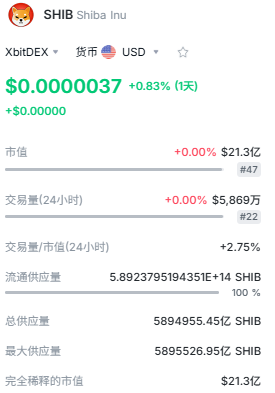
Image: SHIB Latest Price
Suitable ForAdvanced investors who can withstand 50%+ drawdowns, value community operation capabilities, and are willing to track on-chain burn data. In our view, SHIB has greater elasticity than DOGE, but its ecosystem delivery still needs time to verify.
PEPE
Keyword: Pure sentiment high-beta asset, only suitable for strict small positions
Holding Value AnalysisPEPE is the leading coin that currently has no utility and no roadmap, with its positioning entirely dependent on community sentiment and liquidity. According to Bijiie.com data, in mid-November, PEPE's price was about $0.0000034–$0.0000038, with a market cap of about $1.5 billion, down 87% from its December 2024 all-time high and down about 60% over the past year. Although new wallets recently withdrew 355 billion PEPE (about $1.38 million) from exchanges, single-day trading volume fell 26%, and the rebound has not yet been confirmed by volume.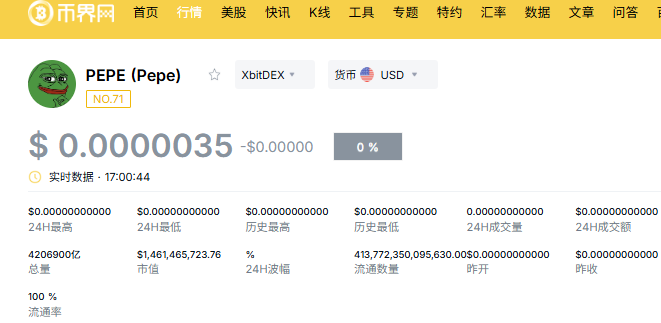
Image: PEPE Latest Price
Suitable ForIn our view, PEPE is suitable for speculative investors with high risk appetite, participating with a swing-trading mindset, and able to strictly execute stop-loss discipline. PEPE does not have traditional long-term holding value; it only has "high-beta position tool" value.
Meme Coin FAQ
Q1: Can meme coins still be held long-term?
A: Yes, but limited to top-tier targets. Only consider the first tier like Dogecoin, SHIB, and PEPE, and it is recommended that total meme coin positions not exceed 10% of crypto assets, using only idle funds.
Q2: What is the biggest risk of long-term meme coin investment?
A: Regulatory classification and zeroing-out risks are the most fatal. In 2026, 68 countries have tightened legislation, about 90% of meme coins ultimately go to zero, and projects with liquidity below $1 million are especially dangerous.
Q3: Is Dogecoin more worth holding than SHIB?
A: In terms of stability, yes. Dogecoin's market cap of about $9.4 billion ranks first in the sector, and it has expectations for payment application implementation; SHIB has greater elasticity but deeper drawdowns, suitable for advanced investors.
Conclusion
Meme coins' share of altcoins approaching 2% means capital is shifting from sentiment-driven to cash flow-driven, and chips are concentrating toward the top. The recommended long-term holding logic is: Dogecoin as the core allocation, SHIB as an elasticity supplement, and PEPE only in small positions; meanwhile, strictly adhere to the three risk red lines of regulatory classification, zeroing out, and chip concentration. Total meme coin positions should not exceed 10% of crypto assets, using only idle funds. Cryptocurrencies are highly volatile, and virtual currency trading in mainland China is an illegal financial activity. This article is for research reference only and does not constitute investment advice.
Disclaimer: Readers are strictly advised to comply with local laws and regulations. This article is compiled based on public market data for reference and educational purposes only, and does not constitute investment advice. Follow CoinMeta for the latest updates.