

Aave DAO is gearing up for a significant overhaul by shutting down over 50% of underperforming L2 instances. It is also restructuring its governance framework and deploying over $100 million to boost GHO.
This could be a pivotal moment that propels Aave back to the forefront of on-chain lending or sparks unprecedented controversy within the DeFi community.
SponsoredACI Proposes Shutting Down 50% of L2s
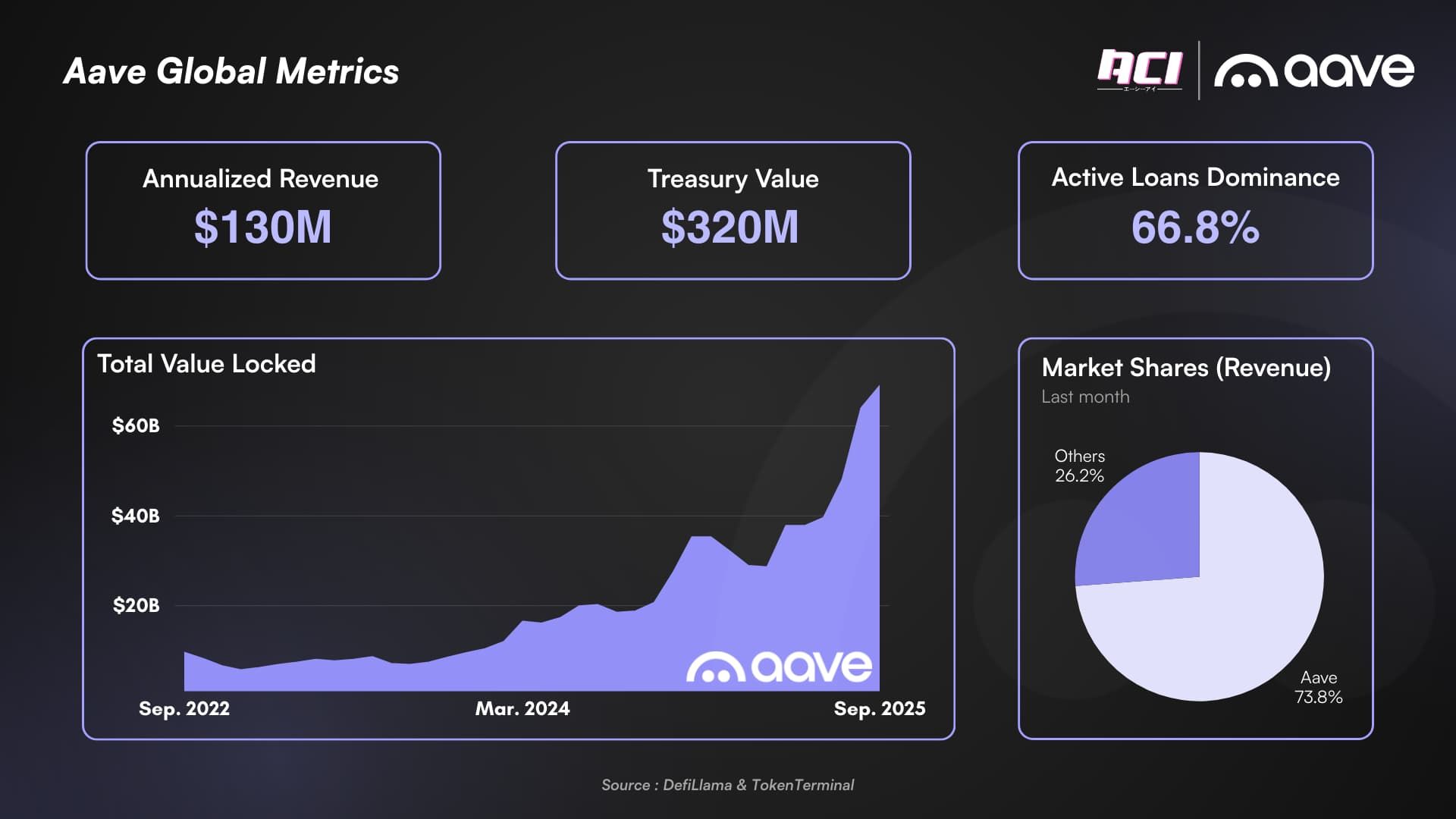
The “State of the Union” report by the Aave Chan Initiative (ACI) paints a candid picture. After a turbulent period in the DeFi market and internal challenges, Aave (AAVE) now leads in key metrics: TVL, revenue, market share, and borrowing volume. Aave’s annual revenue of $130 million surpasses the combined cash reserves of its competitors. Tokenomics improvements and the AAVE token buyback program have also contributed to the ecosystem’s growth.
However, the ACI’s report also highlights several pain points.
First, regarding the Layer-2 (L2) strategy. While Aave’s L2 strategy was once a key driver of success, it is no longer fit for purpose. Over half of Aave’s instances on L2s and alt-L1s are not economically viable. Based on year-to-date data, over 86.6% of Aave’s revenue comes from the mainnet, indicating that everything else is a side quest.
On this basis, ACI proposes closing underperforming networks. The DAO should invest in key networks with significant differentiators.
Second, ACI is pushing for a complete overhaul of the “friendly fork” framework, as most have been unimpressive regarding TVL and revenue. In some cases, attackers have exploited them to Aave’s detriment, as seen with Spark.
Sponsored“The friendly fork model had a good intention but bad execution where the DAO was too friendly towards these forks, allowing the DAO only little upside,” the report states.
Third, the instance model, once a smart innovation in early versions, has become obsolete in newer versions of the Aave V3 codebase due to its high costs. Therefore, ACI proposes that no further development or growth efforts be allocated to instances in the future, except for the Prime instance.
Reasonable, but Risky Decision
ACI’s reasoning is logical in the current context. On-chain lending is a low-margin business. Fragmented TVL across multiple chains incurs high labor and incentive costs, while most revenue is still generated on the mainnet. Streamlining operations will enhance business performance by focusing resources on networks with specific advantages. This approach will also effectively reduce operating costs.
However, this “shutdown” decision carries political and community risks. L2 ecosystems/partners may object, users on those chains may leave, and TVL could temporarily decline. Thus, this needs careful consideration in the implementation roadmap.
A particularly noteworthy direction in the report is ACI’s focus on placing GHO stablecoin at the core of its growth strategy. ACI prioritizes GHO’s development by maintaining the AAVE buyback program. This program will involve weekly purchases of approximately $500,000 to $1 million for the next 18 months. ACI will deploy over $100M in reserves for partnership programs and activate a GHO credit line collateralized by BTC/ETH/AAVE.
The goal is clear: transform GHO into a driver of higher profit margins for the DAO. This shift will move from a low-margin lending model to a higher-margin model through a stablecoin CDP. If executed effectively, this could significantly boost the DAO’s revenue and support AAVE’s valuation.
Aave is well-positioned with a solid financial foundation and dominance in on-chain lending. GHO’s immense potential further places it at a historic opportunity to shape the future of decentralized finance. However, short-term risks of TVL reduction or community backlash may still arise.