Foreign media reports that Aerodrome Finance's token AERO has risen 28% year-to-date and has maintained strong performance recently. However, judging from the price structure and derivatives data, the short-term momentum of this rise is weakening.
The protocol's fundamentals continue to provide support. The report mentions that Aerodrome Finance generated approximately $1.78 million in fees in the past week, and incentivized token holders with approximately $14.73 million. These figures suggest that protocol activity has not yet weakened significantly, but market sentiment has begun to cool.
Daily indicators are weakening.
From the daily chart, the AERO indicator has shown a bearish signal. The report cites the MACD indicator, stating that the fast line has crossed below the signal line, a crossover typically seen as a sign of short-term weakness. Simultaneously, the Bull Bear Power indicator has also turned negative, indicating increasing selling pressure.
If the decline continues, the market is mainly focused on two support zones: $0.49 to $0.47 and $0.44 to $0.42. These ranges are considered potential support levels, and whether they hold will affect the subsequent volatility.
Perpetual funds remain in excess.
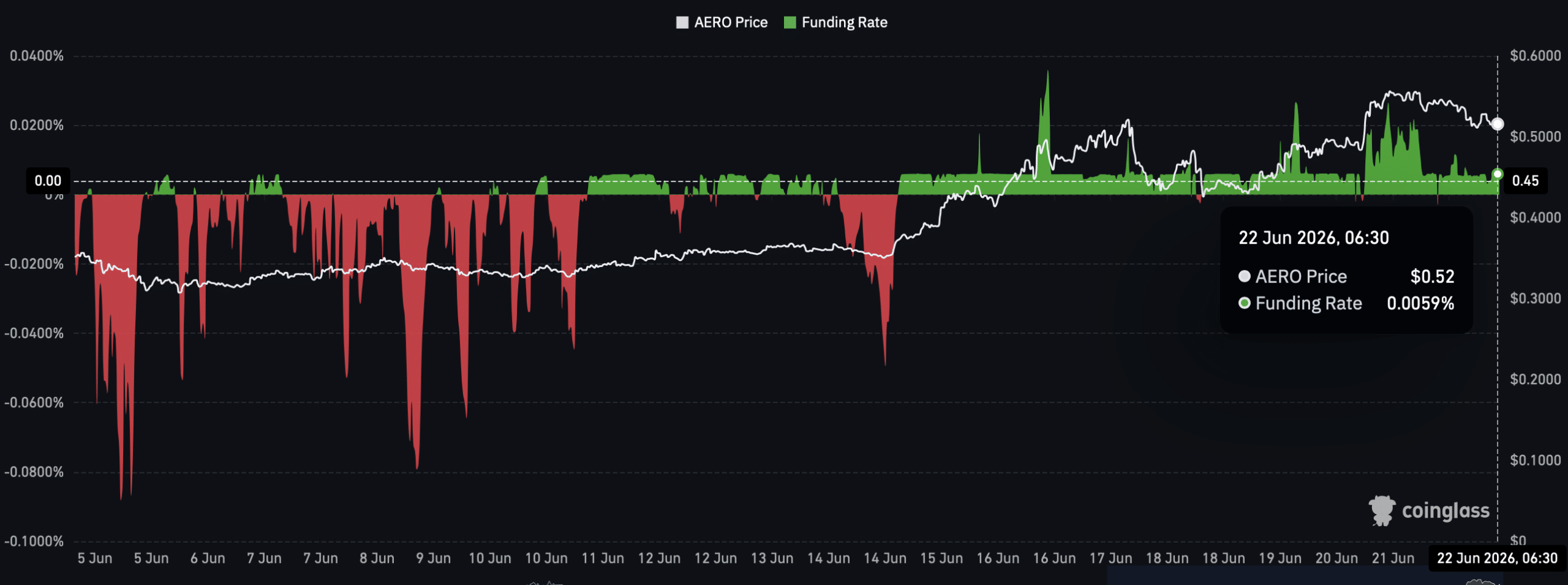
Despite pressure from both spot and technical factors, perpetual contract traders have not completely turned bearish. The average funding rate remains positive at approximately 0.0059%, indicating that long positions still hold a slight advantage in the remaining market open interest.
However, positive funding rates do not necessarily indicate a full-blown market upturn. More notably, open interest fell 12% over the past day to approximately $56 million. This typically suggests that some traders have proactively closed their positions, resulting in an outflow of funds from the overall market.
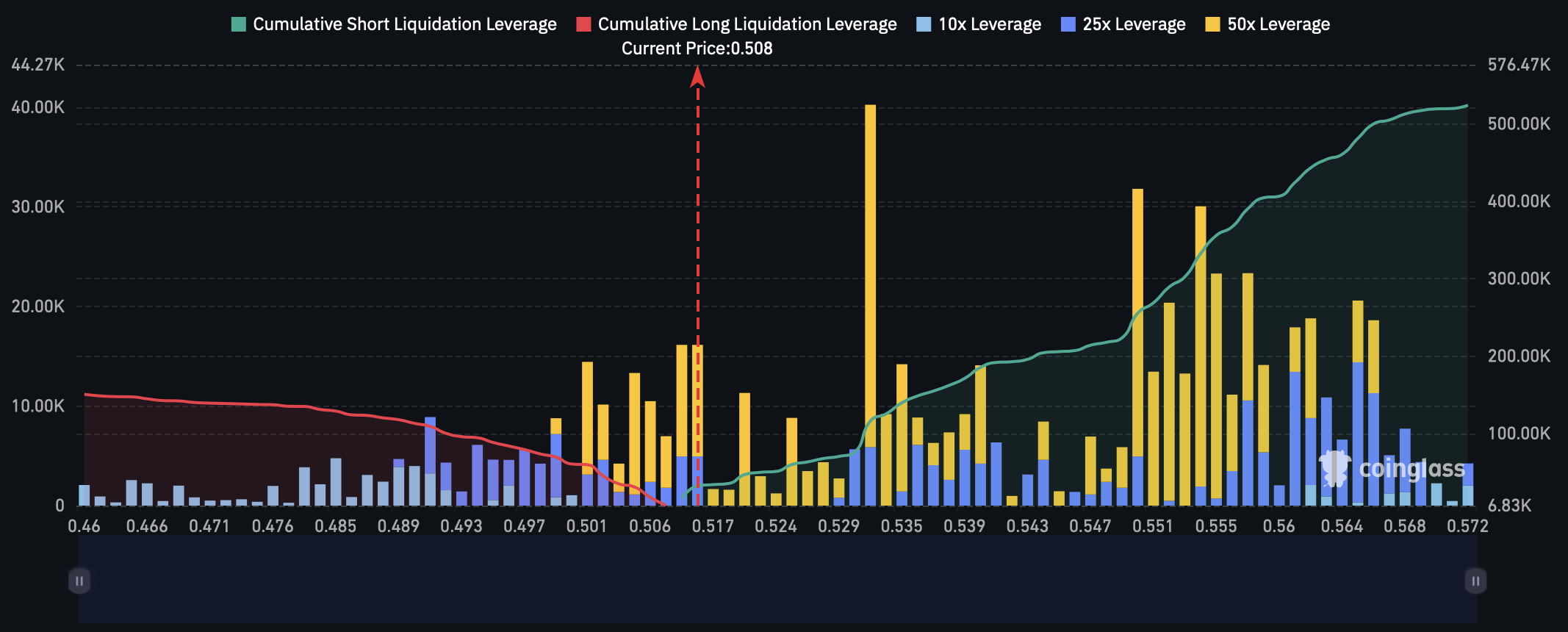
Liquidation pressure is concentrated at the bottom.
The report also mentioned that there is a significant amount of liquidation leverage accumulated below the current price of AERO. If the price continues to decline, these leveraged positions may be forced to close, thereby amplifying downward volatility.
Moreover, as the price range continues to shift downwards, there are signs that leverage intensity is increasing. With selling pressure already rising and open interest declining, this structure often makes short-term price movements more vulnerable.
Overall, AERO's previous rise was still supported by agreement fees and incentive data, but risk signals at the trading level are increasing. Foreign media believe that the bulls have not completely retreated, but if new funds continue to be insufficient, the price may first face a round of correction testing.